
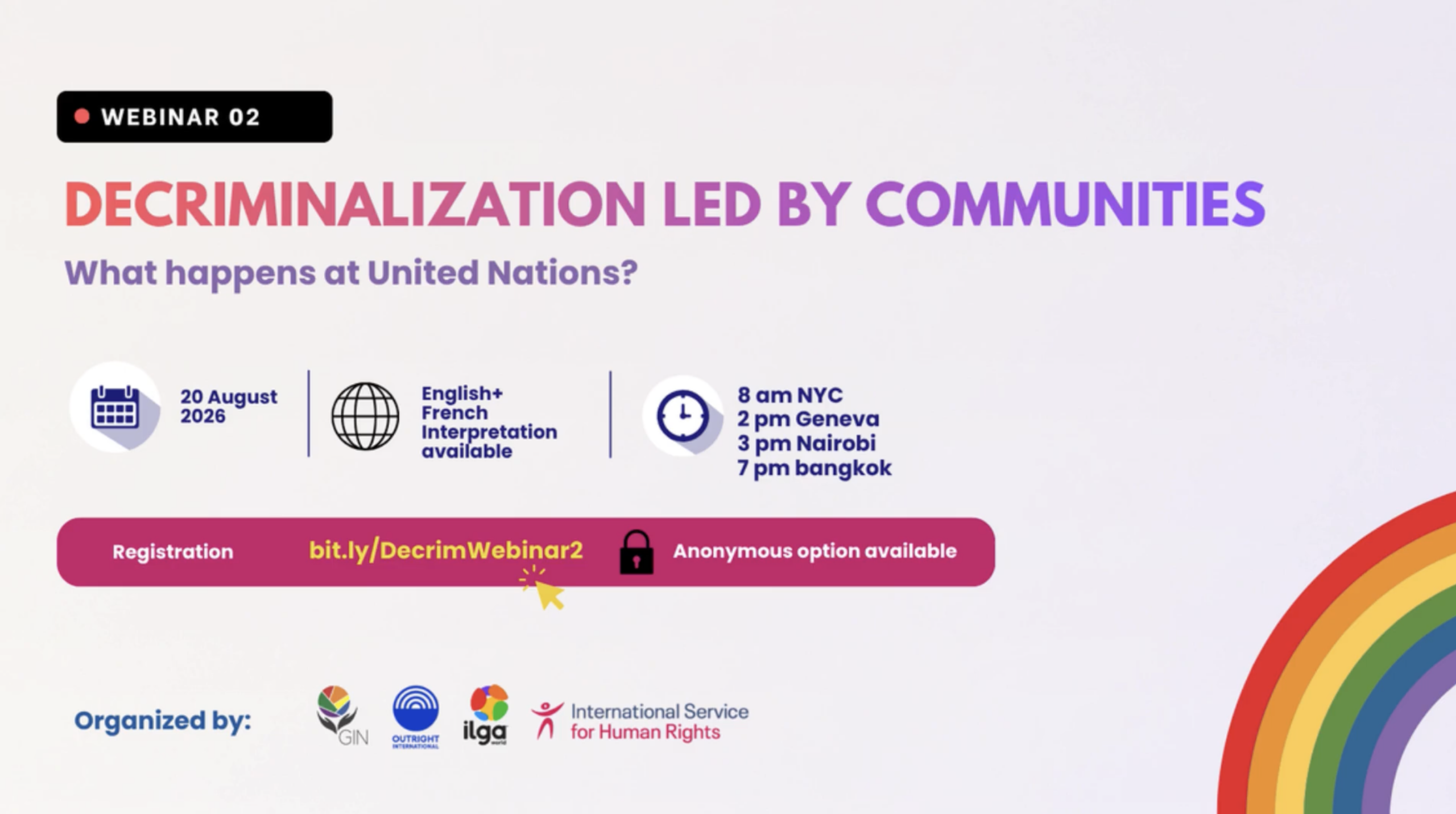
Decriminalisation Led by Communities: What Happens at the United Nations?
Decriminalisation is a human rights imperative. But what happens when a new international initiative is pursued without the communities most affected helping to shape the strategy?
Broadcast and recorded on 20 August, this was the second webinar in the Decriminalisation Led by Communities series, and it turned to a practical and timely question: What could happen at the United Nations?
Building on the first webinar, this discussion brought together human rights advocates, movement leaders and experts working across the UN and in criminalising contexts to examine what a new UN initiative on decriminalisation could mean in practice.
The webinar asked what meaningful consultation actually requires, particularly when communities face immediate concerns including security, displacement, access to healthcare, privacy, shrinking civic space and severe funding constraints. It also explores what States can do now through existing UN mechanisms, diplomatic engagement, technical assistance and flexible support for community-led strategies.
At the centre of the discussion was a shared objective: Decriminalisation. The question is not whether it should advance, but how, when and by whom, so that international action strengthens the communities working for change rather than creating additional risks.
Date and time:
20 August, 8h (EDT) / 14h (CEST)
Moderators
- Apurupa Vatsalya, GIN-SSOGIE
- Tess McEvoy, ISHR
Speakers and respondents
- John Fisher, Human Rights Watch
- Sandra Nafula, African Queer Youth Initiative (AQYI)
- Raymond Adadjisso, ISDAO
- Alex Müller, Human Rights Watch