
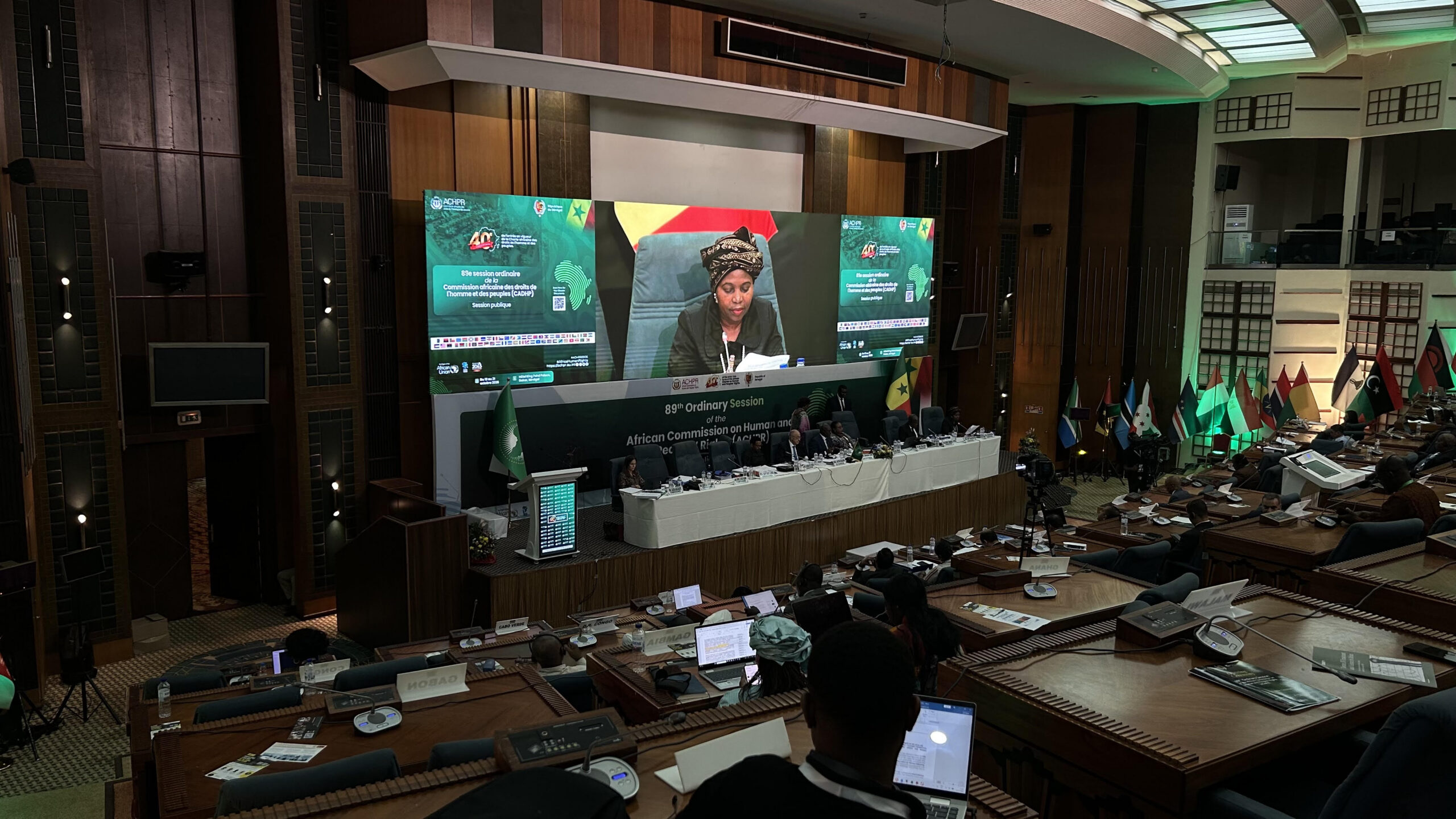
Plenary discussion at the ACHPR.
ACHPR89: Status update on treaty ratification, decision implementation, State reports
At its 89th session, the African Commission discussed an updated on the ratification of treaties, the implementation of decisions and recommendations, and the submission of reports by States Parties.
On 15 October the African Commission on Human and Peoples’ Rights (ACHPR) presented an update on the status of ratification of treaties under ACHPR monitoring, the implementation of ACHPR decisions and recommendations, and on the status of submission of State Party reports.
On ratification, the commission highlighted that Gambia and Ghana are the only two States to ratify the latest instrument of the African Union (AU), the Convention on Ending Violence Against Women and Girls, noting that Uganda and Zimbabwe are the States that ratified the most instruments (7 out of the 9).
No States have yet ratified the Protocol to the African Charter on Human and Peoples’ Rights Relating to the Specific Aspects of the Right to a Nationality and the Eradication of Statelessness in Africa – though Senegal has adopted a draft law to authorise its president to ratify it.
The Commission invited States to mobilise regional blocks to support ratification, to provide resources to their national human rights institutions, and to launch campaigns to incite political resolve to show how ratification can modernise national laws.
‘Ratification represents a binding commitment, implementation of these commitments varies significantly across the continent,’ Commissioner Janet Ramatoulie Sallah-Njie. The commissioner also expressed the importance of civil society organisations in pushing for ratification and expressed her hope for a ‘completely different story to tell’ by next session.
On implementation, Commissioner Marie Louise Abomo spoke about the historic achievement of launching in 2025 a compilation of all the decisions and recommendations of the ACHPR. The success of this initiative, Abomo said, depends on the effectiveness of the alliance between States, national human right institutions, and civil society.
The Commission also noted that only 14.81% of States are up to date on the submission of periodic reports. Commissioners expressed concern that the proportion of States with more than three overdue reports remain high, with as many as five States having not submitted any report. In addressing them, the Commission reiterated that they stand ready to provide any technical assistance they require to achieve their reporting efforts.