
Photo: ACHPR Youtube
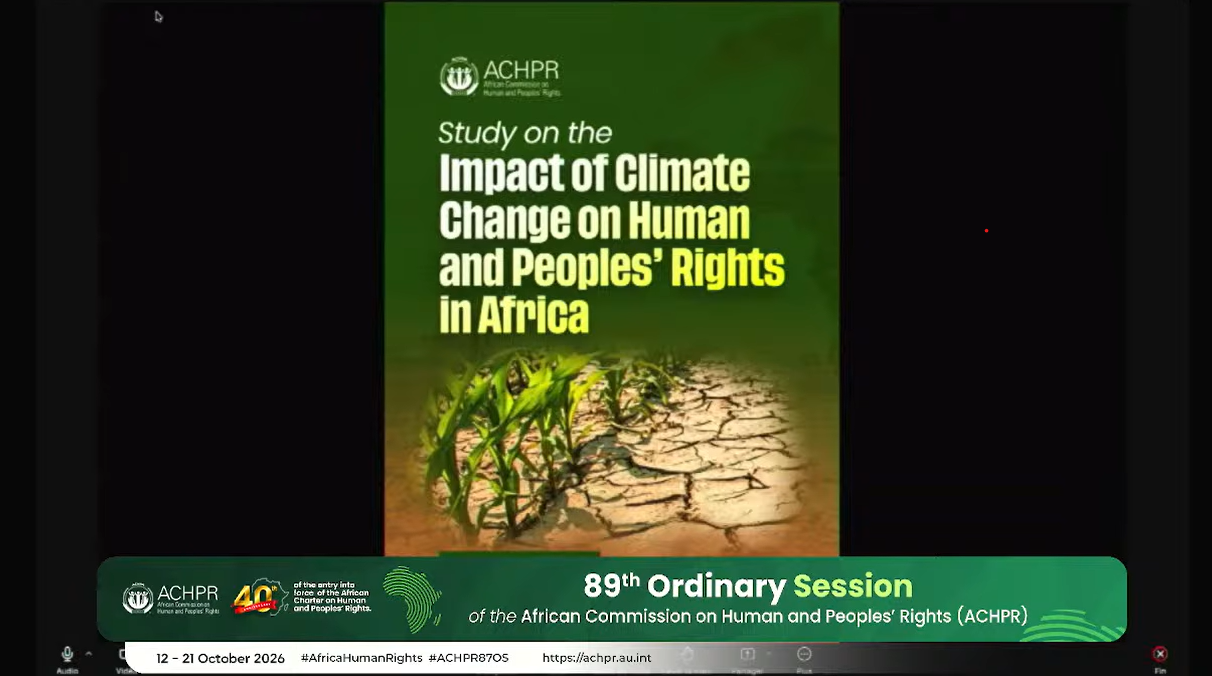
ACHPR89: Climate change is a human and peoples’ rights problem
At its 89 ordinary session, the African Commission for Human and People´s Rights launched a study presenting climate change as a threat to the enjoyment of Human and People´s Rights.
On October 14, 2026 the African Commission for Human and Peoples Rights held a panel to launch the Study on the Impact of Climate Change on Human and Peoples’ Rights in África (here). The Panel was composed of commissioner Solomon Ayele Dersso, focal point of the African Commission on the study; Professor Atia Waris, UN Independent Expert on foreign debt, other international financial obligations and human rights, a professor of Fiscal Law and Policy at the University of Nairobi, and the executive director of House of Fiscal Wisdom, a southern think tank headquartered in Nairobi; Rangarirai Chikova, member of panafrican lawyers union; and Ademola Oluborode Jegede, Professor at University of Venda.
Based on several meetings and over 30 written submissions, the study frames climate change as a human and peoples’ rights issue, not only as an environmental and developmental issue. As the Commission reports, Africa ´contributes relatively little global greenhouse gas emissions and yet faces some of the most severe climate risks, including draughts, heat waves, sea-level rise and water stress’ (ACHPR, Study on the Impact of Climate Change on Human and Peoples’ Rights in Africa (2026) Executive Summary). The study is divided into six sections which include the responsibilities of States Parties to the African Charter, the role of the African Commission, and some recommendations.
During the launch professor Attiya Waris spoke about the 2025 resolution 634 (Extractive industries and the elimination of all forms of exploitation in the international economic relations of Africa – ACHPR/Res.634 (LXXXIII) 2025). The video intervention focused mainly on the need to move forward with the implementation of the resolution. Waris explained that in the debates around the globe on taxation, the taxation of natural resources is being left out. With this in mind, member States from Africa have been pushing for an international tax convention, which should be finalized as a draft next year. The revenue avenues that may open up, could lead to changes to make sure that countries get a more equal share of the tax revenue being collected.
According to Rangarirai Chikova, two of the problems most pressing for the continent are debt distress and illicit financial flows. To Chikova resolution 634 succeeds in drawing together issues that had previously been treated in isolation such as the extractive sector, corruption, tax justice, public debt, illicit financial flows and human rights into a single implementation agenda. Where earlier approaches had been fragmented, the resolution brings development and finance into a coherent relationship with human rights.
Chikova argued that the priority now is to operationalise the resolution. This begins with understanding how the global financial architecture is structured, so that effective ways of dismantling it can be devised. As part of this process, he proposed that the Working Group on Extractive Industries, Environment and Human Rights (WGEI) receive reports from States on the steps they are taking to address debt distress, illicit financial flows, tax matters and related challenges.
Professor Ademola Oluborode Jegede spoke on the importance of the study and how it adds value to the conversation of the human rights impact of climate change. To Jegede the study is a golden document that will become a reference and an inspiration for those who work in the field.
Honorable commissioner Dersso spoke about the need to go beyond the study to provide a guideline to States particularly in relation to protecting vulnerable populations and strengthening accountability in relation to the impact of climate change in the enjoyment of human rights.
You can see the launching event here.