
ACHPR89: Confronting reprisals against environmental defenders in the African context
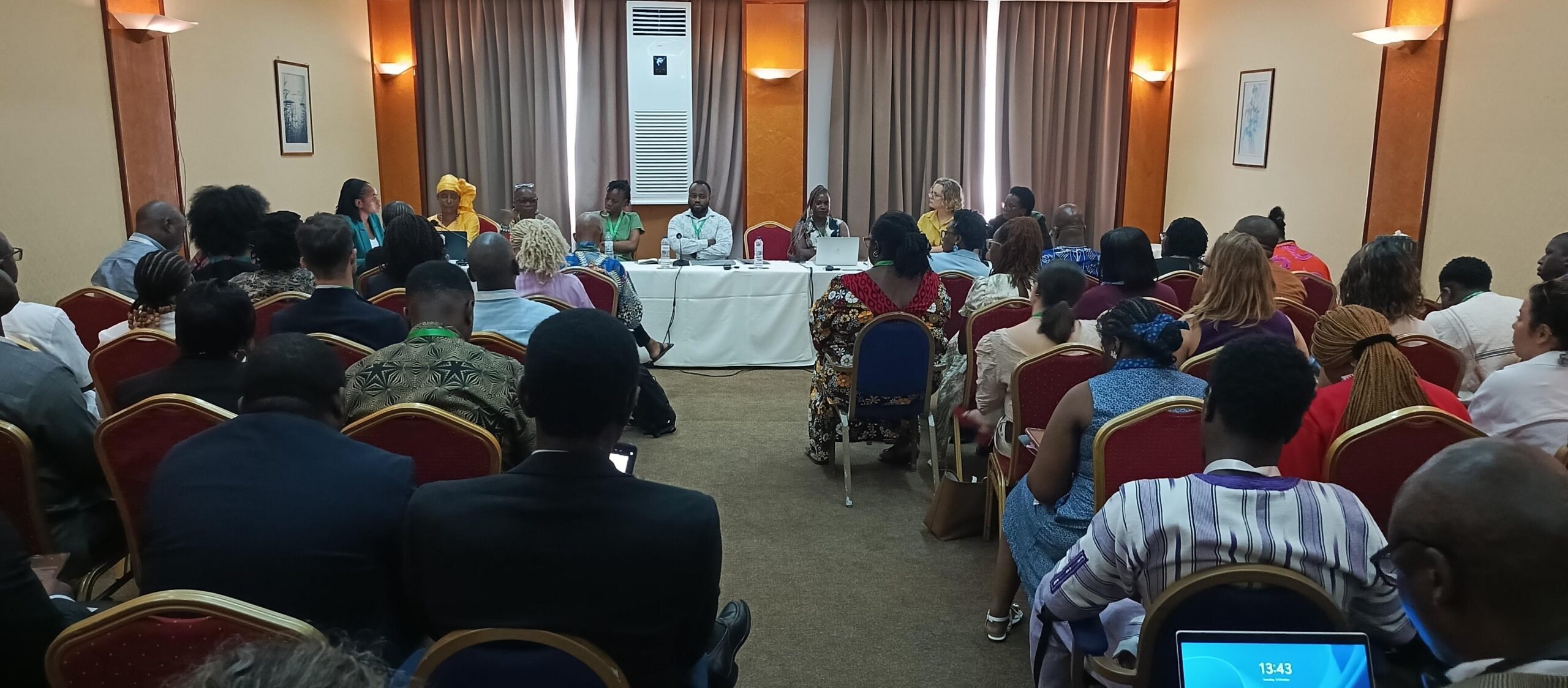
At the 89th ordinary session of the African Commission on Human and Peoples’ Rights, civil society organizations held a side event on confronting reprisals against environmental human rights defenders in África.
On 13 October, Zimbabwe Lawyers for Human Rights (ZLHR) in partnership with Civicus, Norway, ISHR, and the UN Human Rights Council’s Special Procedure section held a side event on the side lines of the African Commission for Human and Peoples Rights (ACHPR).
The event brought together environmental human rights defenders, lawyers, communities, women human rights defenders, journalists and human rights experts to strengthen collective responses to reprisals against environmental human right defenders across África.
There were seven panellists: Brighton Aryampa from Youth from Green Communities, Aua Balde from the UN Working Group on Enforced or Involuntary Disappearances (UN-WGEID), Prisca Dube from Zimbabwe (ZLHR), Priscilla Yagu Ciesay, from the Women association for Women and Victims Empowerment, Marystella A. Simiyu from the International Press Institute, Fiona Illiff from the ABA Center for Human Rights Justice Defenders África Programme, and Tawonga Chihana from Natural Justice. Azaria Kutsanzira from ZLHR was the moderator.
Human rights defenders working to protect the environment in Africa, such as journalists, lawyers, Indigenous Peoples, young activists and local communities, are increasingly being targeted because of their work on the African continent. Speakers cited surveillance, arbitrary arrests, legal proceedings, strategic lawsuits against public participation (or SLAPP suits) physical assaults, abductions and enforced disappearances as recurring examples of some of the experiences of reprisals.
‘The consequences go beyond the individual and send a message to the whole community. In this way, reprisals succeed in silencing the community,’ said Azaria Kutsanzira.
This experience was illustrated by Brighton Aryampa, who admitted that in the past he had been forced to scale back his environmental advocacy work due to an unjustified investigation.
Brighton Aryampa, an alumni ISHR’s flagship Human Rights Defender Advocacy Programme (HRDAP) training course, spoke from personal experience about defending environmental human rights, reprisals, and the passion and determination that drive his work despite the ongoing attacks.
Tawonga Chihana discussed the recurring and changing nature of reprisals, pointing out that the organisation Natural Justice has a specific fund for human rights defenders and through this fund they have observed two trends. First, the criminalisation of defenders, which takes various forms. The most common are arrests and the use of security and cyber laws to criminalise human rights defenders. In the case of arrests, these have intensified significantly in recent years, with at least 300 in recent years, the majority of them in East Africa. The second trend lay in threats and intimidation, including harassment on social media. Some emerging threats mentioned by Chihana were those directed against families and the use of SLAPPs.
‘In the past, human rights defenders simply wanted to leave and be resettled, but now we are seeing that, increasingly, they do not do so because they do not want to leave their families behind, as they believe that their attackers will continue to use their family members to get to them,’ stated Tawonga Chihana.
For women human rights defenders, the risks are specific and distinct. They frequently suffer gender-based violence, including digital sexual abuse, as well as attacks on their morality. Priscilla Yagu Ciesay, referred to the experiences of human rights defenders, including the fact that they often do not describe themselves as such, but rather as people who ‘speak out to survive’.
Furthermore, Marystella Simiyu referred to the lasting impact on mental, physical and economic well-being, and shared information from a follow-up study highlighting the role of the State and corporate actors as perpetrators of reprisals.
Aua Balde noted that the protection of human rights defenders is becoming increasingly important in the work of UN mandates beyond the UN-WGEID, and highlighted that the Working Group received its first report on this issue in 1980, demonstrating, as emphasised by Tawonga Chihana, that this was a recurring and constantly evolving issue. Balde also noted the lack of data, as well as the fact that the Working Group has received reports from very few African countries.
As a first step towards a solution, Balde proposed bridging the gap with rural communities in remote areas and stressed the need for an early warning system. She also reported that the UN-WGEID will soon issue a call for contributions to its next report.
In the discussion on the path to change, Fiona Illiff mentioned the call for fact-finding missions to places where there is a systemic use of reprisals, the recognition of environmental human rights defenders in the African Declaration on Human Rights Defenders, our collective responsibility to support people in gaining access to the commission, and the creation of a coordinated mechanism, such as the Escuazú mechanism within the inter-American system, which specifically recognises environmental human rights defenders and can convene when violations of their rights occur.
For Prisca Dube, change would involve three elements: national legislation, adequate judicial channels, such as a specialised court, and a participatory mechanism for reporting concerns and raising the alarm
Panellists also fielded questions on the application of free, prior and informed consent in remote and rural areas where literacy levels may be low, the carbon market and how it involves communities in the consultation process, reparations for people of African descent, and the place of people of African descent within Indigenous identity in Africa.
Download as PDF