
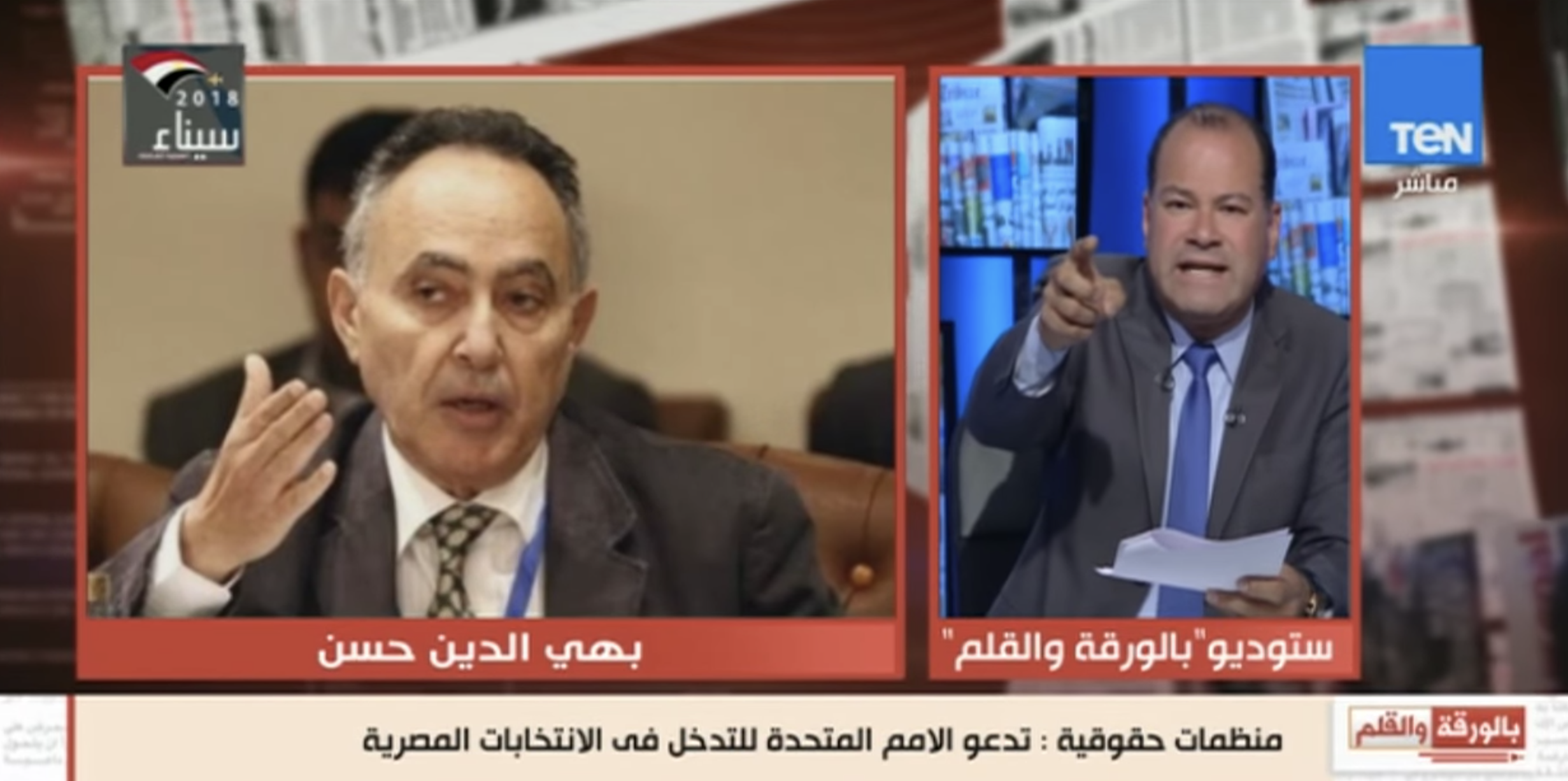
Egypt | Death threats against Egyptian human rights defender Bahey el-Din Hassan during TV show
More than twenty civil society organisations express their outrage at the latest death threats targeting the Director of the Cairo Institute for Human Rights Studies (CIHRS), Bahey el-Din Hassan, as a result of his human rights work on Egypt. European States and the US must take measures to protect Egyptian human rights defenders, both at home and abroad.
On 21 March 2018, in reaction to a memo sent by seven Egyptian independent human rights groups, including CIHRS, to the UN Secretary-General regarding the presidential elections in Egypt, a TV show host called on the Egyptian authorities to ‘deal with him [Bahey el-Din Hassan] the same way the Russian spy was dealt with,’ in reference to the nerve agent attack on Serjei Skripal in the United Kingdom. As a matter of international law, Egypt has an obligation to prevent, denounce and ensure accountability for threats against human rights defenders and ensure a safe and enabling environment for their work.
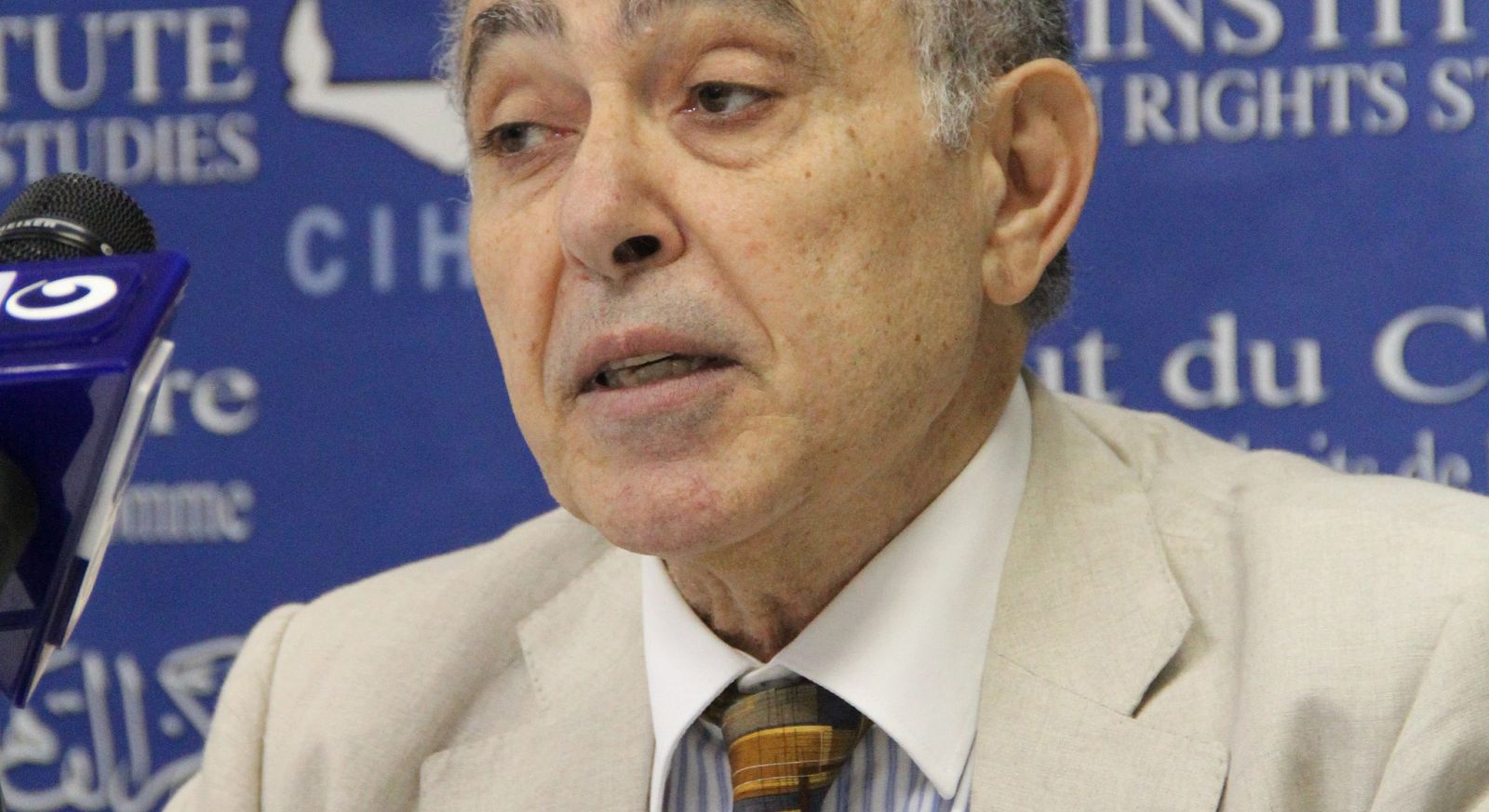
Given the gravity of these threats against Bahey el-Din Hassan, the undersigned organisations call on the European States and the United States to:
- take all necessary measures to protect Egyptian human rights defenders (HRDs), both at home and abroad. These should be able to engage with regional and international human rights systems without fear for their lives. Support for HRDs is a stated priority of EU, Swiss, Norwegian and US foreign policies, and lies at the heart of the 998 UN Declaration on HRDs, and
- urge the Egyptian authorities to carry out immediate, thorough and impartial investigations on these threats.
CIHRS is an indispensable and internationally recognised organisation, which has been a champion of human rights across the Middle East and North Africa for over 20 years. These events not only constitute the latest example of the harassment that Hassan has faced in the last years, which forced him into exile in 2014 following the election of President el-Sisi, but also represent an extremely worrying pattern of reprisals against HRDs in Egypt and many other parts of the world.
While pro-democracy activists in Egypt are being jailed for expressing their views on social media, these repeated and serious incitements on television calling to inflict physical harm against Bahey el-Din Hassan as well as other HRDs have not been adequately addressed by the Egyptian authorities. Amidst an unprecedented crackdown on human rights and civil society, together with a soon-to-be-implemented draconian NGO law, the Egyptian authorities appear determined to silence HRDs by any means, including instructing security services and State-sponsored media to intimidate them in Egypt and abroad.
Egyptian NGOs already witnessed this kind of harassment during a human rights workshop in Rome in May 2017, when two persons pretending to be Egyptian journalists intimidated and took pictures of the Egyptian participants. Subsequently, a smear campaign was launched in Egypt where Moustafa Bakry, a political figure closely associated to President Abdel Fattah el-Sisi and a member of the pro-Sisi parliamentary bloc, stated on his TV show that the Egyptian security agencies should “kidnap” Egyptian human rights defenders, including Bahey el-Din Hassan, from Europe and bring them back to Egypt “in coffins”, reminding them that this had been done in the past.
About Bahey el-Din Hassan
Bahey el-Din Hassan is a journalist. He has published articles in The New York Times and The Washington Post. He is a leading initiator of the human rights movement in Egypt and the Arab region, director and co-founder of CIHRS, and a member of the boards and advisory committees of several international human rights organisations, including the Euro Mediterranean Foundation of Support to Human Rights Defenders (EMHRF), Human Rights Watch (HRW) Middle East and North Africa Division, and the International Center for Transitional Justice (ICTJ). Hassan is also one of the founding members of EMHRF and EuroMed Rights.
Signatories:
1. Americans for Democracy and Human Rights in Bahrain (ADHRB)
2. Asian Forum For Human Rights and Development (FORUM-ASIA)
3. Asian Legal Resource Centre (ALRC)
4. Association for Human Rights in Ethiopia (AHRE)
5. Caucasus Civil Initiatives Center (CCIC)
6. Centro de Estudios Legales y Sociales (CELS) – Argentina
7. CIVICUS – World Alliance for Citizen Participation
8. Conectas
9. DefendDefenders (East and Horn of Africa Human Rights Defenders Project)
10. EuroMed Rights
11. FIDH, within the framework of the Observatory for the Protection of Human Rights Defenders
12. Front Line Defenders
13. Human Rights First
14. Human Rights Watch
15. International Service for Human Rights (ISHR)
16. JOINT Liga de ONGs em Mozambique
17. Karapatan (Philippines)
18. Odhikar (Bangladesh)
19. Project on Middle East Democracy (POMED)
20. Reporters Without Borders
21. Robert F. Kennedy Human Rights
22. World Organisation against Torture, within the framework of the Observatory for the Protection of Human Rights Defenders