
HRC40 | Burundi must end restrictions on defenders’ rights and activities
In a statement delivered during the interactive dialogue with the Commission of Inquiry on Burundi, ISHR reiterated serious concerns over the continuous deterioration of the situation of human rights defenders and the reluctance of the government to comply with its obligations.
In its statement, ISHR denounced the restrictive law on foreign non-governmental organisations adopted in January 2017. It highlighted unfair, discriminatory controls and constraints imposed on defenders in an endeavour to increase state interventionism and to impede them from documenting, reporting and advocating against human rights violations.
As defenders demand justice for all and base their work on the rule of law, it is essential that the justice system remains fair, independent and protective of all rights and fundamental freedoms. Therefore, in light of the breaches to due process observed in the trial of Germain Rukuki, whose sentence is still to be pronounced by the Appeal Court of Bujumbura, ISHR requested “the Council called on the Burundian government to guarantee the right to a fair trial to all defendants”.
Moreover, considering the violence and repression human rights defenders are victims of, the Human Rights Council plays a key role in bringing into the open the unacceptable violations committed and in monitoring the situation in Burundi. However, considering the decision of the Burundian government to close down the UN Human rights office in Burundi, ISHR called into question the commitment of the State to cooperate with UN human rights mechanisms. The downgrading of the National Human Rights Commission to B status is, equally, proof that the State has failed to provide the necessary conditions for national mechanisms to be efficient and independent.
For human rights to be protected in the country, Burundi must reconsider its position and collaborate with UN mechanisms. It is critical to ensuring that defenders can carry out their activities in a conducive and safe environment.
Read the full statement here.
Contact: Adelaïde Etong Kame, Africa advocacy consultant [email protected]
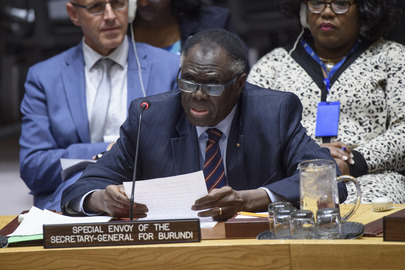
Photo credit: UN Photo