
Source: UNWebTV
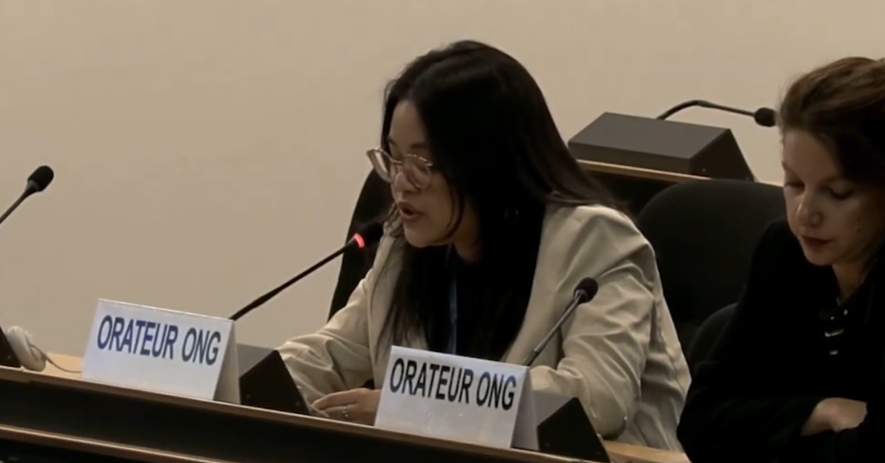
HRC62: Accountability for extrajudicial killings in the Philippines
ISHR and Families of Victims of Involuntary Disappearance (FIND) delivered a joint statement during a dialogue with the Special Rapporteur on extrajudicial, summary or arbitrary executions, calling for investigations, accountability, reparations to victims' families and non-recurrence in cases of extrajudicial killings in the Philippines.
In April 2026, 19 individuals, including human rights defenders, were killed in Toboso, Negros Occidental, in what the Philippine military claims to be an armed encounter.
However, combatants or not, it is clear that international humanitarian law was violated. Findings from the independent forensic investigation challenge the military’s narrative, pointing to inconsistencies with official claims, mishandling of the victims’ remains, and a failure to conduct a proper crime scene investigation in accordance with international standards.
We are equally alarmed that killings associated with the so-called ‘war on drugs’ have not ceased despite the end of former President Rodrigo Duterte’s administration.
As per the Dahas Project, there have been 1267 reported drug-related killings under the Marcos Jr. Administration – which began in June 2022 – as of June 7, 2026. This demonstrates that the structures, practices, and conditions that enabled these violations have yet to be fully dismantled.
Families of victims of killings under the war on drugs from the past administration to the present continue to face a culture of impunity as they are ceaselessly confronted by intimidation and barriers to effective remedies.
Perpetrators, including those who planned, ordered, enabled, or carried out unlawful killings, remain largely unaccountable. While we welcome the arrest of former President Duterte as an important step toward accountability, it is only one step. Many other perpetrators remain beyond the reach of justice.
Accountability must extend beyond a single individual and encompass all those responsible for grave human rights violations. Meaningful justice requires thorough investigations, independent prosecutions, effective witness protection, and comprehensive reparations for victims and their families.
We are grateful to the mandate in its support of the journey in pursuit of justice for extrajudicial killings under the war on drugs. We also welcome the continued engagement of the mandate on strengthening accountability and improving forensic investigation capacities in the Philippines.
Efforts to enhance forensic practices are essential to uncovering the truth, preserving evidence, and ensuring justice for victims and their families.
We urge the Human Rights Council to call on the Philippine government to conduct prompt, independent, and effective investigations into all extrajudicial killings; prosecute all those responsible, strengthen witness protection and safeguards for human rights defenders; end red-tagging and reprisals; and provide effective remedies and reparations to victims’ families.
It is also necessary for follow ups to be made on the killings of human rights defenders under the current administration.
We also call for continuous enhanced monitoring and reporting on the situation in the Philippines, while ensuring that technical cooperation is accompanied by concrete benchmarks on accountability, justice, and non-recurrence.
Watch the full statement below: