
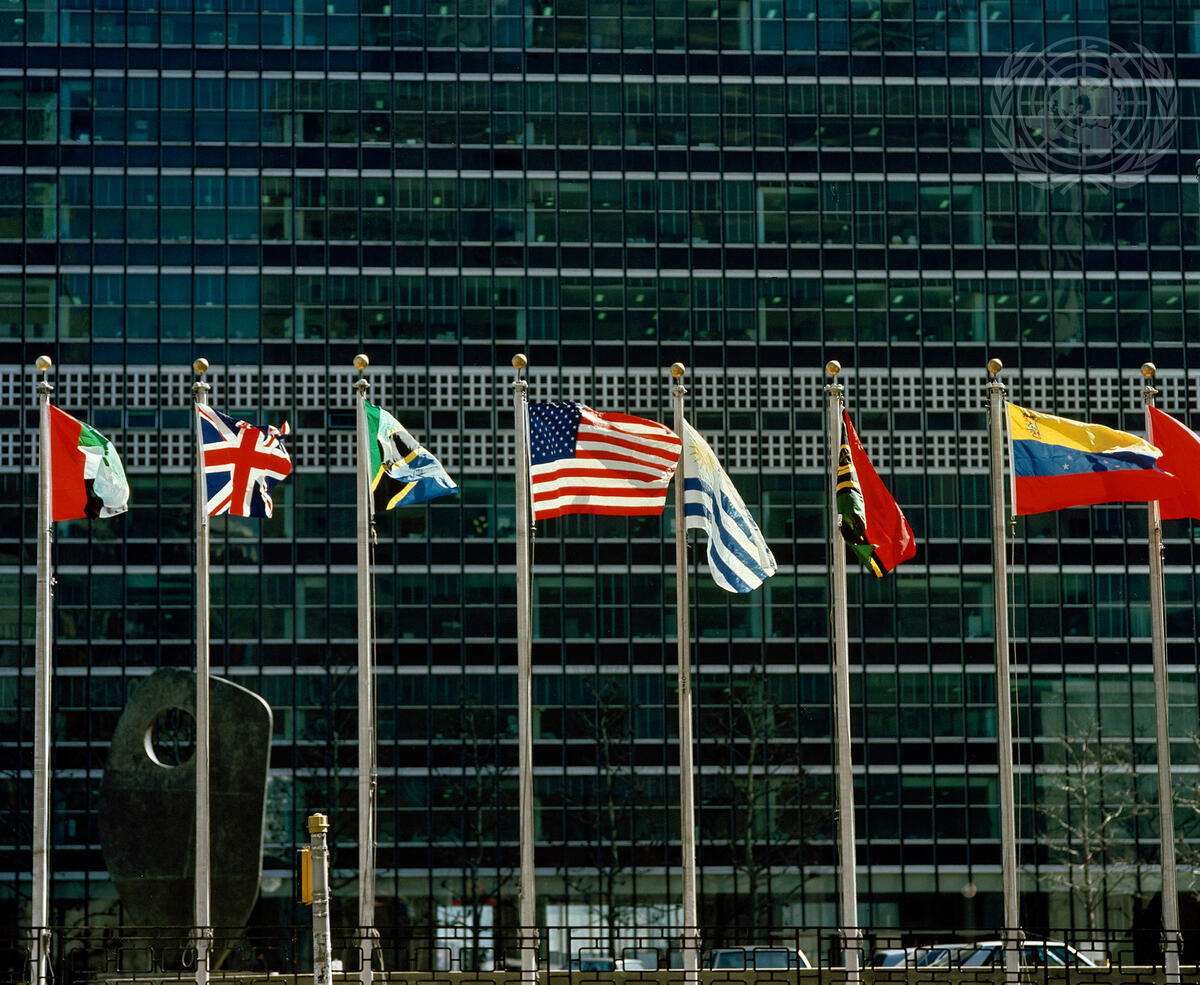
© UN Photo/Milton Grant
Joint civil society statement on outcomes of the UNGA81 Third Committee
10 civil society organisations that closely follow and engage with the General Assembly Third Committee have published a joint statement on the outcomes of this 81st session.
THEMATIC OUTCOMES
Statements
We welcome the joint statement on reprisals delivered by Ireland and Uruguay on behalf of 60 Member States and the European Union, condemning intimidation and reprisals against those engaging or seeking to engage with the UN. We particularly welcome its attention to transnational repression, the misuse of counter-terrorism, cybercrime and national security laws, the chilling effect on UN engagement, and attacks against independent UN mandate holders and personnel. We also welcome calls for a stronger, sustainably resourced UN-wide response, improved documentation and follow-up of longstanding cases, and renewed commitment to zero tolerance under the next Secretary-General. However, we are concerned that support for the statement has declined for the second consecutive year, despite the persistence and evolving nature of reprisals. We urge States to translate these commitments into concrete prevention, investigation, follow-up and accountability measures, and call on more States to join future statements.
Resolutions
The resolution on a moratorium on the use of the death penalty led by Mexico and Switzerland on behalf of an Inter-Regional Task Force of States was adopted by 133 votes in favour, 33 against and 16 abstentions. This marks incremental progress from two years ago, when the UNGA79 plenary had adopted a similar resolution by 130 votes in favour, 32 against and 22 abstentions. This year’s outcome indicates the strong support of more than two thirds of the UN membership on the need to suspend executions with a view to a full abolition of the death penalty. The resolution introduces important new language, including a reference to the Convention against Torture; concern at the links between discriminatory laws, violence against women and girls, and their increased risk of incarceration, including irreversible criminal penalties; a welcome for the Ninth World Congress Against the Death Penalty (France, 2026); and a call to ensure adequate access to qualified legal counsel, representation and interpretation at every stage of proceedings, without discrimination, including for minorities and foreign nationals. Notable positive changes in votes as compared to the plenary adoption two years ago included the move from abstention to vote in favour by Bahamas, Burundi, Comoros, Guinea, Lesotho, Nigeria and Zimbabwe while San Kitts and Nevis changed from voting against to abstention.
The biennial resolution on extrajudicial, summary or arbitrary executions (led by Finland on behalf of the Nordic States this year) was adopted with 131 votes in favor, 0 against, and 47 abstentions after the Third Committee rejected three amendments: one by Egypt on behalf of some members of the OIC to replace ‘sexual orientation or gender identity’ (SOGI) in a list of groups subject to killings with generic language, as well as two by the Russian Federation to remove references to the International Criminal Court (ICC). This year’s iteration was a technical rollover of its 2024 version, updating only references to reports over the past two years. We welcome the adoption of this resolution with the references to the ICC intact. We commend the Third Committee for preserving the long-standing reference to SOGI in the text: ‘sexual orientation’ has been included since 2002 and ‘gender identity’ since 2012. The resolution once again highlights the targeting of specific groups, including killings of persons belonging to minorities, Indigenous communities, human rights defenders, lawyers and journalists, as well as killings because of their SOGI.
The resolution on human rights defenders led by Norway was adopted by a vote of 167 States in favour, 4 against (Argentina, Belarus, Israel, United States) and 8 abstentions. This resolution strengthens protections for human rights defenders in the context of new and emerging technologies including against unlawful surveillance, technology-facilitated violence and repression across borders, while calling for greater accountability by States and technology companies. It also calls for strengthened national disaggregated data collection, analysis and reporting on the number of verified cases of killing, kidnapping, enforced disappearance, arbitrary detention, torture and other harmful acts against human rights advocates. We are disappointed that the resolution does not use the term ”transnational repression” or fully reflect the definition endorsed by more than 130 UN human rights experts in a joint statement in September 2026, given the profound and adverse consequences of transnational repression for human rights defenders.
The resolution right to privacy in the digital age led by Brazil and Germany was adopted by a vote of 176 States in favour, 3 against (Argentina, Israel and the United States), and 1 abstention. This resolution strengthens commitments to metadata and data protection, human rights standards in surveillance tech transfers, and the meaningful inclusion and participation of developing countries in digital privacy governance. It also introduces new measures for states to protect children’s personal data. We particularly welcome that the resolution explicitly addresses the human rights risks arising from AI, neurotechnology, and biometrics, alongside concerns over the interference by states with individuals’ right to privacy as part of repressive activities against individuals located abroad. We call for consensus adoption on this important resolution and to further strengthen development on encryption and other digital security tools, and accountability and enforcement gaps, particularly with regards to the spyware and commercial surveillance industry.
The resolution on the human rights treaty body system (led by Iceland) was a ‘technical rollover’ (A/C.3/81/L.28) and as such does not respond to the unprecedented crisis facing these mechanisms. Despite warnings from treaty body chairs that severe funding and liquidity constraints have resulted in cancelled sessions, postponed State reviews, growing backlogs and delays in examining individual complaints, the resolution remains substantively unchanged from its 2024 predecessor, with no new commitments to address the deteriorating situation. This is in contrast to the broad cross-regional support expressed during the session for adequate, predictable and sustainable funding, including in a joint statement delivered on behalf of 92 Member States and the European Union. We urge the Secretary-General and Member States to ensure that the full operational requirements of existing treaty mandates are reflected in UN budget proposals and adequately funded. We also call on all stakeholders, including treaty body members and OHCHR, to advance meaningful reforms that strengthen effectiveness without compromising independence or the quality of human rights scrutiny. Rights holders must not continue to bear the consequences of institutional inaction and chronic underfunding.
We welcome the consensus adoption of the biennial resolution on ‘Inclusive development for and with persons with disabilities’, co-facilitated by Tanzania and the Philippines. This year’s resolution mandates the UN Secretary-General to prepare and issue the flagship Disability and Development Report 2030, in meaningful consultation with persons with disabilities. We welcome that UN Member States have requested the creation of a publicly available online database in 2027, with baseline data on disability and development to be updated biennially. This is a clear response to the continuing lack of available, accessible, high-quality, and reliable disability data, which poses challenges to effectively monitoring the implementation of the 2030 Agenda for and with persons with disabilities. We appreciate that the resolution underscores the importance of the UN ensuring that disability-inclusive development continues to be accorded much needed implementation efforts, including by maintaining disabilities in the work of the UN Department of Economic and Social Affairs.
Gender related resolutions
Across all gender-related resolutions this session, we note a broad pattern of last-minute amendments, including attempts to caveat references to sexual and reproductive health, to impose a binary, sex-based definition of gender, and to subject an entire resolution to a blanket sovereignty caveat, that were never raised during negotiations. Such practices run counter to the transparency and good faith essential to intergovernmental negotiations and risk weakening long-standing human rights commitments. We are concerned by the growing trend of States seeking to impose their ideological agendas through unilateral amendments that have no precedent in these resolutions and are inconsistent with international human rights standards. We welcome that, as set out below, these amendments were rejected, or not acted upon, on both procedural grounds and as a matter of principle.
The Third Committee adopted by a vote of 175 in favor, 1 against, and 6 abstentions the biennial resolution on intensification of efforts to prevent and eliminate all forms of violence against women and girls (A/C.3/81/L.16/Rev.1). This year’s resolution, led by France and the Netherlands, focused on the theme “gender-related killings, including femicide”. Eleven amendments were presented: 1 by Egypt, 4 by the United States, and 6 by the Russian Federation. The amendment presented by Egypt proposed a new operative paragraph that would have subjected the entire resolution to a blanket sovereignty caveat, allowing States to invoke national laws, development priorities, and religious and cultural values to disregard, or selectively implement, any of its commitments. This paragraph had never been raised during the 18 hours of extensive negotiations, and its adoption would have undermined the resolution in its entirety. In response, France introduced a “no action” motion on the amendment, which was adopted by a vote of 68 in favor, 54 against, and 30 abstentions. The day before the adoption, several civil society organizations published a joint statement alerting Member States to the precedent the proposed sovereignty amendment would set and urging its rejection. The 10 remaining amendments presented by the United States and the Russian Federation were voted on and rejected. We welcome the overwhelming support for the resolution, its overall focus on root drivers of gender-based killings, including femicide, and a reference to “reproductive violence” for the first time in a UNGA resolution. We are however concerned by numerous attempts, in negotiations and through amendments, to weaken language on sexual and reproductive health, multiple and intersecting forms of discrimination, diversity, and State obligations under international human rights law.
The Third Committee adopted by consensus a technical update to the intensification of efforts to end obstetric fistula resolution. Led by Senegal (on behalf of the African Group), the resolution included minor updates, including strengthening cross-border collaboration and encouraging the World Health Organization’s support for improving the quality of clinical data, advancing research and strengthening the evidence base for the prevention and treatment of fistula. Although the resolution was only a technical update that did not involve significant substance or raise contentious issues, we were disappointed that the US nevertheless proposed amendments seeking to caveat references to sexual and reproductive health. These amendments went well beyond the limited scope of the technical update, departing from the approach taken by the lead negotiator, and sought to introduce language without precedent in the resolution. Mali, on behalf of the African Group, put forward a “no action” motion to prevent a vote on the US amendments, citing their departure from the agreed scope of the update and the lack of opportunity to negotiate the issues they raised. While we welcome the rejection of these amendments, we are particularly concerned by the attempt to caveat references to sexual and reproductive health. Such amendments risk undermining more than a decade of commitments made to prevent, address and eliminate obstetric fistula.
The Third Committee adopted by consensus a technical rollover of the resolution intensifying global efforts for the elimination of female genital mutilation (A/C.3/81/L.19). Burkina Faso led the process on behalf of the African Group, keeping the text closed to substantive changes and limiting the process to minor technical updates. Despite this approach, we were disappointed that the US proposed amendments to caveat sexual and reproductive health. As with the resolution on Obstetric Fistula, the African Group put forward a “no action” motion to prevent a vote on the US amendments. Mali, on behalf of the African Group, explained that the motion was based on the fact that the amendments were presented after the deadline and undermined the clear and transparent negotiation process established by Burkina Faso and agreed to by all other delegations. The motion was successful, and the resolution was adopted by consensus. While we welcome this outcome, we remain concerned with attempts to weaken the resolution by caveating references to sexual and reproductive health in a resolution addressing a practice whose survivors require access to sexual and reproductive health services. We call on Member States to uphold their commitments and obligations under international law to ensure access to these essential services without restrictions or qualifications that undermine the rights of women and girls affected by FGM.
The Third Committee adopted by consensus the resolution on trafficking in women and girls (A/C.3/81/L.15/Rev.1). The resolution was facilitated by the Philippines, who opened select paragraphs to update the text on the impact of digital and emerging technologies on trafficking in women and girls, based on the Secretary-General’s annual report. Despite this limited scope, several delegations sought to reopen closed paragraphs, including to introduce regressive language on gender and surrogacy. At adoption, the United States presented amendments to caveat language on, among other things, sexual and reproductive health. The Philippines successfully brought a “no action” motion, citing the amendments’ departure from the agreed scope of negotiations. A subsequent Russian amendment seeking to delete previously agreed language on gender-related crimes under the Rome Statute was also rejected by a vote of 82 in favor (of retaining the paragraph), 19 against, and 49 abstentions. While we appreciate the adoption of this resolution by consensus and the preservation of important language related to sexual and reproductive health and diversity, we are concerned by the growing trend of last-minute amendments to reopen previously agreed language and introduce proposals not raised during negotiations.
The Third Committee adopted a technical update on the girl child resolution (A/C.3/81/L.17). South Africa, on behalf of the Southern African Development Community (SADC), led the negotiation process and established that no paragraph would be opened for substantive negotiations. This approach was followed by all Member States except the United States. The United States proposed several regressive amendments despite the agreement among Member States, including to sexual and reproductive health; to add a reference to “risk avoidance” in the context of sexual and reproductive health education, a broad term meant to disguise an abstinence-focused approach to such education; and to remove and weaken gender language in general. We were pleased that each of these amendments were defeated by wide margins and that the technical update was adopted by consensus.
The Third Committee adopted a technical update on the aging resolution (A/C.3/81/L.9). Uruguay, on behalf of the Group of 77 and China, led the negotiation process and no paragraph was opened for substantive negotiations.
OUTCOMES ON COUNTRY SITUATIONS
Statements
We welcome the joint statement on the situation of women and girls in Afghanistan, delivered by Spain on behalf of 55 States and the European Union during the interactive dialogue with the Special Rapporteur on the situation of human rights in Afghanistan. The statement expresses grave concerns over the Taliban’s institutionalised and systematic gender-based oppression, noting that it has been characterised as gender apartheid by the UN Secretary-General and the Special Rapporteur, and that these violations and abuses may amount to Crimes Against Humanity. The statement also rejects any normalisation of Taliban rule at the expense of women’s rights, and expresses support for all legal and international efforts to hold those responsible to account. We urge States to follow through on this commitment, including by ensuring that the Independent Investigative Mechanism for Afghanistan is fully resourced in the ongoing Fifth Committee negotiations.
Resolutions
The Third Committee adopted by consensus the resolution Supporting human rights in the Syrian Arab Republic (A/C.3/81/L.41). The resolution received support from the Syrian Arab Republic itself, who called on all States to join consensus in the resolution. This marks the second resolution adopted in the Third Committee on Syria since the fall of the Assad government and acknowledges the progress made by the Syrian government, the importance of continued progress, while also emphasizing the need for a transparent transitional justice and accountability processes which are Syria-led and Syrian-owned and expresses support for the role of for civil society, human rights defenders, victims, survivors and their families in these processes. We appreciate strengthened language on the judiciary, the importance of fair elections, the participation and representation of women in political and peacebuilding processes, and ensuring women’s equal access to education. However, we note that some of the paragraphs that detailed specific human rights violations, such as torture, enforced disappearances, and war crimes prior to and after 2024 were streamlined in the text, reduced to a broad reference to human rights violations rather than explicitly stating the examples of the violations as before. We note that streamlining these paragraphs makes it difficult for victims and survivors of these human rights abuses to demand accountability and justice for these violations. We also note that the language on the mandates of the International, Impartial, and Independent Mechanism (IIIM) and the International Institution on Missing Persons (IIMP) encouraging the Syrian government to strengthen their joint cooperation with these institutions falls short of explicitly calling on transitional authorities to formally authorize them to start operating in Syria.
The resolution on the situation of human rights in the Islamic Republic of Iran, facilitated by Canada, was adopted by 76 votes in favor, 27 against and 64 abstentions. It expresses serious concern over widespread human rights violations in Iran, including those targeting women, religious and ethnic minorities, and other vulnerable groups. It also recognizes the harms caused by the armed conflict in Iran and the broader region, including the loss of life, displacement and destruction of civilian objects, which continues to have serious implications for the enjoyment of human rights. It condemns the extensive application of the death penalty and the increasing number of executions as a tool of political repression and to silence dissidents, the targeted repression of women and girls both online and offline, and the lack of accountability and justice measures for human rights violations perpetrated against them, the widespread restrictions on the rights to freedom of peaceful assembly and association and freedom of opinion and expression, both online and offline, which unduly restrict civic space, the use of the death penalty, arbitrary detention, excessive force, torture, gender-based violence in custody, and harassment of human rights defenders in connection with protests, noting that these violations occur with impunity, and the unprecedented scale of violence carried out by the Government of the Islamic Republic of Iran in response to the protests that began on 28 December 2025, injuries and mass killing of protesters including children, in January 2026.
The resolution on the human rights situation in the Democratic People’s Republic of Korea (DPRK) was adopted by a vote called by the United States breaking the Third Committee’s decade-long consensus on this resolution due to the United States’ opposition to the long-agreed reference to the International Criminal Court (ICC), based on recommendations of the Commission of Inquiry. The US abstention in the vote is an unfortunate reflection of the weakening US commitment to human rights under the current administration and its assault on the ICC and international accountability. The resolution condemns the North Korean government’s ongoing systematic, widespread and gross human rights violations and stresses the link between its repressive practices, human rights abuses, and international peace and security. It highlights the connection between human rights violations and the diversion of North Korea’s resources to pursue nuclear weapons. The resolution also calls for North Korea to end acts of transnational repression. It also reminds members of the Commission of Inquiry’s recommendation that the Security Council refer North Korea to the ICC prosecutor.
The Third Committee again adopted a joint EU/OIC-drafted resolution on the situation of human rights of Rohingya Muslims and other minorities in Myanmar. The United States, which has previously supported and co-sponsored the resolution, abstained due to the current administration’s opposition to references to the International Criminal Court (ICC) that have long been part of the consensus text. The US decision to abstain on what was a text previously adopted by consensus is another attempt by the US government to advance its assault on the ICC and international accountability. The resolution reiterates UN members’ strong condemnation of human rights abuses against Rohingya Muslims and other minorities in Myanmar. It also expresses deep concern over the Myanmar junta’s decision to hold elections that were neither free nor fair.Even though the resolution this year was strengthened, we are disappointed that it failed to address the flow of weapons and other technology to the junta, in line with Human Rights Council and General Assembly resolutions. The resolution refers to the International Court of Justice but was negotiated and adopted before its landmark 19 November 2026 ruling that Myanmar was responsible for genocide against the Rohingya, a long-awaited recognition of the suffering the Rohingya have endured.
The Third Committee again adopted a resolution on the situation of human rights in the temporarily occupied territories of Ukraine with 77 votes in favor, 17 votes against, and 73 abstentions. The resolution condemns serious violations by Russian forces including the widespread unlawful deportation of children and that of unlawful transfer of children from temporarily occupied areas of Ukraine to Russia; intensified militarization, indoctrination and forced assimilation of Ukrainian children and youths; persecution and discrimination against religious minorities; and extrajudicial killings, torture, and arbitrary detention of Ukrainians, including prisoners of war and civilian detainees.
International Criminal Court
The International Criminal Court was again the target of attacks during this session with the US, Israel and Russia at the forefront of these attacks. The Russian Federation introduced amendments to delete references to the Rome Statute of the International Criminal Court (ICC) in resolutions regarding Trafficking in Women and Girls and Extrajudicial, Summary or Arbitrary Executions. While both amendments were rejected, we regret that countries such as Argentina, Guinea and Sierra Leone, parties to the Rome Statute, voted in favour of the amendment. When the country resolutions were considered, the US moved to call for a vote on resolutions traditionally adopted by consensus, mainly due to references to the ICC in the text. The US and Israel made harsh negative remarks against the Court each time they took the floor. We call on all State Parties to the Rome Statute to push back against these unwarranted attacks and protect the integrity and independence of the Court.
Special Procedures
This session, several independent experts faced severe attacks in the Third Committee, including attacks of a personal nature. We commend the States that spoke out against these attacks, including in the cross-regional joint statement on reprisals delivered by Ireland on behalf of some 60 states and the European Union, which declared the targeting of independent mandate holders “completely unacceptable”, as well as Croatia, Spain, Brazil and the European Union. These attacks threaten not only the safety of individuals concerned but the integrity of the UN human rights system as a whole. We call on all States to publicly and unequivocally reject attacks, sanctions, disinformation campaigns and reprisals against all mandate holders, without exception. We urge them to defend the independence and autonomy of the special procedures, engage with their evidence-based findings, and address disagreement through substantive dialogue rather than intimidation.
Civil society access
We regret that severe delays in issuing groundspasses by the UN NGO Branch in October prevented representatives of several accredited NGOs from accessing the UN premises and participating and contributing to the work of the Third Committee and the UN more broadly. This included the in-person civil society briefing convened by the Chair of the Third Committee at the beginning of the session.
While we appreciate that the iGov portal was mostly updated with information regarding meetings of the Committee, civil society faced challenges in accessing updated draft proposals in the days before adoption, severely impeding our ability to access information and contribute effectively. It was especially difficult to access resolutions even one or two days after draft proposals were adopted. Despite these barriers, we underscore the important contributions of NGO representatives that participated as observers across Third Committee meetings throughout this session. 17 civil society organisations delivered an important joint statement at the beginning of the session calling for meaningful civil society participation, improved quality, accessibility and effectiveness of Third Committee’s human rights work.
We would also like to extend our sincere appreciation to the Chair of the Third Committee Ambassador James Larsen for convening a second meeting with civil society this session due to the barriers faced in participation. The meeting was convened by the Chair in acknowledgment of the inability of several civil society organisations to participate in the first meeting, due to civil society receiving delayed communication regarding the meeting. This unprecedented meeting provided a deeply appreciated opportunity to engage in dialogue on the ongoing negotiations and processes at the Third Committee. We urge timely communication and updates from the UN to ensure effective participation and contribution by civil society.
Signatories
Access Now
Amnesty International
Center for Reproductive Rights
CIVICUS
Coalition for the UN We Need
Human Rights Watch
International Disability Alliance
International Service for Human Rights
Outright International
Together 2030 Stakeholder Group