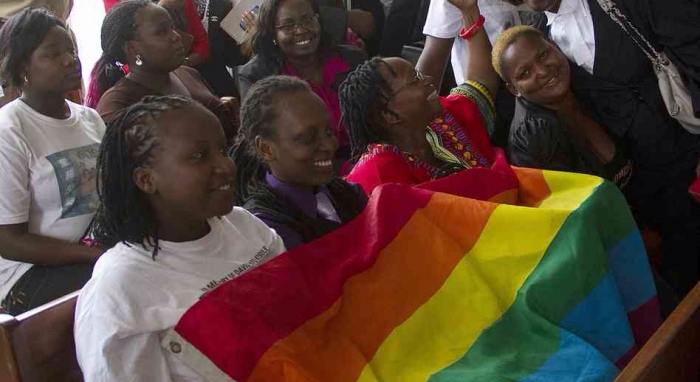
(Geneva) – The Government of Uganda should respond to a landmark Constitutional Court decision to strike down the draconian Anti-Homosexuality Act by legislating to prohibit discrimination on the grounds of sexual orientation or gender identity and to protect human rights defenders who advocate for LGBTI rights, the International Service for Human Rights said today.
The deeply problematic law criminalised same-sex relations with sentences of up to life in prison, prohibited advocacy in relation to LGBTI rights, and was associated with an increase in violence and discrimination against LGBTI persons. ISHR had previously condemned the bill when it was signed into law earlier this year by President Yoweri Museveni.
‘We applaud the brave human rights defenders in Uganda who fought this case amidst threats of arrest and mob violence’, said Pooja Patel of ISHR.
The Court ruled on procedural grounds, stating that the lack of quorum in Parliament on the day the Act was adopted had violated legislative process.
‘The Court’s decision was not based on the substance of the law. The law falls far short of international human rights standards, showing complete disregard for individual’s rights to freedom of expression, assembly and association which are fundamental pillars of a safe, secure and democratic society’, stressed Phil Lynch, Director of ISHR.
‘While LGBTI rights defenders may no longer face the immediate risks of arrest and disproportionate sentencing under this law, the Court did not go far enough to provide for a safe space for defenders to undertake their vital work,’ said Ms Patel. ‘We are concerned that human rights defenders working on the rights of LGBTI people in Uganda will continue to be targeted with intimidation and violence’.
ISHR urges the government of Uganda to recognise that the work of human rights defenders is vital to developing an inclusive, healthy and prosperous society, and stressed that targeting human rights defenders for their work constitutes a step backwards for democracy and development in Uganda.