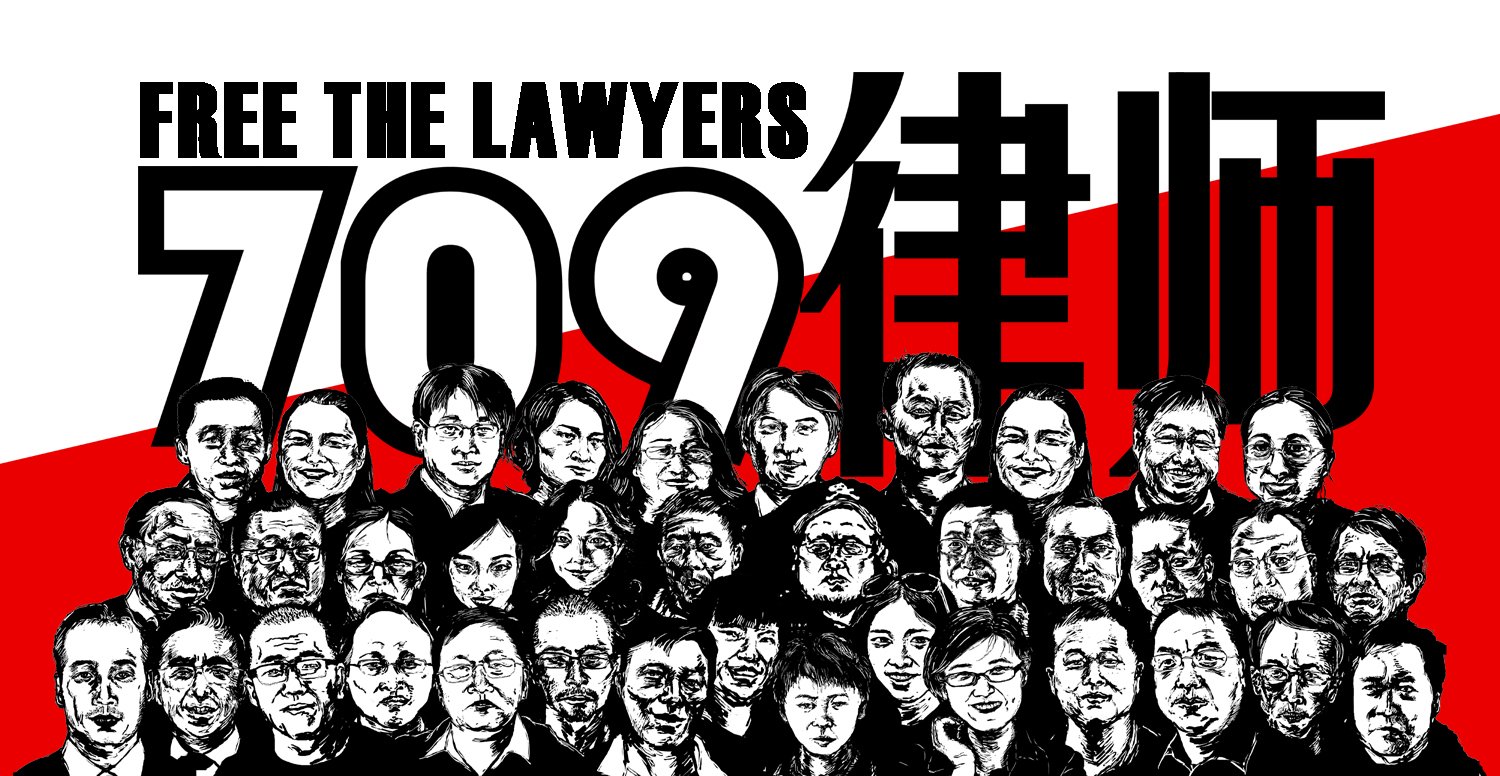
Today, 9 July 2025, marks ten years since Chinese authorities launched an unprecedented, nationwide crackdown against human rights lawyers and legal activists. More than 300 were interrogated, held incommunicado, subjected to torture and other ill-treatment, and sentenced to lengthy prison terms in what became known as the ‘709 Crackdown’.
Global solidarity on the tenth anniversary
ISHR joined more than 30 NGOs in a joint statement to commemorate the crackdown, echoing the call of 50 UN Special Procedures experts since June 2020 to establish a dedicated mechanism to monitor and report on the human rights situation in China.
The statement urges governments to speak out in support of detained human rights lawyers, to raise their cases by name, to increase support to them and their families, and use every opportunity to highlight the situation of Chinese human rights defenders, including through joint statements, briefings and side events.
The ‘709 Crackdown’ did not end with lawyers: it became a blueprint for silencing dissent across China. Today, other human rights defenders, feminist and LGBT activists, Uyghurs, Tibetans, and Hongkongers face the same repression, despite repeated UN calls for justice. Governments must push for the release of those still imprisoned and demand accountability for ongoing violations.
Lee Chung Lun, ISHR programme officer
Civil society organisations across the world are marking the tenth anniversary of the ‘709 Crackdown’ through events and advocacy initiatives from Washington, D.C. to Geneva, and Tokyo. These efforts aim to ensure that the lawyers are not forgotten, to highlight their central role in advancing human rights and the rule of law in China, and to reaffirm a shared commitment to accountability and solidarity.
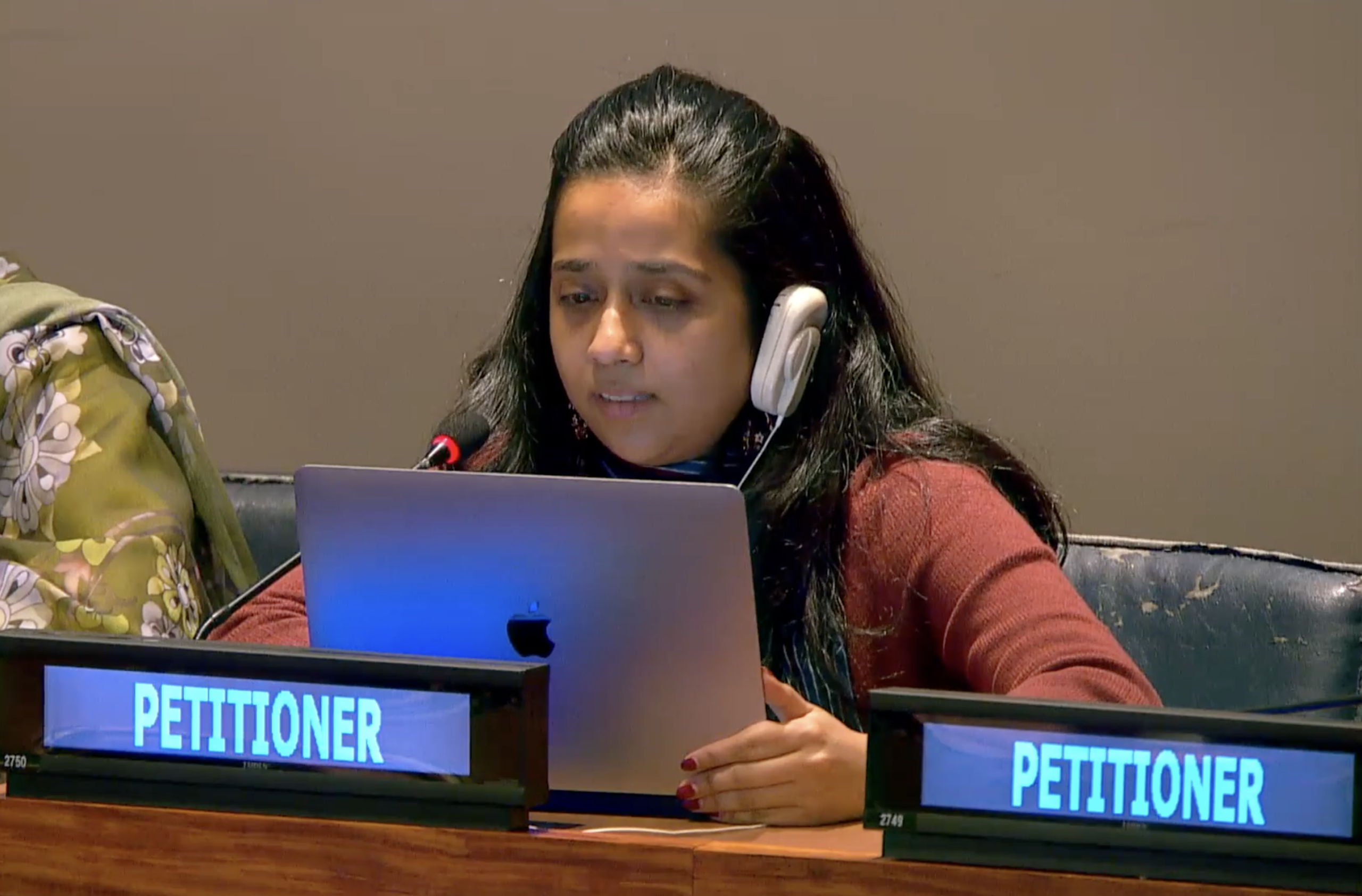
At the 59th session of the Human Rights Council, ISHR joined 22 NGOs in delivering a joint oral statement marking the anniversary during the Interactive Dialogue with the Special Rapporteur on the independence of judges and lawyers. The statement was delivered by Sophie Luo, wife of imprisoned Chinese human rights lawyer Ding Jiaxi.
Watch the video of the statement below:
Defending rights in the face of repression
Over the past decade, Chinese authorities have frequently used sweeping and vague charges such as ‘inciting subversion of State power’ or ‘picking quarrels and provoking trouble’ against human rights lawyers and dissidents. Secret detention under Residential Surveillance at a Designated Location (RSDL), which UN experts have deemed to amount to enforced disappearance, remains a key tool of repression. Under RSDL, detainees can be held for up to six months without access to legal counsel or family and subjected to torture or ill-treatment.
Closed-door trials, denial of access to lawyers of one’s choosing, and verdicts withheld from families remain systematic in practice. Family members of human rights lawyers, including spouses, children and elderly parents, continue to face collective punishment through surveillance, travel bans, and restrictions on employment and education.
As a human rights lawyer, I insisted on speaking truth to power, while seeking to advance freedom of religion and belief, freedom of expression, human dignity, social justice, and peace and democracy.
Human rights lawyer detained in the ‘709 Crackdown’
Despite relentless repression, Chinese human rights lawyers have shown remarkable resilience. They play a fundamental role in defending the rights of the most marginalised, including Tibetans, Christians, feminists, LGBT advocates and victims of public health crises, while promoting broader access to justice.
These lawyers have raised public awareness of legal protections, defended victims in court, challenged unlawful government practices, and contributed to critical reforms such as the abolition of ‘re-education through labour’. Many continued their work in upholding the human rights enshrined in China’s Constitution and international treaties that China has ratified.
Their dedication has come at great personal cost, but it has also sparked national and international discussion about the rule of law and accountability in China.
Imprisoned by not forgotten
These patterns of repression are reflected in the cases of lawyers and legal professionals who remain unjustly detained today. Imprisoned but not forgotten, their treatment has been extensively documented by UN Special Procedures:
- Xu Zhiyong and Ding Jiaxi, leading figures of the New Citizens’ Movement, were sentenced to 14 and 12 years respectively for ‘subversion of State power’ after attending a private gathering of lawyers. Both were detained under RSDL and subjected to torture. Their work sought to empower citizens, combat corruption, and promote equal access to education.
- Yu Wensheng, recipient of the 2021 Martin Ennals Award, is serving a three-year sentence for ‘inciting subversion of State power’. Previously jailed for defending fellow 709 lawyers, Yu was detained again in April 2024.
- Xie Yang, previously detained and convicted during the ‘709 Crackdown’, has been in pre-trial detention since January 2022. He is accused of ‘inciting subversion of State power’.
- Lu Siwei, who continued advocacy after the ‘709 Crackdown’, was forcibly returned from Laos and sentenced to 11 months for ‘illegally crossing the border’. He had previously been banned from leaving China to reunite with his family.
Together, they show resilience that continues to inspire civil society in China and beyond.
Ongoing UN condemnation
Over the past decade, UN bodies have consistently denounced the targeting of lawyers in China. In its 2015 Concluding Observations, the Committee Against Torture called on China to ‘stop sanctioning lawyers for actions taken in accordance with recognised professional duties’ and to ‘ensure the prompt, thorough and impartial investigation of all the human rights violations perpetrated against lawyers’.
Five years after the ‘709 Crackdown’, a group of UN Special Procedures experts expressed ‘shock’ in a 2020 joint statement on the continued persecution of human rights lawyers. In a February 2024 communication, the UN Special Rapporteur on the independence of judges and lawyers denounced disbarments, disappearances, and ideological control over the legal profession, urging China to revise regulations affecting lawyers and law firms.
Despite years of international outcry, no Chinese authorities have been held accountable for these grave violations. Chinese human rights lawyers have stood firm in the face of immense pressure to defend justice and the rule of law. Their courage must be met with sustained international support.
ISHR reiterates its calls for all States to stand with Chinese human rights lawyers and urge China to:
- End its crackdown on human rights lawyers and defenders
- Immediately and unconditionally release all those arbitrarily detained
- Amend national security legislation, the Criminal Law, the Criminal Procedure Law, the Administrative Measures for the Practice of Law by Lawyers and the Measures on the Administration of Law Firms to bring them into full compliance with international human rights standards
- Meaningfully cooperate with United Nations human rights mechanisms in implementing their recommendations
- End and ensure accountability for acts of intimidation and reprisal against those cooperating with the UN human rights mechanisms
Author
Lee Chung Lun
Lee Chung Lun is a programme officer at ISHR. He supports Chinese, Uyghur, Tibetan, and Hong Kong human rights defenders in their advocacy at the United Nations.
Article also available in