
ACHPR89: Mauritius presents its 11th Periodic Report to the African Commission on Human and Peoples’ Rights
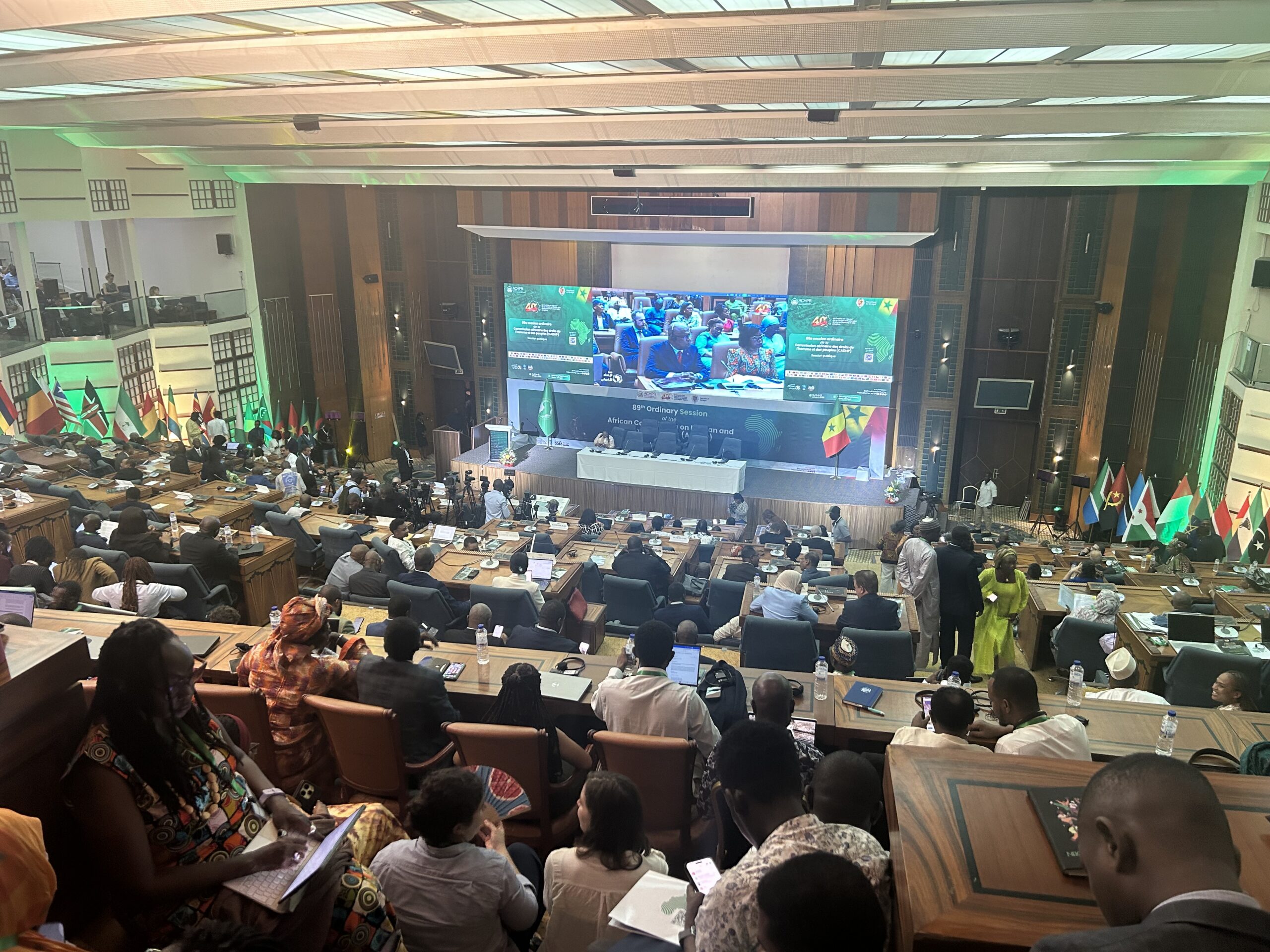
On 15 October, Mauritius presented its 11th periodic report at the 89th ordinary session of the African Commission on Human and Peoples’ Rights (ACHPR). The commissioners, drawing on contributions from civil society organisations, including ISHR and DIS MOI, raised questions regarding human rights defenders including journalists, gender justice, protection against discrimination, and more.
On 15 October, Mauritius presented its 11th Periodic Report at the 89th ordinary session of the African Commission on Human and Peoples’ Rights (ACHPR). The State delegation acknowledged that the report had been due for consideration at the Commission’s previous session but could not be presented due to circumstances beyond their control. Opening the dialogue, Mauritius welcomed the opportunity for constructive scrutiny and underscored that its presence reflected a commitment to engaging with openness, transparency and cooperation. The delegation, composed of five State representatives, further noted that the current government is relatively new, having been in office for close to two years.
Among the themes highlighted by the delegation were gender justice, the rights of the child, access to healthcare, the rights of older persons, protection against discrimination, migration and the rights of LGBT persons, together with the country’s ratification of international instruments including the Maputo Protocol.
Ahead of the review, ISHR and Droits Humains Océan Indien (DIS MOI) submitted a parallel report highlighting the situations and lived experiences of human right defenders in Mauritius, which sometimes contradict the affirmations by the State. The parallel report was a result of individual and group interviews conducted by ISHR in Mauritius with defenders and a compilation of public information on the protection of human rights defenders.
Many of the questions raised by the commissioners directly address the realities denounced by ISHR and DIS MOI. For example, questions raised by commissioners in relation to the situation of journalists, the amendment of the Independent Broadcasting Authority Act in 2021, the legal regime applicable to assemblies, section 46 of the Information and Communications Technologies Act (ICT), advertisement revenue for all media, were all raised in the parallel report.
Below are some of the questions raised by the commissioners. Please note that the topics listed below do not constitute an exhaustive list of questions, but rather a general summary of some of the points raised during the presentation.
Honourable Commissioner Solomon Ayele Dersso, Chairperson of the Working Group on Extractive Industries, Environment and Human Rights Violations in Africa, turned to the Chagos Archipelago. Referring to observations by the UN Committee on the Elimination of Racial Discrimination (CERD) to the effect that Chagossians had not been adequately consulted or heard in the negotiations surrounding implementation of the opinion by the International Court of Justice affirming the sovereignty of Mauritius over the Archipelago. Comm. Dersso asked what steps were being taken to ensure that Chagossians’ grievances were taken on board and addressed. On the environment, Commissioner Dersso commended Mauritius as one of the small island States at the forefront of the fight against climate change, and for maintaining a dedicated ministerial portfolio on the issue, a practice suggested by the commissioner as one that could be emulated by other States on the continent. In this regard, Commissioner Dersso also invited Mauritius to look at the study launched by the Commission on this subject, as he considered that the State has experience and best practices to share in this area.
The Honourable Commissioner Rémy Ngoy Lumbu, Special Rapporteur on human rights defenders and focal point on reprisals in Africa, enquired about the laws governing association and encouraged the State to consult the ACHPR Guidelines on Freedom of Association and Assembly. Comm. Remy also described restrictions on the number of people authorised to assemble as a colonial-era legislation that warrants reform, and urged Mauritius to adopt specific legislation for the protection of human rights defenders.
Honourable Commissioner Janet Ramatoulie Sallah-Njie, Special Rapporteur on the Rights of Women in Africa, addressed several questions in relation to her mandate including the implementation of the Maputo Protocol. Commending Mauritius for withdrawing its reservation to Article 6(b), she recalled that the Commission has developed guidelines to assist States in lifting reservations and affirmed that her mandate stood ready to provide support in this regard. She further raised the rights of widows, women’s access to justice, equal access to refugee status, the harassment of women in political life, digital violence, and section 242 of the Criminal Code, which permits a husband to invoke provocation as a defence for killing his wife and her companion if caught in the act of adultery, and more.
On 16 October Mauritius responded to many of these questions during the segment reserved for this purpose and decided to address the remaining inquiries in writing.
To see the full list of questions raised by Commissioners please follow THIS link and to hear the complete answer by Mauritius please see HERE.