
GA73 | High Commissioner denounces ‘reprehensible’ verbal attacks against UN experts
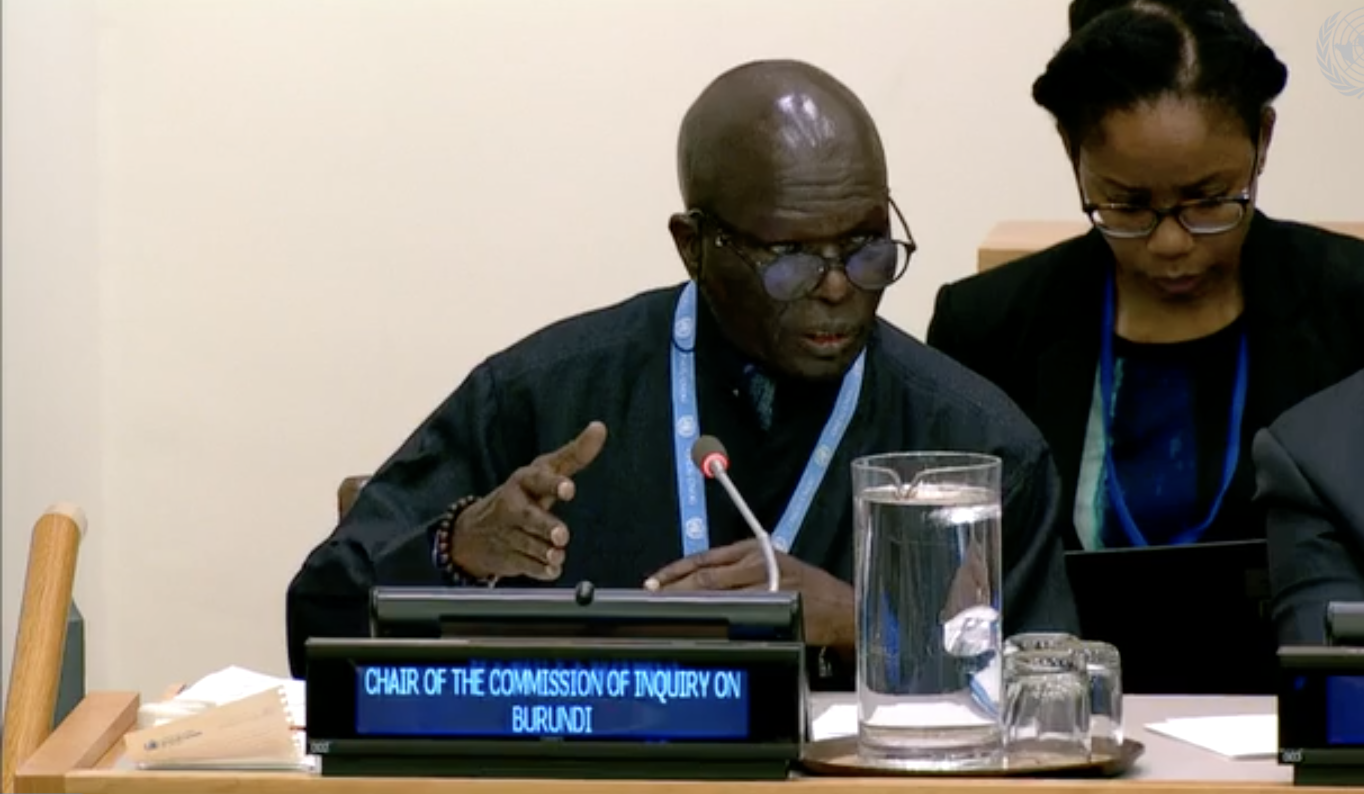
The UN High Commissioner for Human Rights has called recent assertions made by Burundi about the UN Commission of Inquiry on Burundi, ‘reprehensible’ and ‘a disgrace’. The Commission of Inquiry, and in particular its Chair Doudou Diѐne faced such attacks when it came to report on its findings - including evidence of crimes against humanity - to the General Assembly’s human rights committee.
As mandated, the Commission of Inquiry on Burundi presented its report to the General Assembly’s Third Committee on Thursday. It highlighted ongoing serious human rights violations, including crimes against humanity, and generalised impunity in the country. Subsequently, the Burundian Ambassador took the floor accusing the Commission of being ‘remotely controlled by foreigners’ and operating to ‘satisfy non-African interests in exchange for individual advantage’. Burundi added that it reserved ‘its legitimate right to take to court the authors (of the report) for having engaged in libel and de-stabilisation of Burundi’.
ISHR’s Eleanor Openshaw noted that the majority of other States in the room failed to respond to the threats made.
‘Unforgivably, the Chair of the Commission was left alone to defend himself and his colleagues’, said Openshaw. ‘The Chair actually asked the Third Committee to press Burundi on its threats to ‘punish’ the Commission. No-one from the Committee did so.’
The only response to date has been a statement made by the High Commissioner for Human Rights, Michelle Bachelet, who called Burundi’s intervention ‘belligerent and defamatory’ and urged Burundi ‘to issue an immediate retraction of this inflammatory statement’.
‘The High Commissioner’s statement is very welcome. Attacks against UN experts are grave in and of themselves. They also send a message that threats and attacks against other human rights monitors will go unchallenged by States,’ said Openshaw.
‘If you can threaten members of a Commission of Inquiry at the heart of the UN, just imagine what you’ll feel empowered to do to silence a human rights defender working at community level.’
Burundi also called upon the Chair to resign to distance himself from the Commission as, he suggested erroneously, the previous Chair of the Commission had done. A statement from the ex-Chair of the Commission of Inquiry, Fatsah Ouguergouz, was then read out to the Third Committee, clearly stating that he had stepped down for purely personal reasons.
The Commission of Inquiry was established by the UN’s Human Rights Council in 2016 and had its mandate renewed twice, most recently last month.
This is not the first time the Commission of Inquiry has faced such attacks. Last year Burundi also threatened the Commission with criminal proceedings. This year Burundi made several – ultimately unsuccessful – efforts to prevent the Commission of Inquiry from reporting to the Third Committee. Other UN experts have also faced threats and attacks in recent times in reprisal for their work.
Concluding the dialogue, the Chair of the Commission of Inquiry noted he would not be cowed by threats made. The Commission is ‘determined to deliver on its mandate fully and objectively,’ he noted.
‘We are calling on heads of key UN human rights bodies – the President of the General Assembly, President of the Human Rights Council and Chair of the Third Committee – to speak out in defence of UN experts,’ said Openshaw.
‘Equally essential is that individual States do. The dialogue with the President of the Human Rights Council planned for this Friday, is a perfect moment to do so.’
Contact: Eleanor Openshaw [email protected] (212) 490 2199
Photo: UN footage
The following clip is the response of the Chair of the Commission of Inquiry on Burundi as he asks the committee to note the threats made against members of the Commission.
The following clip is the Burundi Ambassador’s final response on the Commission’s report.