New tools to engage with UN Special Procedures in English, Chinese, Uyghur, and Tibetan
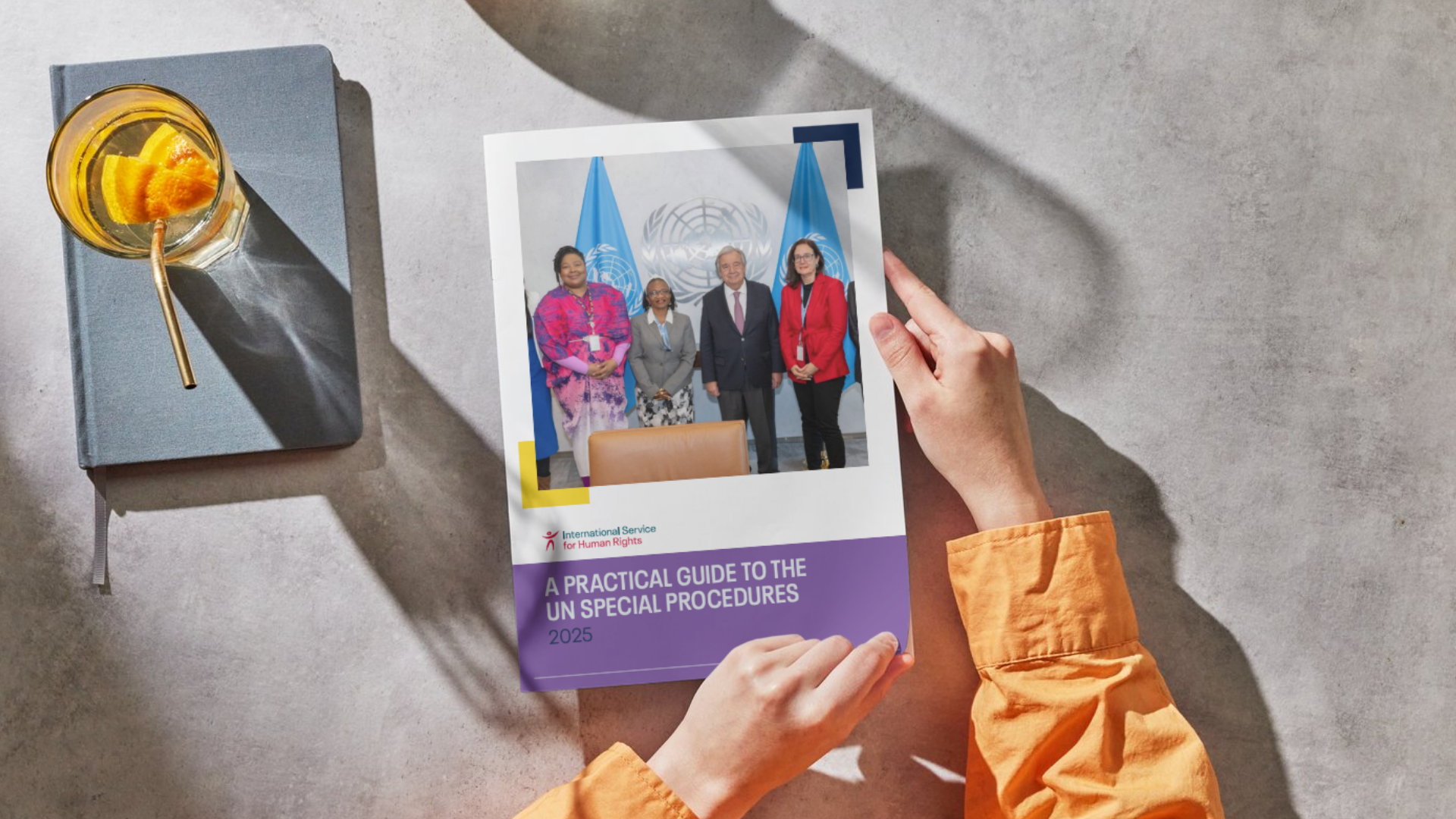
ISHR is pleased to launch its updated practical guide for civil society and human rights defenders who engage with UN Special Procedures experts to support their human rights work. This tool assists civil society actors in engaging in a more strategic, autonomous and safe manner with the Special Procedures to increase the impact of their work around the world.
ISHR’s updated handbook ‘Practical Guide to the UN Special Procedures’ provides an overview of the UN’s system of independent human rights experts known as the ‘Special Procedures’, and the different ways human rights defenders can make use of it to further their human rights causes. The guide, first launched in 2019, is now available in an updated version in English and Chinese (Simplified and Traditional).
Watch our video, with subtitles in English, Chinese, French, Spanish, Arabic, Uyghur and Tibetan for an introduction to the UN Special Procedures.
‘Special Procedures’ is the collective term used for a group of human rights experts appointed by the UN Human Rights Council to monitor and report on the situation of human rights around the world, focusing on themes and countries. These experts also provide advice and recommendations for the implementation of human rights. Most Special Procedures are individual experts (Special Rapporteurs or Independent Experts) or groups of five experts (Working Groups), with similar tools to advance human rights, including visiting countries, writing letters to State and non-State actors, speaking publicly, and reporting to the Human Rights Council and the General Assembly. The Special Procedures are one of the most accessible UN human rights tools for civil society and human rights defenders. They can take up cases from any country, do not require a country to be Party to a specific treaty or for victims to exhaust domestic remedies, and they can act quickly, even in emergencies.
To better equip human rights defenders with tools to engage in a more strategic, autonomous and safe manner with the Special Procedures, ISHR also released a new explainer on submitting information about individual cases, problematic laws and policies, and situations of human rights violations and abuses, to Special Procedures mandates. This tool is available in English, Simplified Chinese, Traditional Chinese, Uyghur and Tibetan.
Hear what human rights defenders say about the multilingual guide:
UN Special Procedures are one of the few avenues that Uyghur communities can resort to for the human rights abuses they are experiencing. A practical guide provides the clarity and accessibility necessary to navigate these complex international mechanisms. Crucially, providing this resource in the Uyghur language removes the language barriers and allows our community to learn about UN Special Procedures in their own language and at their own pace. Effectively, it brings international tools directly into the hands of the people who need them most and facilitates our advocacy work by bridging the gap between global human rights systems and the realities on the ground.
Rizwangul NurMuhammad, Uyghurs at UN Action Initiative
UN Special Procedures are often one of the few accessible international avenues for human rights defenders and affected communities to seek urgent attention, accountability, and protection. Yet the system can be complex and difficult to navigate. Circulating a practical guide in the languages of defenders can help encourage more effective engagement with these mechanisms.
Shane Yi, Chinese Human Rights Defenders
The UN Special Procedures are a lifeline for defenders facing systematic repression, but the system can be daunting to navigate without a map. This guide is that map. By translating these complex mechanisms into accessible languages, ISHR is empowering those on the front lines to use international law as a shield. Knowing exactly how to engage with the mechanisms means our lived experiences of rights violations are transformed into formal, authoritative records that can no longer be ignored. It is more than a guide; it is a bridge to international solidarity.
Carmen Lau, Hong Kong activist
As a Tibetan activist, UN Special Procedures are one of the few international mechanisms we can still access to advocate for our communities, especially as the Chinese government works relentlessly to keep information out of sight of the international community. Special Procedures offers a way to contest that by bringing urgent cases and ongoing structural abuses into the international record and increasing international scrutiny. Yet the process often feels opaque and intimidating, especially for grassroots defenders. ISHR’s practical guide, now available in Tibetan, helps democratise access to a space that must belong to everyone, and makes it easier to act decisively and strategically.
Tsela Zoksang, Students for a Free Tibet
If you are a human rights defender seeking to engage with the Special Procedures, read these tools carefully and share them with your peers!
Find more tips and examples on how to strategically engage with Special Procedures in the ISHR Academy, ISHR’s e-learning space for human rights defenders looking to strengthen their advocacy skills with the UN for greater impact on the ground.
Author
Raphaël Viana David
Raphaël is ISHR's China and Latin America Programme Manager in our Geneva office. He joined ISHR in 2018.