
© Laura O'Brien, Access Now.
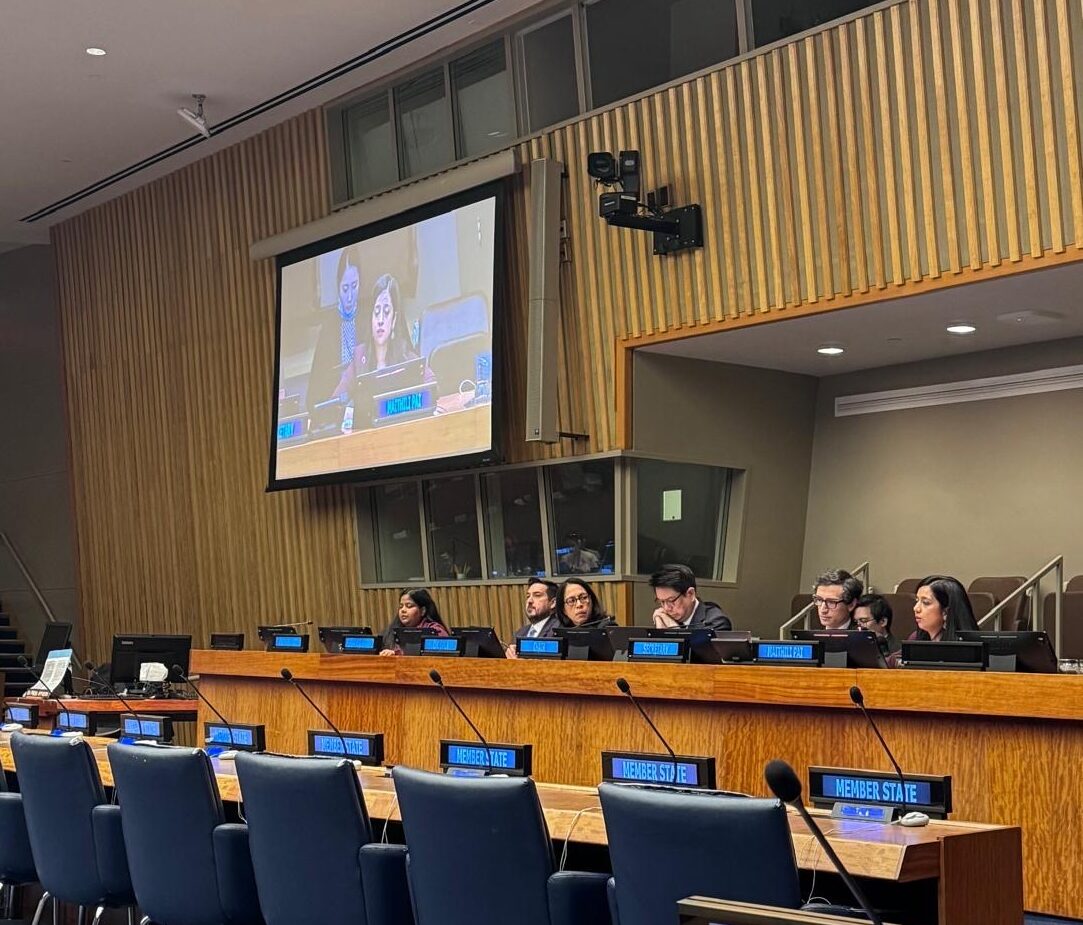
Joint statement at the Third Committee on reforming working methods
On behalf of a coalition of NGOs that closely engage with the General Assembly Third Committee, ISHR’s Maithili Pai delivered a joint statement during an informal meeting between the Chair and civil society surrounding the thematic focus of 'Civil Society Perspectives on Strengthening Working Methods and Delivering on Mandates.'
Read the full statement below:
Distinguished Chair, thank you for engaging with civil society on this crucial and timely issue. This is a joint statement delivered on behalf of a coalition of NGOs engaging at the Third Committee.
Excellencies, esteemed delegates, and civil society colleagues,
It is an honour to address you on how we can strengthen the effectiveness of the Third Committee in practice.
At the outset we underline that working methods reform is not a purely technical exercise. How the Committee organises its time, structures its dialogues, and interfaces with Geneva has direct consequences for access, transparency, and accountability for rights-holders.
We note the strong emphasis by many delegations on efficiency, rationalisation, and workload management. While these objectives are legitimate and pressing, efficiency should be understood as a means to strengthen impact, not as an end in itself. Streamlining measures—whether fewer interactive dialogues, shorter resolutions, or reduced reporting—should be assessed against a simple test: do they enhance or weaken the Third Committee’s ability to scrutinise human rights situations, advance implementation, and respond to emerging risks? Reforms that save time but reduce visibility, scrutiny, or follow-up risk shifting burdens rather than resolving them. Fewer interactive dialogues, and reports, for example, by the Special Procedures should also be assessed on a case by case basis as opposed to a one size fits all approach. We welcome the broad recognition that coordination with Geneva is essential, and that duplication between New York and the Human Rights Council must be avoided—particularly in the current context of resource strain. At the same time, we see value in the distinct role of the Third Committee providing greater visibility, cross-pillar political attention, and access to delegations that may not engage as actively or at all in Geneva. Mandate mapping and tracking tools could be helpful in this regard, provided they do not become a mechanism for quietly narrowing mandates without oversight and impact analysis.
Many delegations also highlighted the rapid growth of interactive dialogues. An impact analysis is critical: a sole focus on reducing numbers without improving quality risks hollowing out one of the few moments where independent expertise, UN reporting, and intergovernmental dialogue meaningfully intersect. To maximise impact, meaningful interactions should be prioritised over compressed interventions with more interactive formats, deeper and constructive engagement on practical solutions.
We urge all States to continue ensuring that any revision to the working methods is based on inclusive consultation processes fostering meaningful engagement from all relevant stakeholders engaging on issues within the mandate of this Committee including beyond New York where relevant. Including civil society in discussions on working methods is key to amplifying the Committee’s effectiveness on the ground.
NGOs, human rights defenders and community leaders provide critical and indispensable ground-level insights into the realities behind the resolutions negotiated at the Committee. They contribute evidence, implementation perspectives, and impact analysis—particularly as reforms move from principle to practice. Expanding opportunities for safe and effective participation for civil society actors would improve both the impact and legitimacy of the Committee’s work. Human rights protection is strongest when those closest to the harm are heard in the policymaking process.
Distinguished Chair, Excellencies, as discussions on working methods move forward, we urge that reforms be guided not only by considerations of efficiency, but by their impact on the Third Committee’s ability to fulfil its core mandate: advancing human rights, humanitarian and social issues through meaningful scrutiny, accountability and implementation.
Civil society stands ready to engage constructively in this process—sharing evidence, impact perspectives, and practical insights from the ground—to help ensure that reforms strengthen, rather than dilute, the Committee’s relevance, credibility, and protection function. We look forward to continued dialogue as this process evolves, in a manner that is transparent, inclusive, and firmly anchored in the lived realities the Third Committee exists to address.
Signatories:
- Access Now
- Amnesty International
- Center for Reproductive Rights
- CIVICUS
- Human Rights Watch
- International Service for Human Rights
- SOS Children’s Villages International