
©Elma Okic / Flickr
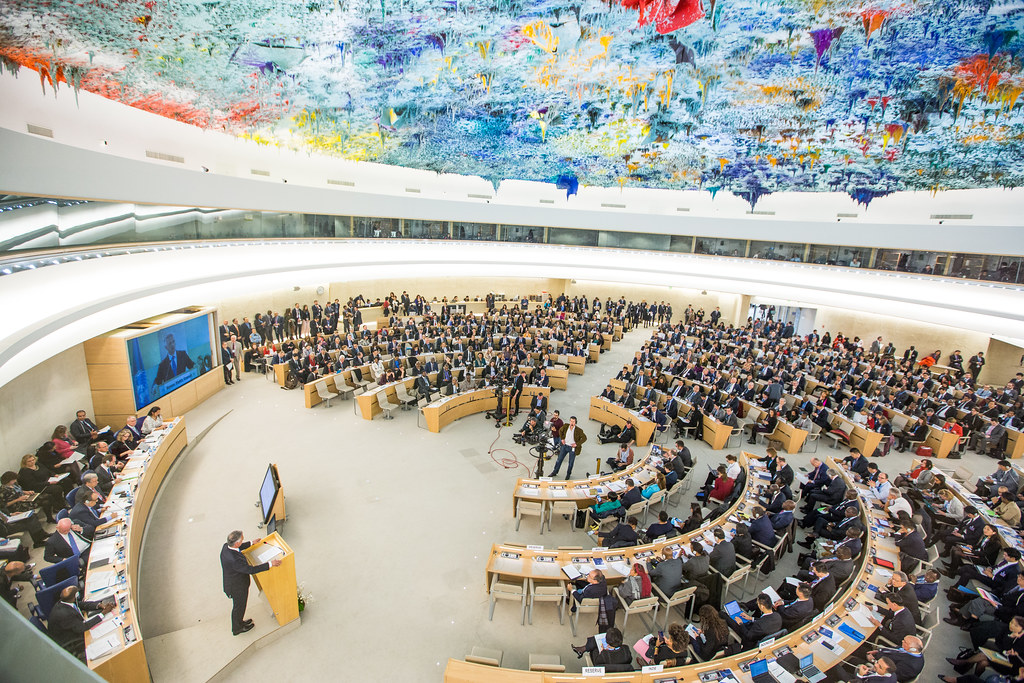
States miss opportunity to strengthen Human Rights Council at its 20th Anniversary
While they acknowledged the interlinkages between human rights, peace and security, and the importance of adequate and sustainable financing of the Human Rights Council, UN Member States decided to maintain the Council’s position as a subsidiary body of the General Assembly.
On 6 July 2026, the United Nations General Assembly decided to maintain the Human Rights Council as a subsidiary body of the Assembly, adopting Resolution A/RES/80/287.
While the resolution recognised the importance of adequate and sustainable financing of the United Nations Human Rights Council and its mechanisms, it stopped short of elevating human rights and the Council’s status within the UN system.
Instead, the Assembly deferred the question, deciding to review the Council’s status again no sooner than its 90th session and no later than its 95th session – meaning somewhere between 2036 and 2041. This is a missed opportunity to reinforce the central role of human rights within the United Nations at a time of mounting global human rights challenges.
In the debate leading to the adoption of the resolution, some delegations acknowledged their principled position of elevating the Council’s status. Uruguay highlighted that granting the Human Rights Council the status of principal organ would strengthen the UN’s human rights pillar, improve institutional balance, and reduce overlap with the General Assembly’s Third Committee. It also acknowledged the fundamental contribution of civil society to its work.
South Africa said that the UN’s three pillars – peace and security, development, and human rights – are inseparable and mutually reinforcing, and none can be fully achieved without the others. The European Union added that the Human Rights Council should be recognised as a UN principal organ to ensure human rights have equal institutional weight alongside peace and development, even if current circumstances do not allow this change.
Ahead of the review, ISHR led a coalition of more than 50 organisations calling on Member States to use the 2026 review to strengthen the Council’s position in the UN system by elevating its status and thus placing human rights on an equal footing with the other pillars.
Elevating the Council’s status would have brought greater coherence to the UN architecture by aligning global human rights governance with the bodies responsible for security and development. It could also have strengthened the political weight of Council resolutions and recommendations, improved follow-up to its decisions, reinforced funding priorities, and enhanced the Council’s institutional independence from political pressures.
The review stems from the Council’s founding resolution. When the General Assembly established the Human Rights Council in 2006, Resolution 60/251 mandated a review of both its work and status within five years.
The General Assembly subsequently addressed the review process through Resolution 65/281 and postponed the issue of the status to no later than 15 years after the initial review. June 2026 marked the deadline for the General Assembly to review the Council’s status.
In recent years, there have been several efforts – in 2019, 2021 and 2024 – to advance informal discussions in Geneva on the review of the Council’s status, including on whether Geneva-based stakeholders should contribute to the process.
In early 2026, the Council’s President appointed Spain and Thailand as focal points to coordinate consultations in Geneva and liaise with the General Assembly’s co-facilitators in New York, the Ambassadors of Ireland and Senegal. Informal consultations subsequently took place in Geneva alongside negotiations in New York.
With up to 15 years to go until the postponed review, States have the opportunity to pursue practical initiatives that strengthen and consolidate the Council’s role as the UN’s principal human rights body.
These reforms should include removing barriers to meaningful civil society participation, ensuring elections to the Council are competitive so that its members uphold the highest human rights standards, addressing selectivity and double standards through principled decision-making, and enabling the Council to bring relevant human rights situations formally to the attention of the Security Council, thereby contributing to prevention.
In addition, States should make it possible for the Council to request advisory opinions from the International Court of Justice on legal questions within its mandate, thereby strengthening normative development, legal clarity and accountability. To improve efficiency and visibility, States should also consider allowing the Council to report directly to the General Assembly plenary, rather than through the Third Committee.
Finally, States should mandate a cross-regional, independent, expert working group to trigger consideration of urgent human rights situations by the Council based on the consistent application of objective criteria, thereby addressing issues of selectivity and double standards in the application of human rights.
While the General Assembly has postponed a decision on the Council’s status, the need to strengthen the UN’s human rights pillar remains urgent. The coming years must be used to build a Human Rights Council that is fit for purpose and responds effectively to the gravest human rights violations and the needs of those it was built to serve, putting human rights at the centre of global politics.