
© Photo: ISHR
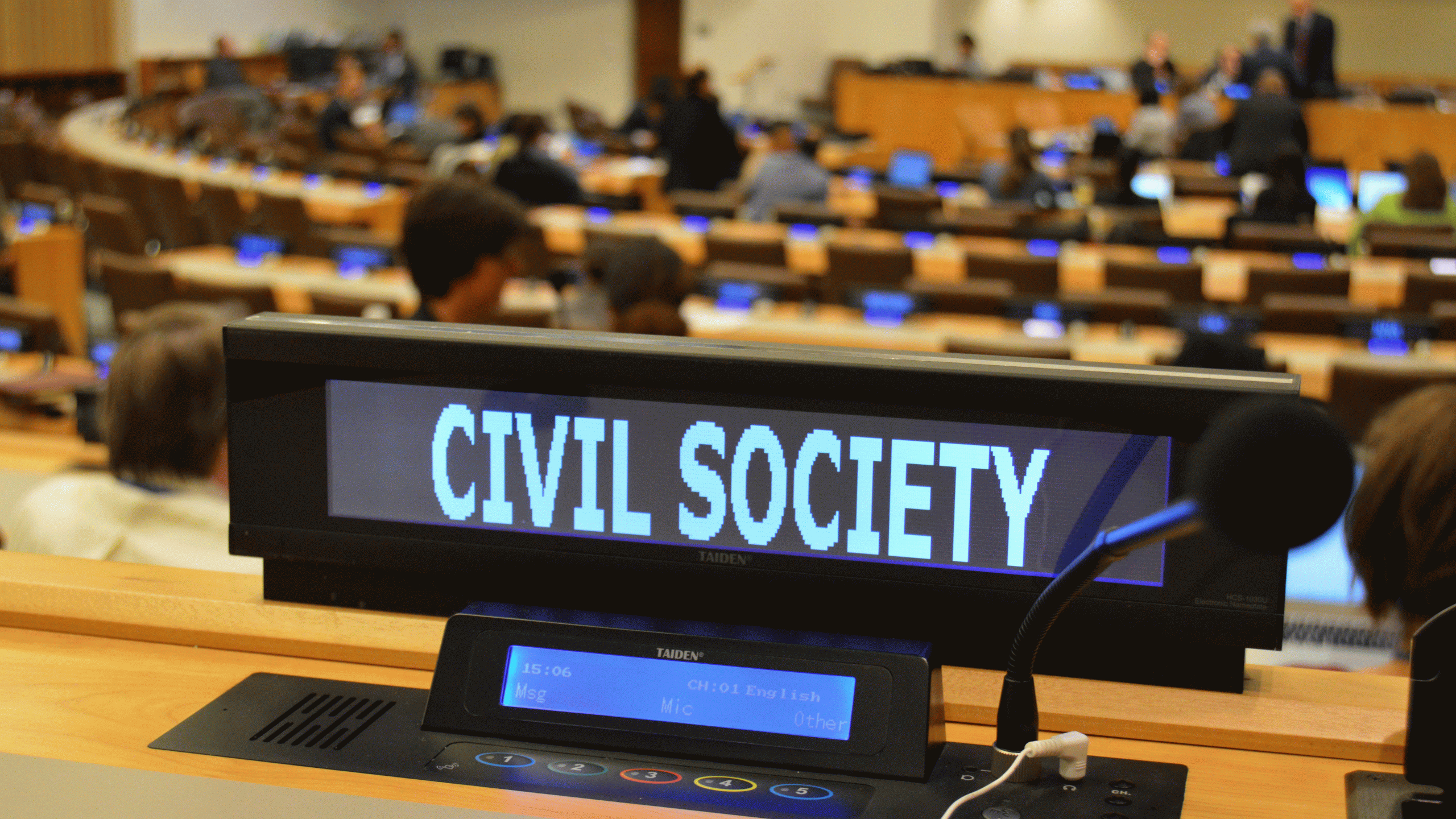
Submission | ISHR calls for the strengthening of civil society participation in all human rights mechanisms
In its submission to the Office of the High Commissioner for Human Rights, ISHR emphasises the critical and vital role of civil society in UN and regional human rights mechanisms, as well as existing challenges and obstacles to participation.
While former Secretary-General Ban Ki-moon highlighted that ‘civil society is an indispensable partner of the United Nations’, the current Secretary-General, Antonio Guterres, has reiterated this commitment, noting civil society’s critical role in the success of the Sustainable Development Goals.[1]
In terms of UN human rights mechanisms for civil society, the Human Rights Council and Special Procedures are two of the most accessible ones.
NGOs can engage with the Human Rights Council through attendance, oral statements, holding side events and participating in informal negotiations of resolutions, despite some practical restrictions. Further, many Special Procedure mandate holders engage with civil society at all stages, including by calling for inputs to thematic and country reports, sharing information on human rights violations and playing an integral role in follow-up to and implementation of recommendations.
Notwithstanding these positive procedures for engagement, more needs to be done to enhance and safeguard participation of civil society with UN mechanisms.
Among others recommendations made in the submission, ISHR calls on:
- Members States of ECOSOC to take steps to ensure the practice of the NGO Committee is fair, transparent, non-discriminatory, expeditious and apolitical. This includes calling on the NGO Committee to clearly explain the grounds on which NGO applications for accreditation are to be assessed.
- Members States of the General Assembly Third Committee to enhance civil society engagement to provide for at least the same level of participation as is currently the case with the Human Rights Council, including the right to speak during open sessions.
- The Office of the High Commissioner for Human Rights to ensure safe, user-friendly and accessible system for requesting and granting access for civil society to the Palais des Nation and room XX without discrimination.
- Special Procedure mandate holders to consistently call for submissions for thematic reports from civil society and announce requests for country visits to ensure meaningful civil society contributions.
- Treaty Bodies to create a uniform and system wide policy on interaction between treaty bodies and civil society, including components on formats and participation in formal and informal briefings, and remote participation.
- The Universal Periodic Review Working Group to ensure civil society space at its meetings, specifically by permitting up to ten two-minute long interventions after the interactive dialogue with States, using the same modalities as interventions at the Human Rights Council.
- The African Commission to open extra session of the Commission to all civil society and to continue to be prepared to reject State objections to NGO observer status applications.
- States to refrain from, prevent and address acts of intimidation or reprisals associated with cooperation or attempted cooperation with UN human rights mechanisms.
- The President and Bureau of the Human Rights Council to prevent and respond to acts of intimidation or reprisals against those cooperating with the Council or its mechanisms and to develop and implement a comprehensive policy on intimidation and reprisals.
The submission is available here.
Contact: Tess McEvoy, [email protected]
Photo: ISHR