
UN Web TV
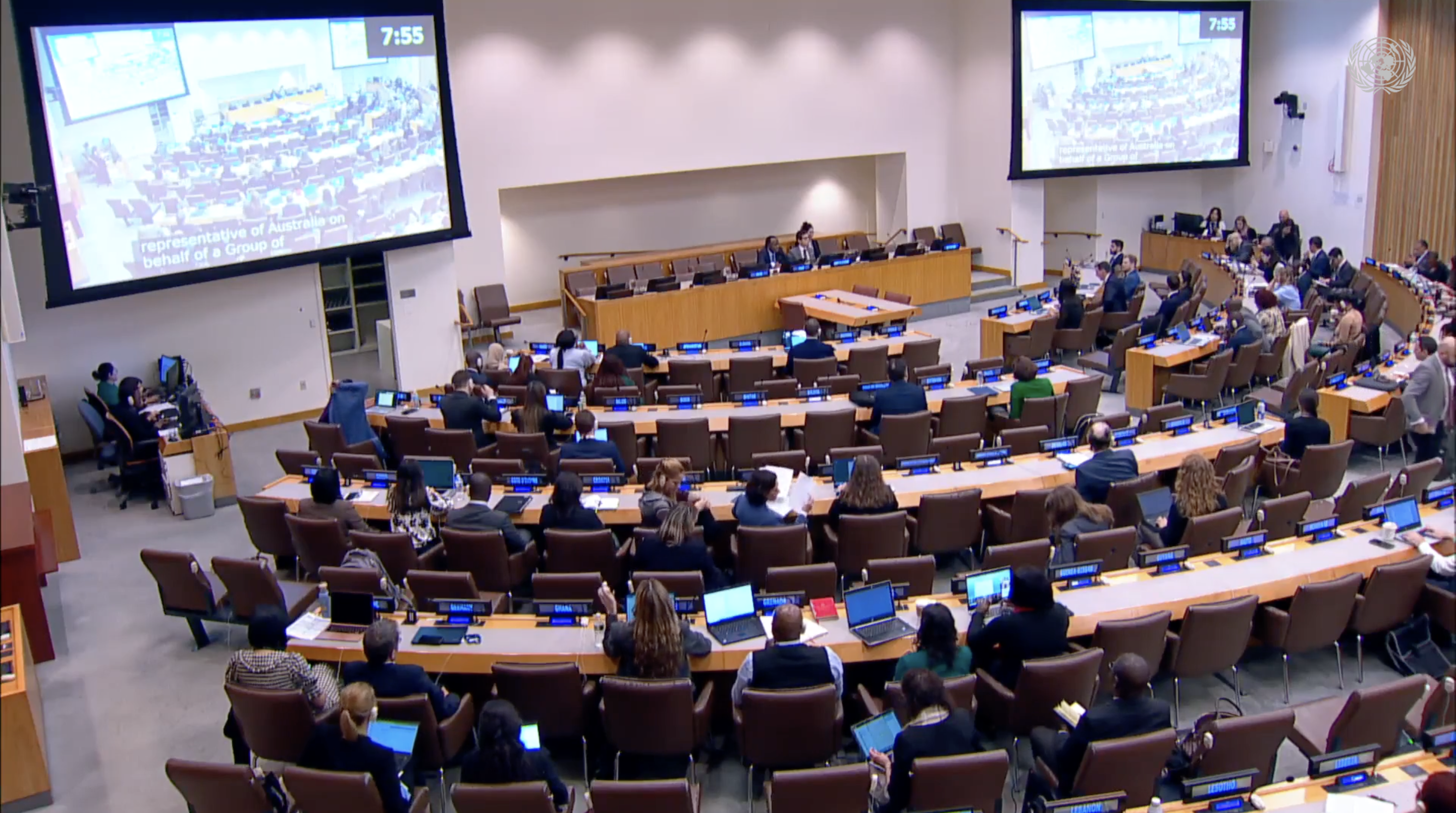
UNGA81: Treaty bodies sound the alarm as States fail to address human rights funding crisis
The chairs of the UN's ten human rights treaty bodies have warned that funding shortages are preventing them from fulfilling their mandates. Despite widespread recognition by Member States of the need for adequate resources and meaningful reform, the draft resolution set to be adopted by the Third Committee simply repeats commitments made two years ago, without any new measures to address a dramatically worsening crisis.
The chairs of the UN’s ten human rights treaty bodies have warned that funding shortages are preventing them from fulfilling their mandates. The treaty bodies are the guardians of binding international human rights law, and provide States with authoritative guidance on its implementation. Despite widespread recognition by Member States of the need for adequate resources and meaningful reform, the draft resolution set to be adopted by the Third Committee simply repeats commitments made two years ago, without any new measures to address a dramatically worsening crisis. States, the UN Secretary General and Secretariat, and treaty bodies themselves all have a responsibility to act to safeguard the backbone of the UN human rights system.
During the 81st session of the UN General Assembly, the chairs of all ten treaty bodies highlighted the devastating impact of the UN’s financial and liquidity crises on their work. Their message was clear: cancelled sessions, mounting backlogs and restrictions on essential activities are undermining the system’s ability to monitor States’ compliance with their human rights obligations and provide justice to victims of violations.
Funding shortages undermine treaty body mandates
In 2026, approximately 40% of scheduled treaty body meeting time was cancelled, postponing 51 State reviews and decisions on more than 100 individual complaints.
The chairs provided stark illustrations of the consequences across the system:
- Human Rights Committee: An entire session was cancelled for the second consecutive year, alongside reductions in staffing and outputs.
- Committee on Economic, Social and Cultural Rights: Its 79th session was shortened from four weeks to two and a half. Clearing the system-wide backlog of State reports would now take almost four years, compared with two years in 2023, while intervals between State reviews could reach 14 years.
- Committee on the Elimination of Discrimination against Women: More than a third of its meeting time was lost, with only eight State dialogues conducted and a backlog of 31 reports.
- Committee on the Rights of the Child: One of three sessions and two pre-sessional working groups were cancelled. State reviews fell from 24 in 2024 to 15 in 2026, leaving 57 reports awaiting examination. A planned country visit was also cancelled.
- Committee on the Elimination of Racial Discrimination: One session was cancelled and another shortened in both 2025 and 2026.
- Committee against Torture: Nine weeks of meeting time were lost between July 2025 and December 2026, postponing State reviews and consideration of individual complaints.
- Subcommittee on Prevention of Torture: Its country-visit budget was halved in both 2025 and 2026. In 2025, only four of eight planned visits to monitor places of detention could take place.
- Committee on Migrant Workers: Financial constraints reduced its meeting time to an unprecedented single session in 2026.
The committees on enforced disappearances and the rights of persons with disabilities also raised concerns about the impact of funding shortages on their ability to fulfil their mandates, including adequate secretariat support and accessibility arrangements.
These are not merely administrative delays. They mean less guidance and support for States to implement their human rights obligations, longer waits for individuals seeking justice and fewer opportunities to hold governments accountable.
The contradiction is fundamental: States have voluntarily assumed legally binding human rights obligations and established independent bodies to monitor their implementation, yet collectively fail to ensure those bodies have the resources necessary to fulfil their mandates.
Reform must strengthen effectiveness, not accommodate underfunding
The crisis has intensified discussions about reform, including harmonisation of working methods, digitalisation, clustered or decentralised reviews and more predictable reporting schedules.
While recognising potential benefits, several chairs cautioned against reforms that could compromise the quality of reviews, treaty body independence or their distinct mandates. Concerns included proposals under which not all committee members would participate in State dialogues, alongside calls for reforms to be piloted and evaluated before wider implementation.
The chairs also highlighted efforts already undertaken to modernise procedures, while emphasising that digitalisation and remote participation require adequate infrastructure, interpretation, accessibility and secretariat support.
While proposals must be properly debated and legitimate concerns addressed, consultation cannot become a substitute for decisions and action. Those responsible for the system must be willing to make choices, implement reforms and evaluate their results. Prolonged institutional deadlock has real consequences for rights holders who depend on timely and effective monitoring.
In the end, reform must be guided by what treaty bodies need to fulfil their mandates, not by the limitations of an increasingly inadequate budget. Efficiency cannot substitute for sufficient resources.
Member States recognise the crisis and call for adequate funding
Member States themselves have acknowledged the urgent need to address the treaty bodies’ funding crisis.
In a joint statement delivered by Switzerland on behalf of 92 Member States and the European Union, delegations reaffirmed their commitment to an adequately funded treaty body system and called for adequate, predictable and sustainable financing alongside practical reforms within existing mandates, noting that 45 State party reviews did not take place in 2025.
Speaking on behalf of the African Group, Namibia cited the Secretary-General’s projection that 43% of scheduled meeting time in 2026–2027 could be cancelled, called for sustainable and predictable financing through the General Assembly, and expressed interest in the proposal to hold decentralised dialogues in Africa.The European Union and its Member States separately called on States to pay their assessed contributions in full and on time and on the Secretary-General to ensure sufficient resources for the human rights pillar. Nigeria and Malaysia explicitly supported adequate resourcing of the Committee on Economic, Social and Cultural Rights, while Portugal and Ukraine highlighted the damaging consequences of financial constraints for effective monitoring.
These interventions demonstrate that political recognition of the crisis and support for a properly resourced system extend across regions. The challenge is no longer recognition but action. Statements of support mean little unless matched with concrete decisions and adequate budgets to implement them.
An increasingly urgent crisis, an unchanged resolution
Despite these warnings and expressions of support, at a moment of unprecedented crisis for the treaty body system, the Third Committee’s 2026 biennial resolution on the treaty body system (A/C.3/81/L.28) is substantively unchanged from the resolution adopted in 2024 (79/165). All 12 operative paragraphs remain essentially identical, with no new commitments on funding, reform or effective functioning.
Even the resolution’s acknowledgement of the financial crisis is unchanged. In the 2024 resolution, the General Assembly acknowledged the UN’s liquidity crisis for the first time, framing it largely as an aggravating factor in the operational challenges arising from COVID-19. Two years later, despite unprecedented disruption to treaty body operations, the 2026 draft reproduces that language verbatim, without acknowledging the deterioration or proposing measures to address it.
The resolution also reaffirms the 2014 resource allocation framework established by consensus through resolution 68/268. Yet more than a decade on, that framework has never been implemented in a way that delivers the full resources necessary for treaty bodies to fulfil their mandates. Rather than noting the obvious gap between the funding allocated and the funding required for mandate delivery, the resolution simply reiterates the existing approach.
While treaty body chairs warn that the system is increasingly unable to fulfil its mandates, and Member States themselves call for adequate funding, States at the Third Committee have not even updated its description of the crisis, let alone its response.
Making the system work for rights holders: Time to act
Responsibility for the system’s effectiveness is shared. All stakeholders responsible for the system have roles to play in ensuring effective working methods, sound administration, adequate resources and meaningful reform:
- The Secretary-General must ensure that the full operational requirements of existing treaty mandates are assessed and reflected in proposed UN budgets, and should actively support system-wide modernisation and , including through technological advances in document processing, translation and interpretation, with any resources freed up redirected towards strengthening mandate deliver
- Member States must approve and provide the necessary resources.Progress should not depend on a new political agreement on resource allocation when existing mandates already provide the basis for determining what the system needs.
- Treaty body members and chairs must demonstrate the leadership and flexibility to adapt their working methods to advance meaningful reforms, while safeguarding their independence and the integrity of their mandates.
- OHCHR and its secretariat must identify and articulate the system’s operational requirements, drive modernisation, develop and test practical reform proposals, and ensure effective administration and support for treaty bodies, including by exploring technological efficiencies while safeguarding quality, accessibility and multilingualism.
Ultimately, rights holders pay the price for the collective failure to make the treaty body system work. While institutions struggle over resources and reforms, victims wait for their complaints to be heard, States escape timely scrutiny and violations go unexamined. Every cancelled session, postponed review and delayed consideration of communications widens the space for impunity. The system exists to protect rights, not perpetuate institutional processes. All those responsible for its functioning must act now.