
Declaration+25
In a ground-breaking initiative, civil society organisations worldwide have united to produce an authoritative articulation of the international legal framework for the protection of human rights defenders.
ISHR submitted a report to the Special Rapporteur on the human right to a healthy environment, informing her report to the upcoming 64th session of the UN Human Rights Council.
For the purpose of this submission, the term EHRDs (Environmental Human Rights Defenders) encompasses individuals or groups who act to promote, protect, or strive for the protection of the right to a clean, healthy and sustainable environment (R2HE). This submission also builds on the principle — reflected in growing jurisprudence — that threats and attacks against human rights defenders may amount to violations of the very rights for which they advocate; applied to EHRDs, this means such threats and attacks may amount to a violation of the R2HE.
Read on for highlights of the submission, and download the full report!
Situation of environmental human rights defenders (EHRDs)
Responsibility of businesses to respect the rights of EHRDs
The triple planetary crisis has intensified the repression faced by Environmental Human Rights Defenders (EHRDs). While their work is more urgent than ever, advocating for a clean, healthy, and sustainable environment (R2HE) exposes them to severe risks. While the Declaration +25 — a landmark civil society-led document supplementing the 1998 UN Declaration — calls for an end to stigmatisation, EHRDs are still frequently labelled as ‘anti-development’, ‘terrorists’, or ‘uncivilised’. These bad-faith narratives, fuelled by disinformation, create a foundation for unlawful actions, restrictive legislation, and criminalisation.
Defenders also face reprisals for cooperating with the UN. Between 2010 and 2025, 25 cases of reprisals against EHRDs were reported in the UN Secretary-General’s annual reports, with India accounting for a fifth of these. The majority involved threats, intimidation, and surveillance. These cases represent only the tip of the iceberg. Recent high-profile examples include the arbitrary detention of Indigenous defender Daria Egereva in Russia following COP30, and the arrest of climate justice advocate Anar Mammadli in Azerbaijan ahead of COP29 (Case of Daria Egereva; Case of Anar Mammadli).
States are increasingly adopting regressive laws to obstruct defenders’ work. In 2025 and 2026 alone, governments in Ecuador, Bolivia, Argentina, Chile, and Venezuela merged environmental ministries with extractive industries, dissolved environmental protections, or passed laws enabling mining in protected zones (Ecuador fusion; Bolivia balance; Argentina Glacier Law; Chile decrees; Venezuela Mining Law). Furthermore, laws in Ecuador and Uganda now condition civil society’s ability to operate on invasive reporting requirements or criminalise legitimate advocacy as a threat to sovereignty (Ecuador Organic Law; Uganda Sovereignty Act).
Strategic Lawsuits Against Public Participation (SLAPPs) are weaponised to silence dissent, and defenders are criminalised. Indigenous defenders like Bernardo Caal Xol in Guatemala have been imprisoned on fabricated charges, while in the US, fossil fuel companies have leveraged SLAPPs to demand hundreds of millions in damages from groups like Greenpeace (Greenpeace SLAPP case). Beyond physical and legal threats, defenders suffer from mental health issues, ‘climate anxiety’, and significant barriers to participating in international fora due to financial constraints, bureaucratic accreditation hurdles, and corporate capture of negotiation spaces (Climate anxiety & Finance; Corporate capture).
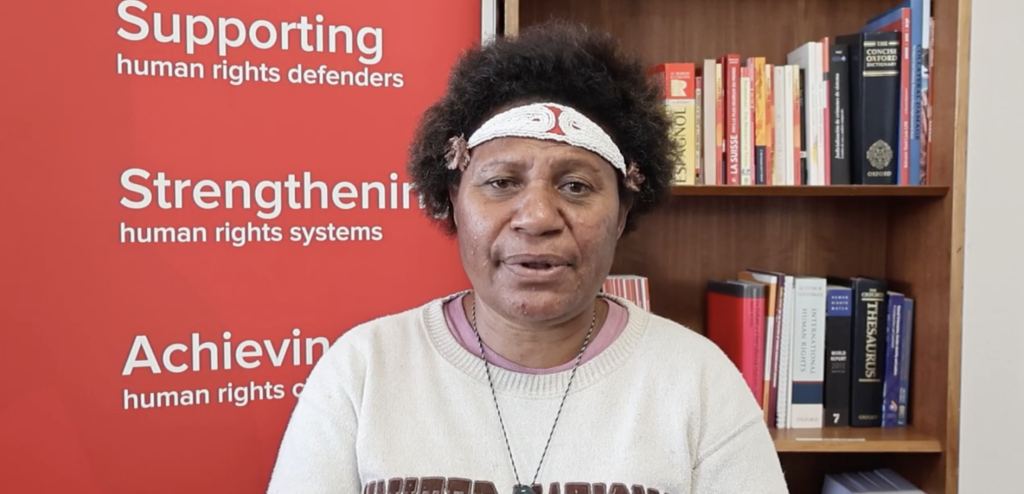
Cressida Kuala lives in a small gold mining town in the Highlands Region of Porgera District in the Enga Province of Papua New Guinea. In 2011, Cressida founded the Porgera Red Wara (River) Women’s Association, and she started speaking out about issues such as environmental degradation, chemical waste, pollution, expropriation of land, and the impact on the local community. Cressida participated in the Women Human Rights Defender Advocacy Week in October 2025.
Inadequate responses to harm against EHRDs likewise fail to acknowledge or address the root causes of these harms, in turn delaying accountability and enabling continued degradation of the environment and the R2HE. EHRDs should not be portrayed solely in terms of risks they face, but also the contributions made to advance the R2HE.
To tackle these challenges, significant legal frameworks have emerged. In 2022, Michel Forst was appointed as the first Special Rapporteur on environmental defenders under the Aarhus Convention, the first mechanism of its kind within a legally binding UN framework. He recently issued Guidelines on the Right to Peaceful Environmental Protest to help States ensure activists are not disproportionately penalised for civil disobedience (Aarhus Rapporteur Guidelines).
Regionally, the Escazú Agreement stands as a landmark treaty for Latin America and the Caribbean, explicitly addressing the protection of EHRDs. It established a Rapid Response Mechanism, triggered for the first time to protect the relatives of disappeared Indigenous defender Julia Chuñil in Chile (Julia Chuñil case). The Inter-American Court of Human Rights has further reinforced these protections, ruling that States have a special obligation to protect defenders as fundamental to democracy and recognising the differentiated impacts on Indigenous peoples, women, and youth (Inter-American Court Ruling).
However, national protection mechanisms often fall short. Consultations reveal that many mechanisms focus on individual physical protection rather than collective safety, lack investigative powers, and suffer from limited resources. There is a critical need for better coordination between international, regional, and national bodies to ensure comprehensive protection that includes preventive measures and addresses the collective nature of environmental defence (National Protection Instruments; ISHR Online Course).
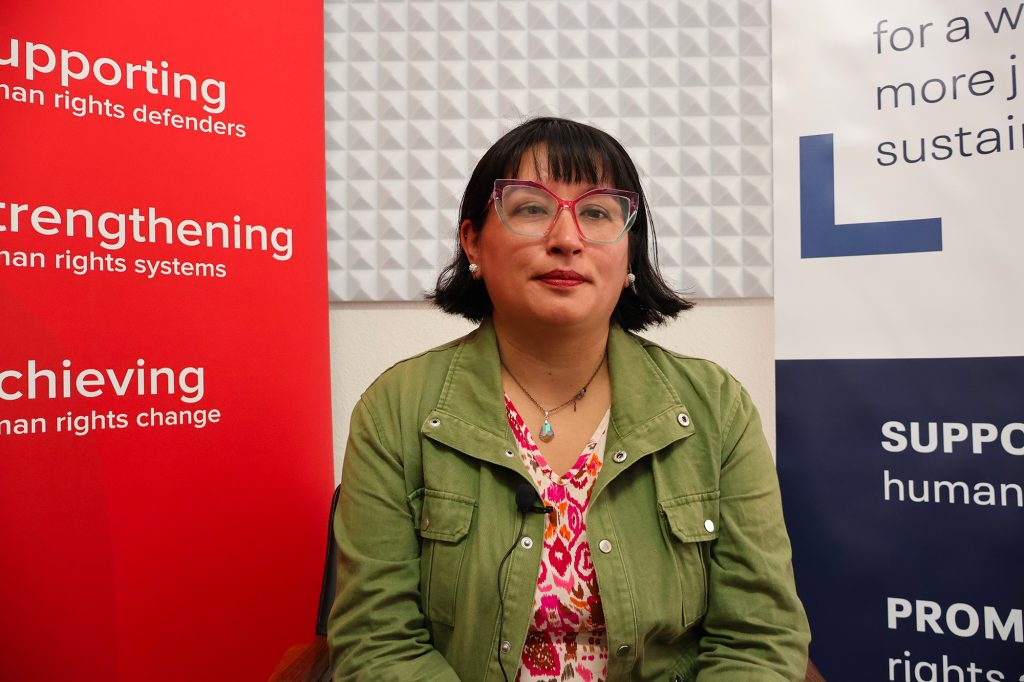
The Escazú Agreement, a landmark regional development, is the first legally binding international instrument explicitly addressing EHRDs. The Escazú Agreement is also the first environmental treaty adopted in Latin America and the Caribbean. As EHRD Bárabara Astudillo explained, in Chile, the instrument helped to broaden access to information, increase public participation and support capacity building.
According to the Declaration +25, businesses have a clear responsibility to respect the right to defend human rights. The UN Working Group on Business and Human Rights has clarified that engaging with defenders and assessing risks to them must be part of mandatory due diligence processes. While some companies have committed to zero tolerance for attacks, voluntary commitments are insufficient to guarantee safety. States must ensure that non-State actors refrain from harassing defenders or their communities (UN Working Group Guidance; Business Frameworks Retrospective).
Based on this submission, we encourage the Special Rapporteur to expressly recognise in her report that an attack on an EHRD amounts to a violation of the right to a clean, healthy and sustainable environment.
We also encourage the Special Rapporteur to make recommendations to States based on their international obligations including those articulated in the UN Declaration on Human Rights Defenders and the Declaration +25:
Coordination: Enhance coordination and complementarity between national, regional and international human rights mechanisms to effectively protect and rapidly respond to attacks against EHRDs, and monitor the effective implementation of provisional and precautionary measures that aim to protect EHRDs.
In a ground-breaking initiative, civil society organisations worldwide have united to produce an authoritative articulation of the international legal framework for the protection of human rights defenders.
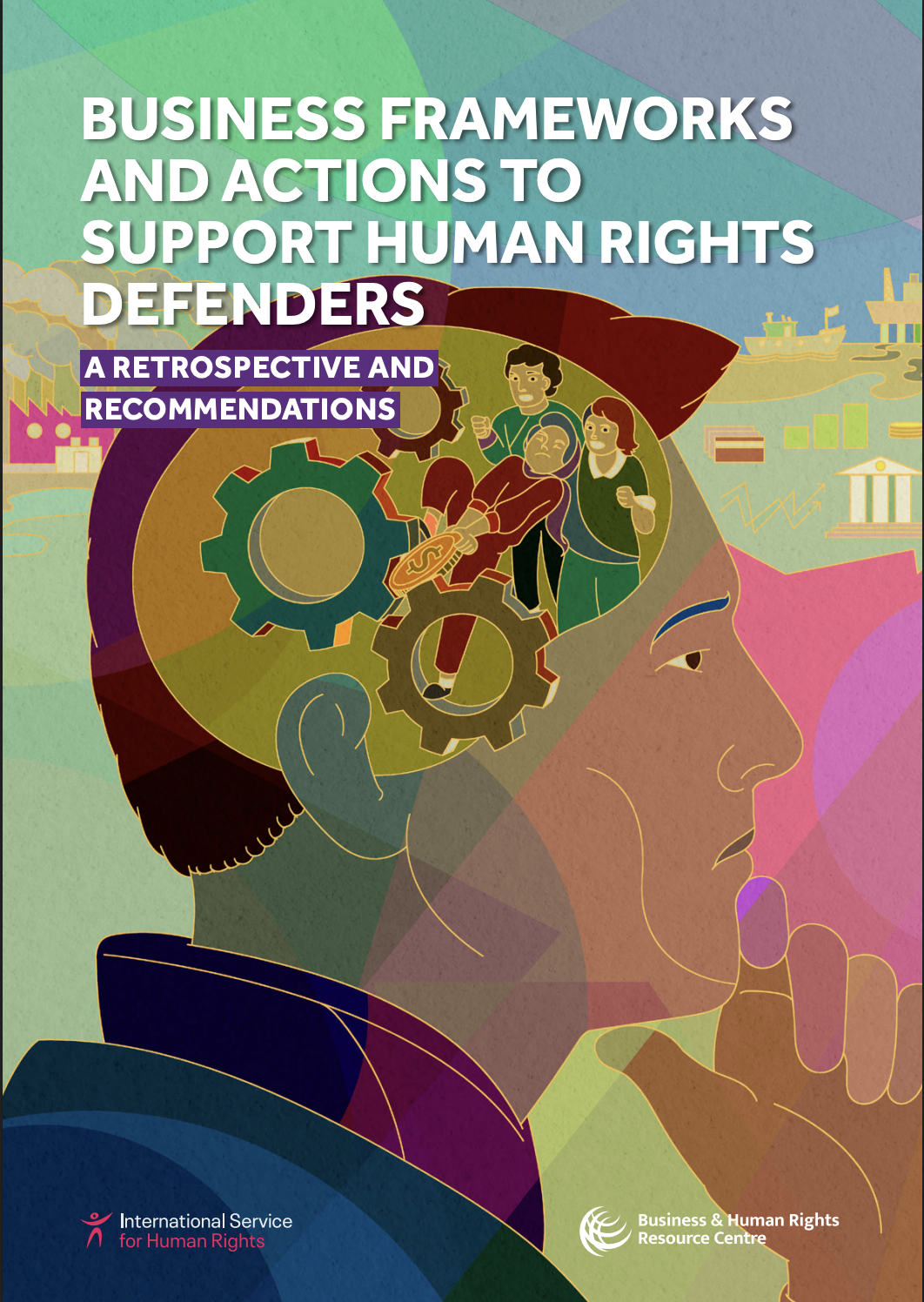
This report summarises and assesses progress and challenges over the past decade in relation to business frameworks, guidance, initiatives and tools to protect human rights defenders that have emerged at local, national and regional levels.
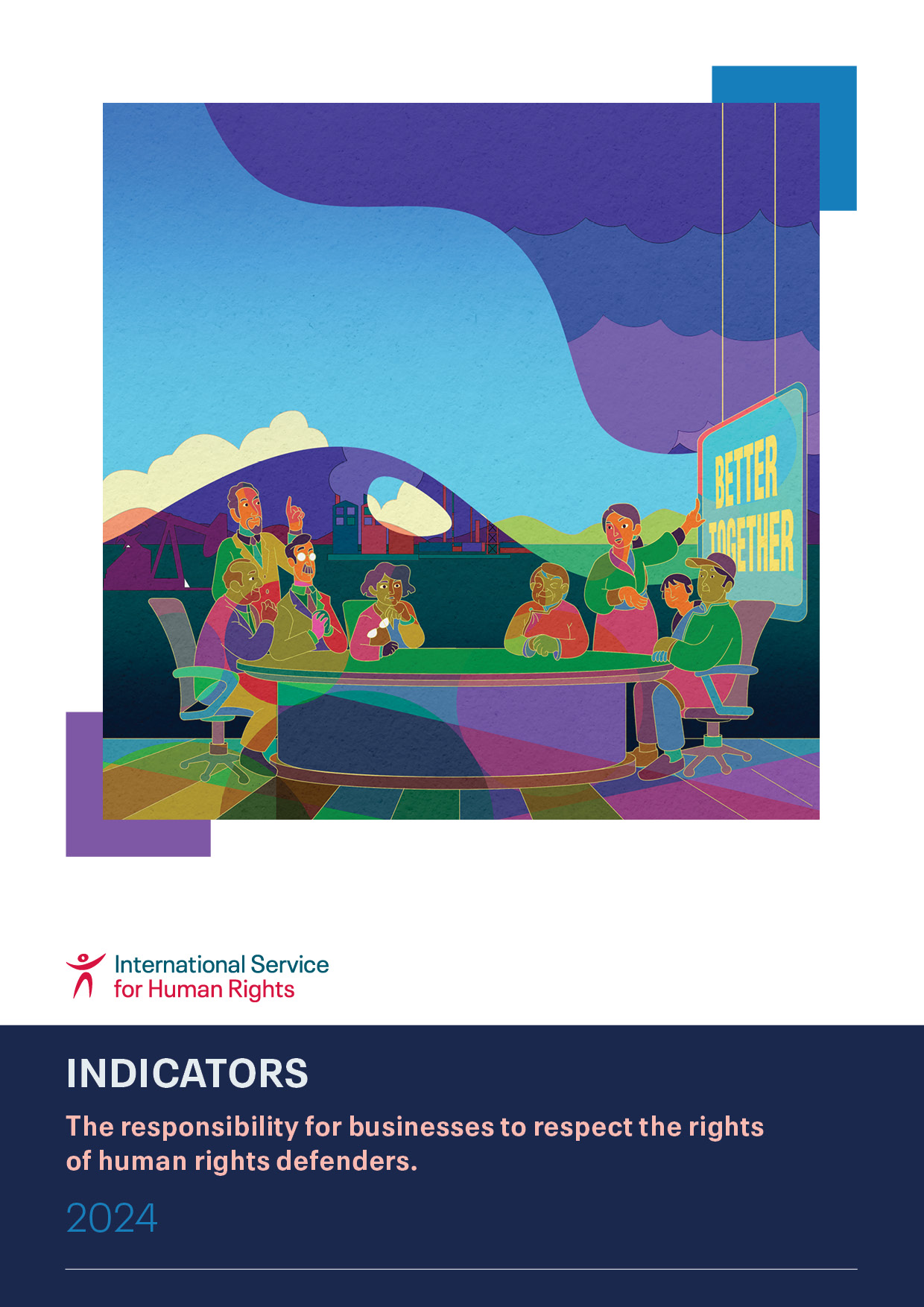
ISHR's indicators are designed to provide baseline guidance on what is required to monitor the implementation of the responsibility of business to respect the rights of human rights defenders.