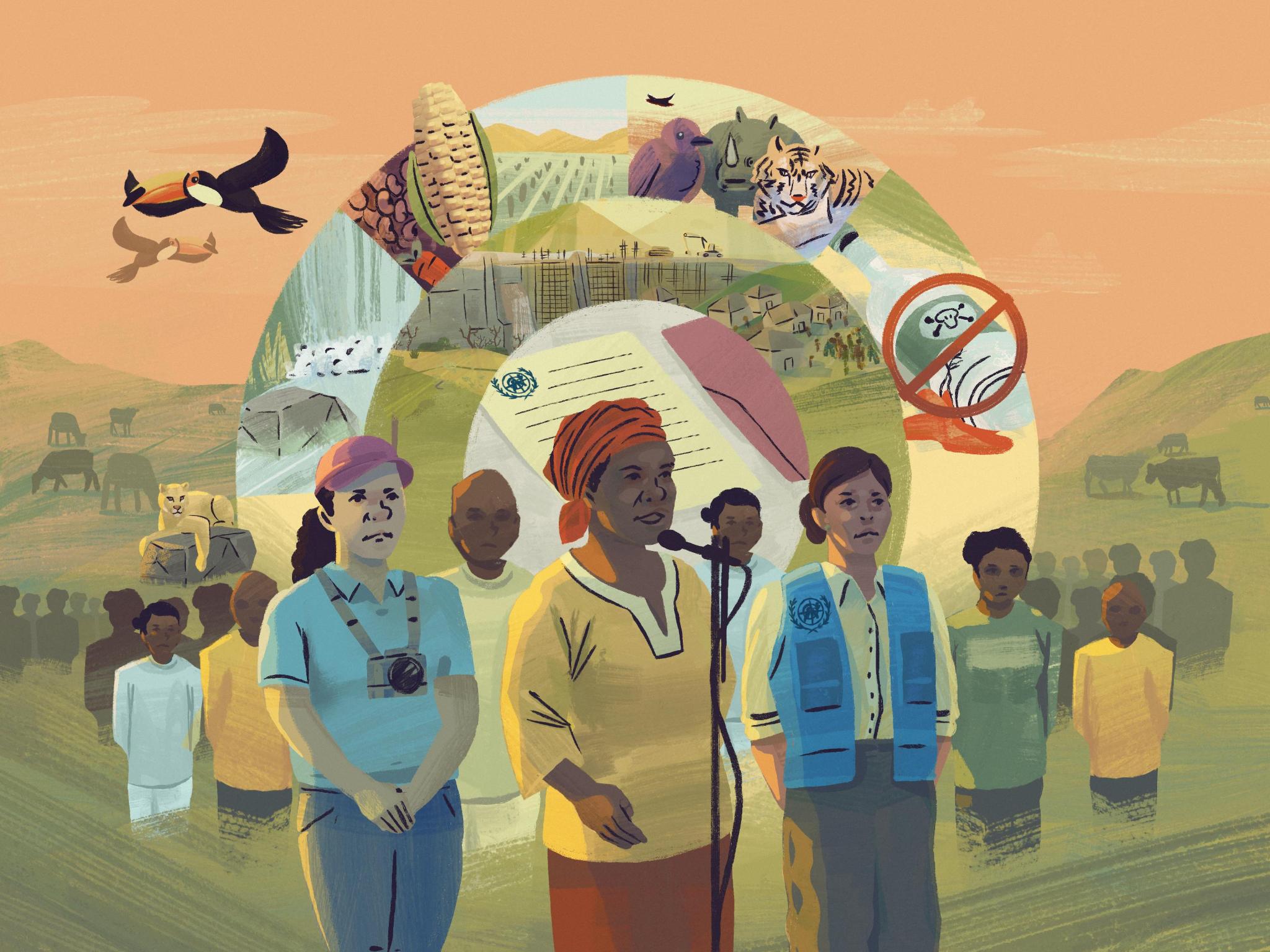
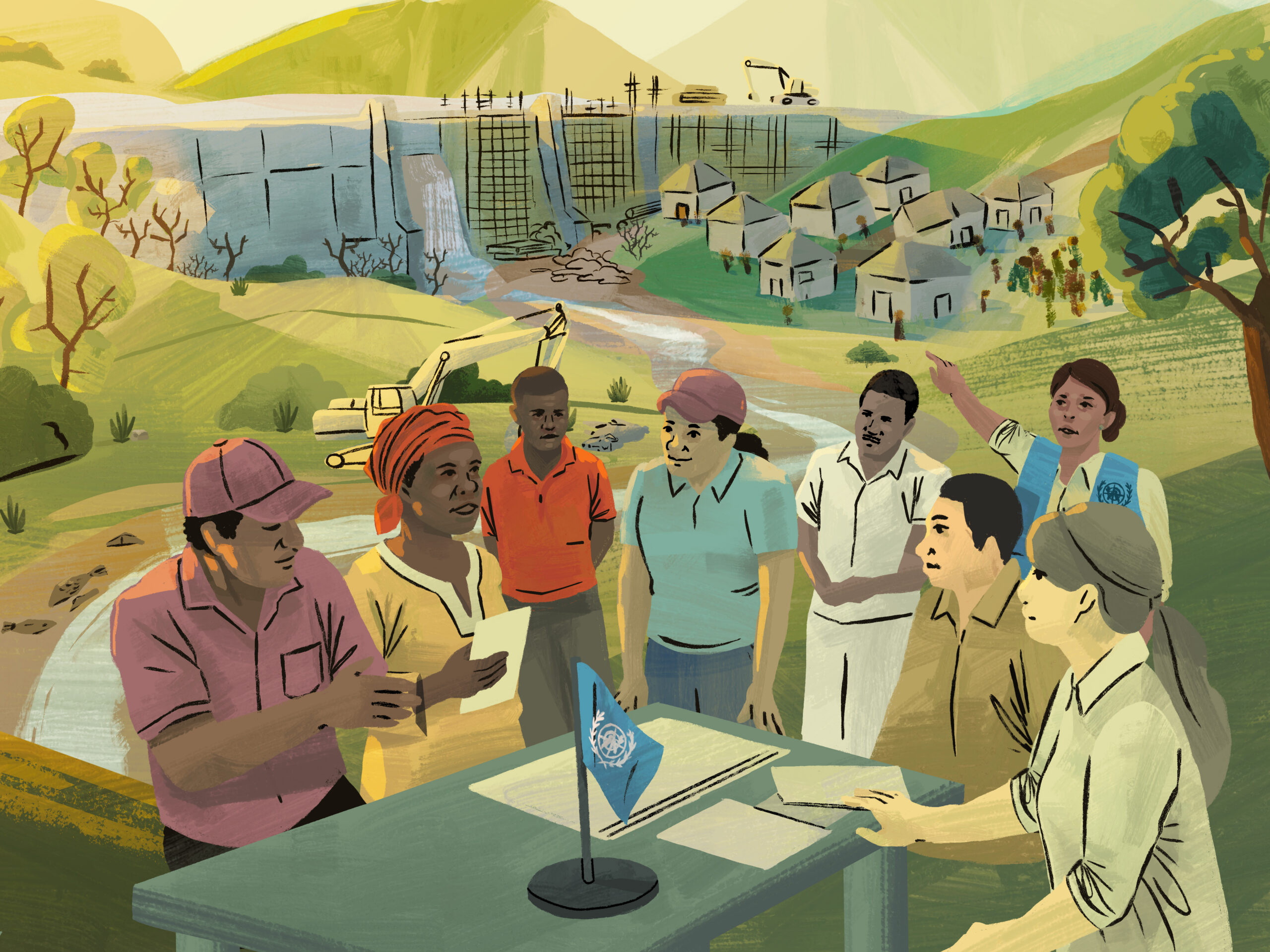
On World Environment Day, and in parallel to the 1st European Forum on Environmental Human Rights Defenders, ISHR is introducing its new online course entitled ‘Advocacy for environmental human rights defenders: a pathway’. A conceptual, legal, and strategic resource to help environmental human rights defenders and their allies translate local environmental struggles into coordinated international and regional advocacy.
Environmental human rights defenders are those who protect our planet and defend the right to a clean, healthy and sustainable environment. They are Indigenous Peoples, farmers, scientists, journalists and young activists from all over the world.
Despite their vital role, more than 2,253 of them were killed, harassed, or persecuted between 2012 and 2024 according to Global Witness. More recently, the Business and Human Rights Centre found that the most dangerous sectors in which to pursue activism to defend rights are mining, agribusiness and fossil fuels.
Behind those numbers are stories of resistance and solidarity.
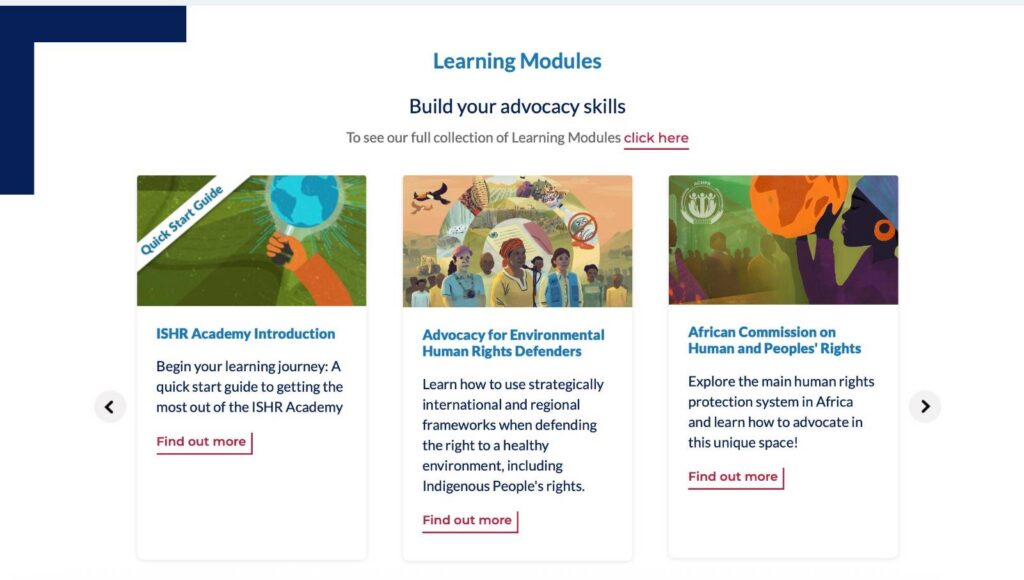
A look at our course on the ISHR academy.
Why a new course for environmental human rights defenders?
The past few years saw an increased number of positive developments for the protection of the environment and environmental human rights defenders.
This includes the recognition of the right to a clean, healthy and sustainable environment, the Human Rights Council’s Resolution 40/11 recognising the role of environmental defenders, the Escazú Agreement enshrining the latter’s rights in Latin America and the Caribbean, and the creation of the Special Rapporteur on Environmental Defenders under the Aarhus Convention. All these developments also require defenders to understand how and when to use these mechanisms.
Defenders themselves have called for tools that strengthen their capacities and sharpen their advocacy. Built for defenders, and with defenders, alongside experts in these mechanisms, this pathway is a direct response to that call.
What can I find in this course?
The pathway is divided into three independent chapters:
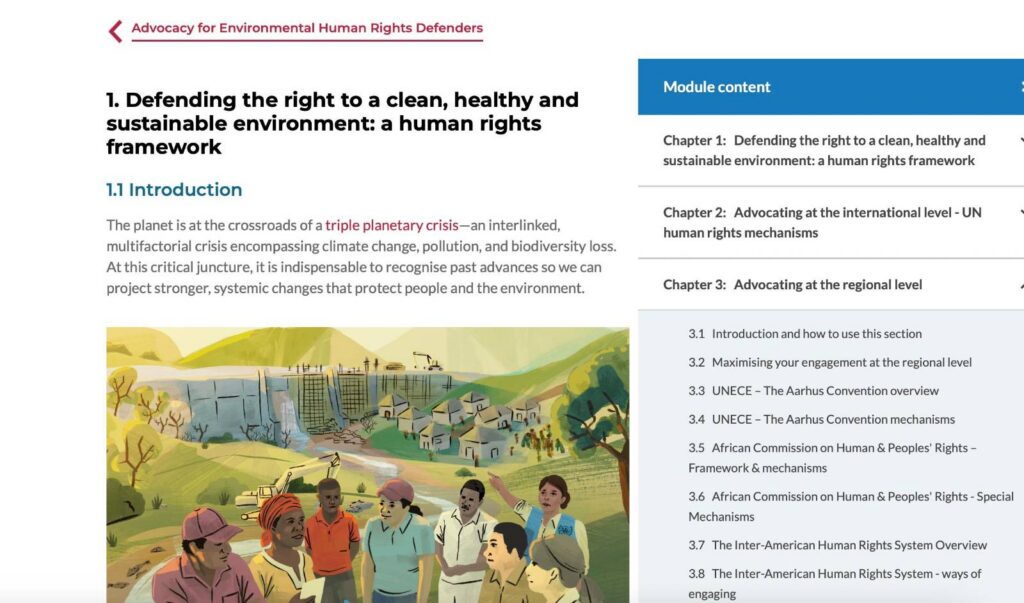
Module content on the ISHR Academy
Chapter 1 examines the legal and conceptual foundations of the right to a clean, healthy and sustainable environment, the role of environmental human rights defenders in addressing the triple planetary crisis, including accountability of States and non-State actors.
Chapter 2 provides strategic and practical guidance to advance environmental justice through UN human rights mechanisms like the Human Rights Council, the Special Procedures, the Treaty Bodies or the Expert Mechanism on the Rights of Indigenous Peoples, and translate local defence into international advocacy.
Chapter 3 dives into regional mechanisms and other tools, in particular, for the protection of environmental human rights defenders. This includes rapid response mechanisms in Europe and Latin America, and other options designed for African and Asia-Pacific defenders through regional institutions and tools.
Free, self-paced, modular and flexible, each chapter can be taken independently, enriched with case studies, videos, and additional resources. You set the pace according to your needs.
How do I know if this is for me?
You know that bringing international attention could create pressure for change, but you don’t know where to start? You have an idea of who the Special Rapporteur on climate change is, the International Covenant of Economic, Social and Cultural Rights does, but don’t know the steps to engage with them?
The pathway walks you through exactly this.
Whether you are a community leader facing displacement, an environmental lawyer seeking international leverage, a representative of a grassroots organisation whose government has stopped listening, a young advocate learning to navigate international spaces, or an NGO supporting defenders on the frontline — this pathway was built for you.
By the end of this pathway, you will be able to:
- Understand who environmental human rights defenders are, the contexts they operate in, and the legal frameworks for their protection
- Identify international and regional advocacy avenues, within the UN and beyond, to advance the right to a clean, healthy environment
- Plan strategic engagement with mechanisms based on your context, and hold governments and non-State actors accountable.
Start learning now at the ISHR Academy!
ISHR warmly thanks all the human rights defenders, experts, Special Rapporteurs and UN staff who supported us in building this course.