Strategy 2030: ISHR’s new Strategic Framework
After extensive internal and external consultations, ISHR has just released its Strategy 2030, our new Strategic Framework.
ISHR provides both analytical and practical information to human rights defenders to strengthen their access to and engagement with human rights bodies and mechanisms at the international, regional and national levels.
After extensive internal and external consultations, ISHR has just released its Strategy 2030, our new Strategic Framework.
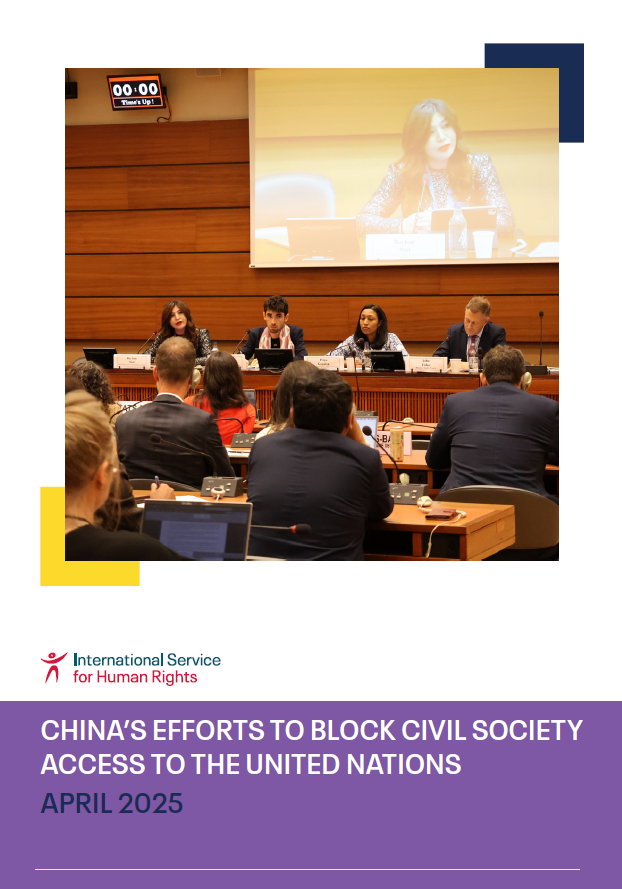
In a new report, ISHR analyses China’s tactics to restrict access for independent civil society actors in UN human rights bodies. The report provides an analysis of China’s membership of the UN Committee on NGOs, the growing presence of Chinese Government-Organised NGOs (GONGOs), and patterns of intimidation and reprisals by the Chinese government.
The Road map for civil society engagement outlines a programme through which civil society organisations (CSOs) can maximise their impact while engaging with the African Commission for Human and Peoples' Rights through the State Reporting Procedure.
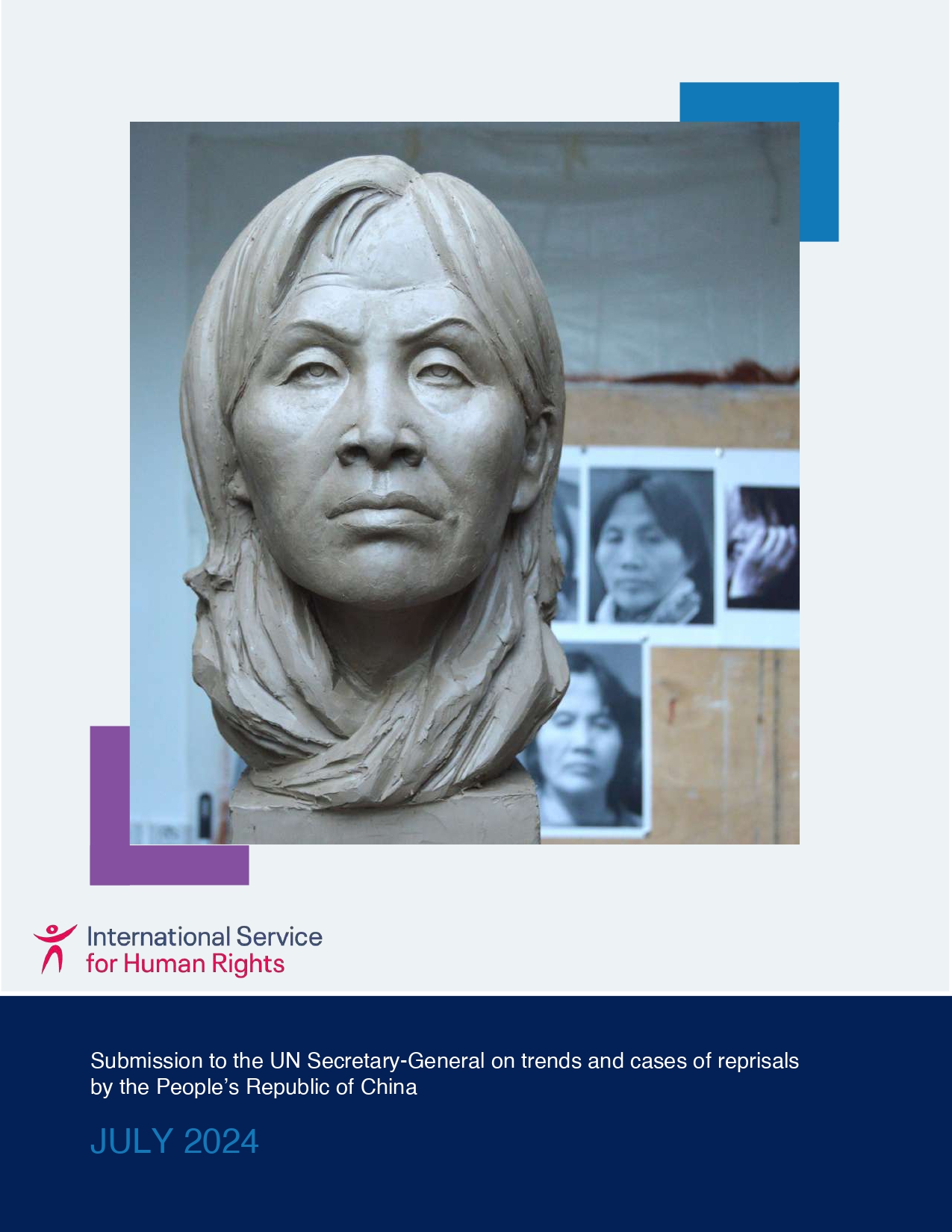
This report examines the troubling trend of reprisals against civil society actors by the People’s Republic of China, particularly those engaging with UN human rights mechanisms. It highlights the systematic measures taken by the Chinese government to suppress civil society's engagement with international bodies, under the guise of national security.
This submission to the 4th Universal Periodic Review (UPR) of China addresses the Chinese government's misuse of ill-defined national security legislation as a structural abuse and common root cause of systematic and widespread violations against Uyghurs, Tibetans, and human rights defenders and lawyers in mainland China and Hong Kong.
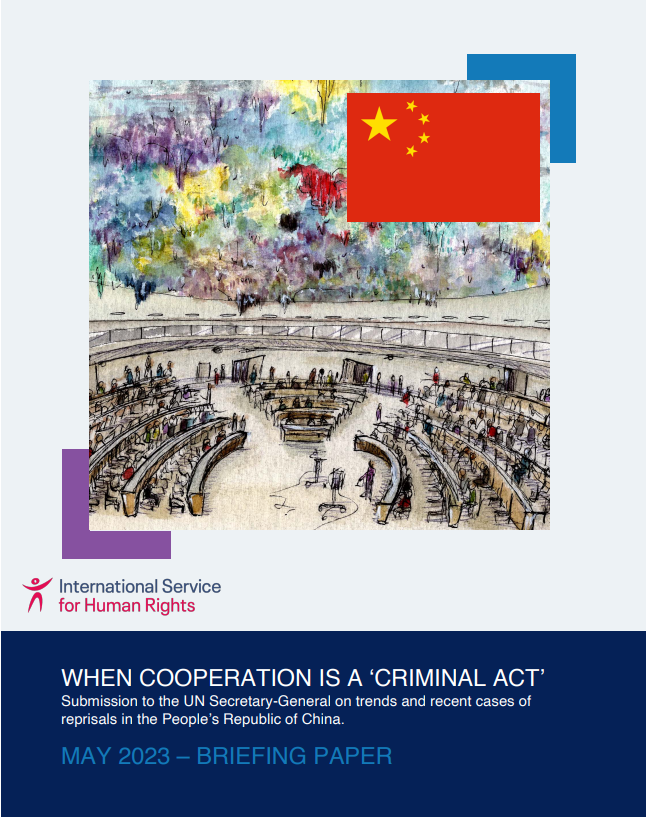
Following an earlier version of this submission of the same title in May 2022, this new ISHR report continues to document trends of reprisals in China in 2022-2023 with an analysis of extant cases, and further summarises the way in which it has portrayed civil society’s cooperation with the UN as a ‘criminal act’.
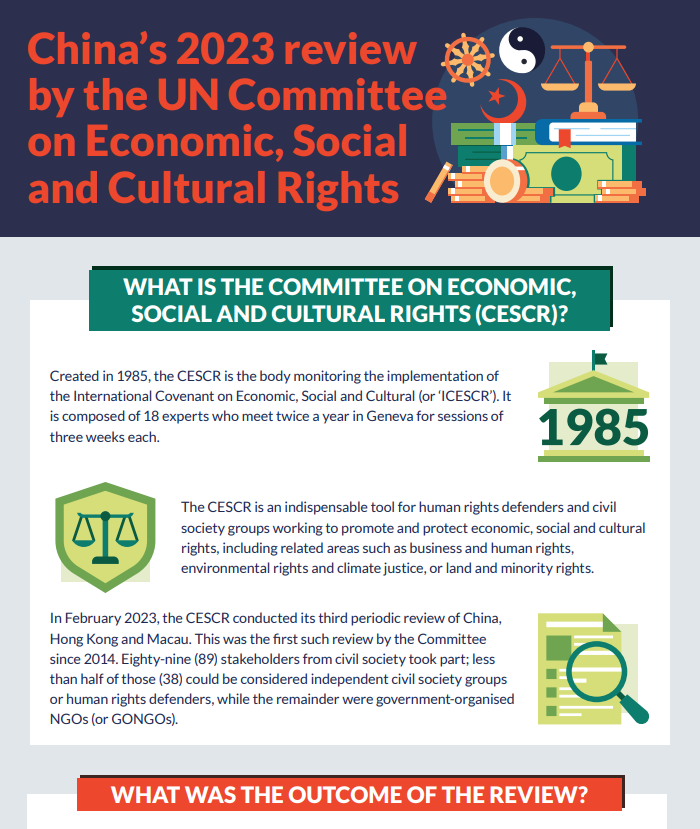
In February 2023, the CESCR conducted its third periodic review of China, Hong Kong and Macau. ISHR has developed an explainer on the Concluding Observations of the review, summarizing the key recommendations and how civil society can use them to assist documentation and advance change.
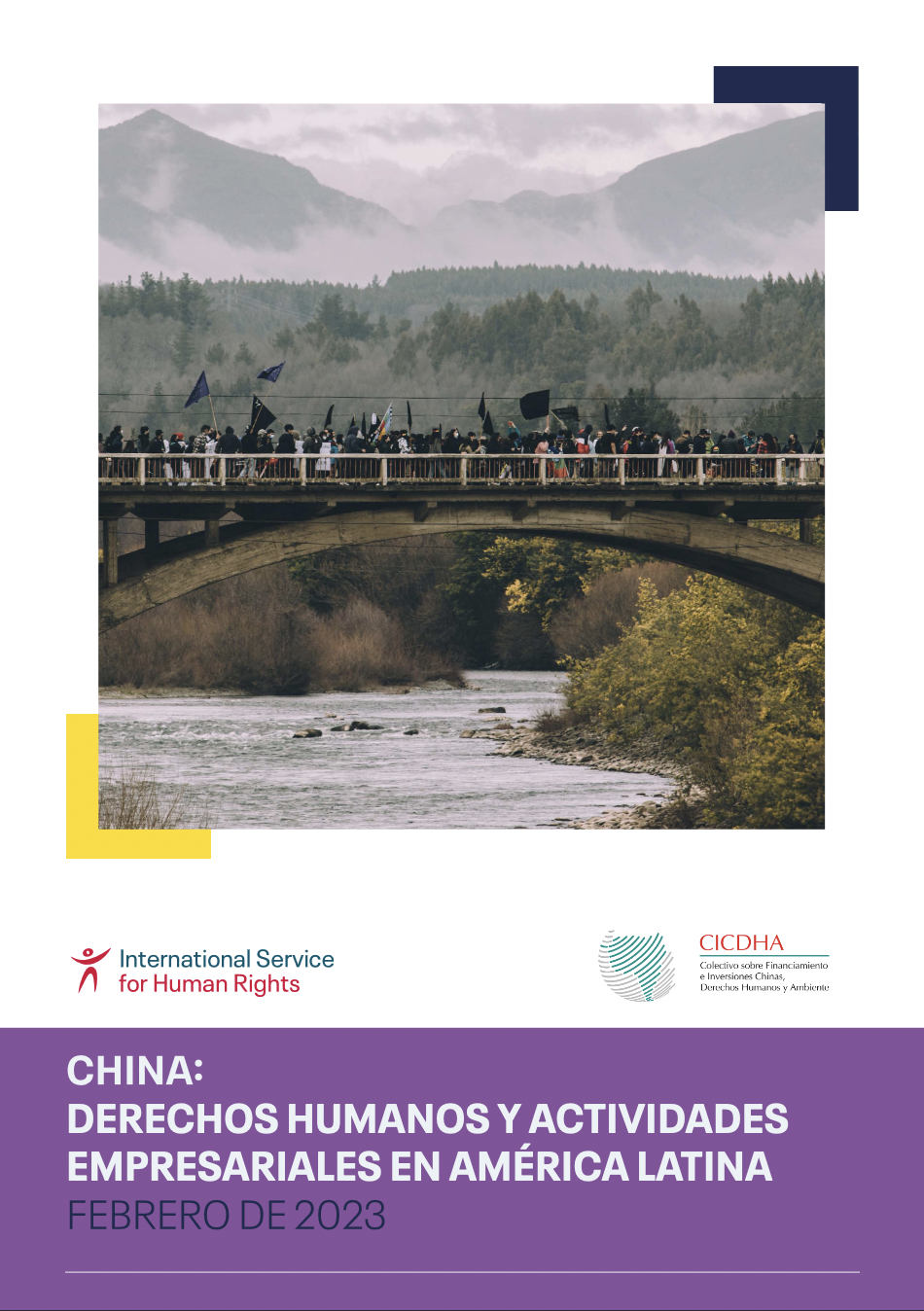
This report submitted to the UN explores 14 business ventures in Latin America in which companies and banks under China's jurisdiction have not complied with international human rights, labour and environmental standards.
In this briefing paper, ISHR looks at the powerful role of China over the UN human rights treaty bodies (UNTBs), identifying the ways in which China deploys influence, from an official discourse that consistently focuses on restricting their scope of work to direct threats to independent NGOs who wish to engage with the UN experts.
'Colectivo 46/2' has published an Evaluation Benchmark on the implementation by the Nicaraguan government of Human Rights Council resolution 49/3 on the human rights situation in the country.