Strategy 2030: ISHR’s new Strategic Framework
After extensive internal and external consultations, ISHR has just released its Strategy 2030, our new Strategic Framework.
ISHR provides both analytical and practical information to human rights defenders to strengthen their access to and engagement with human rights bodies and mechanisms at the international, regional and national levels.
After extensive internal and external consultations, ISHR has just released its Strategy 2030, our new Strategic Framework.
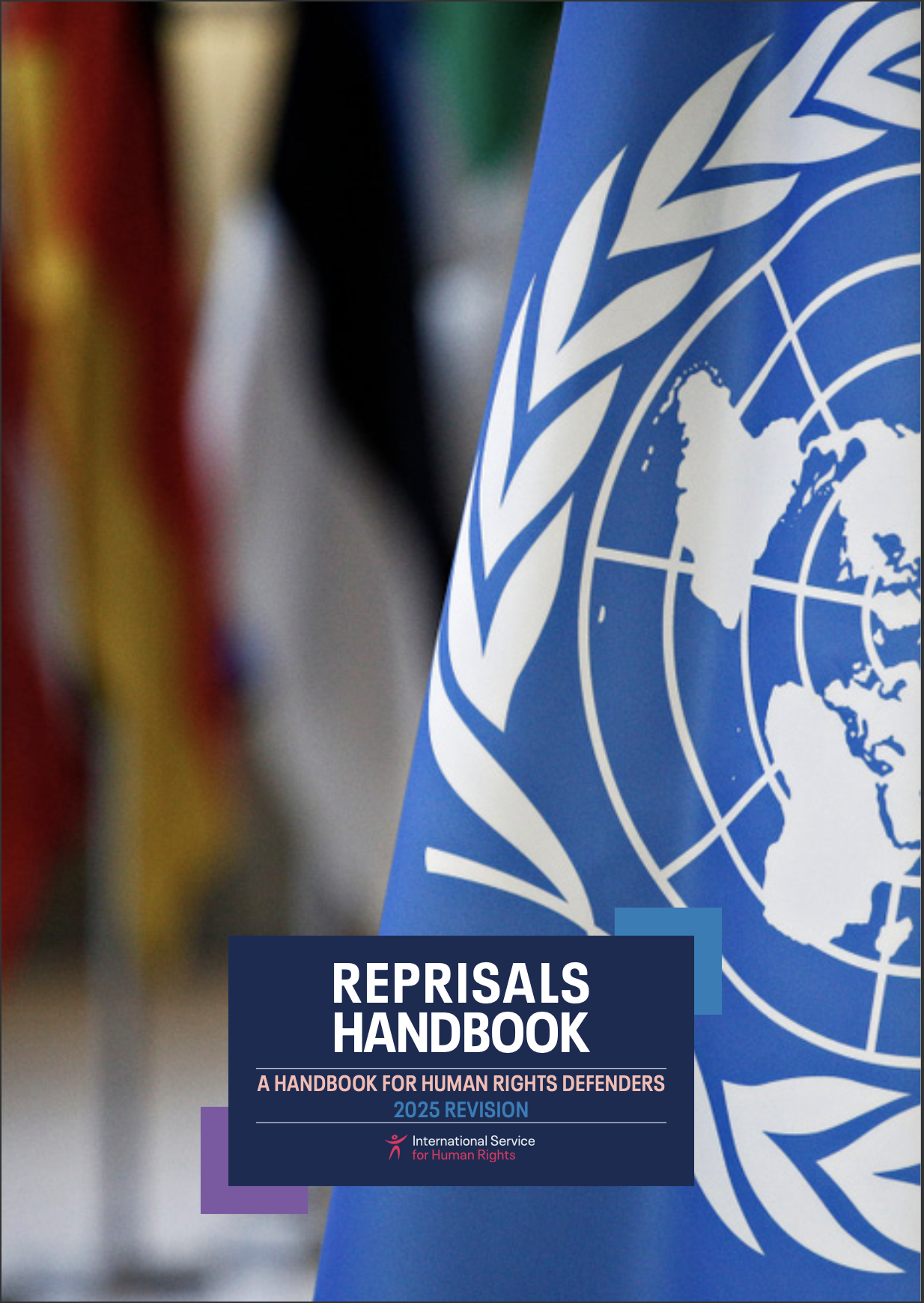
ISHR is pleased to launch its updated Reprisals Handbook in four languages (five versions), an essential resource for all stakeholders concerned about intimidation and reprisals against those cooperating with international or regional human rights systems.
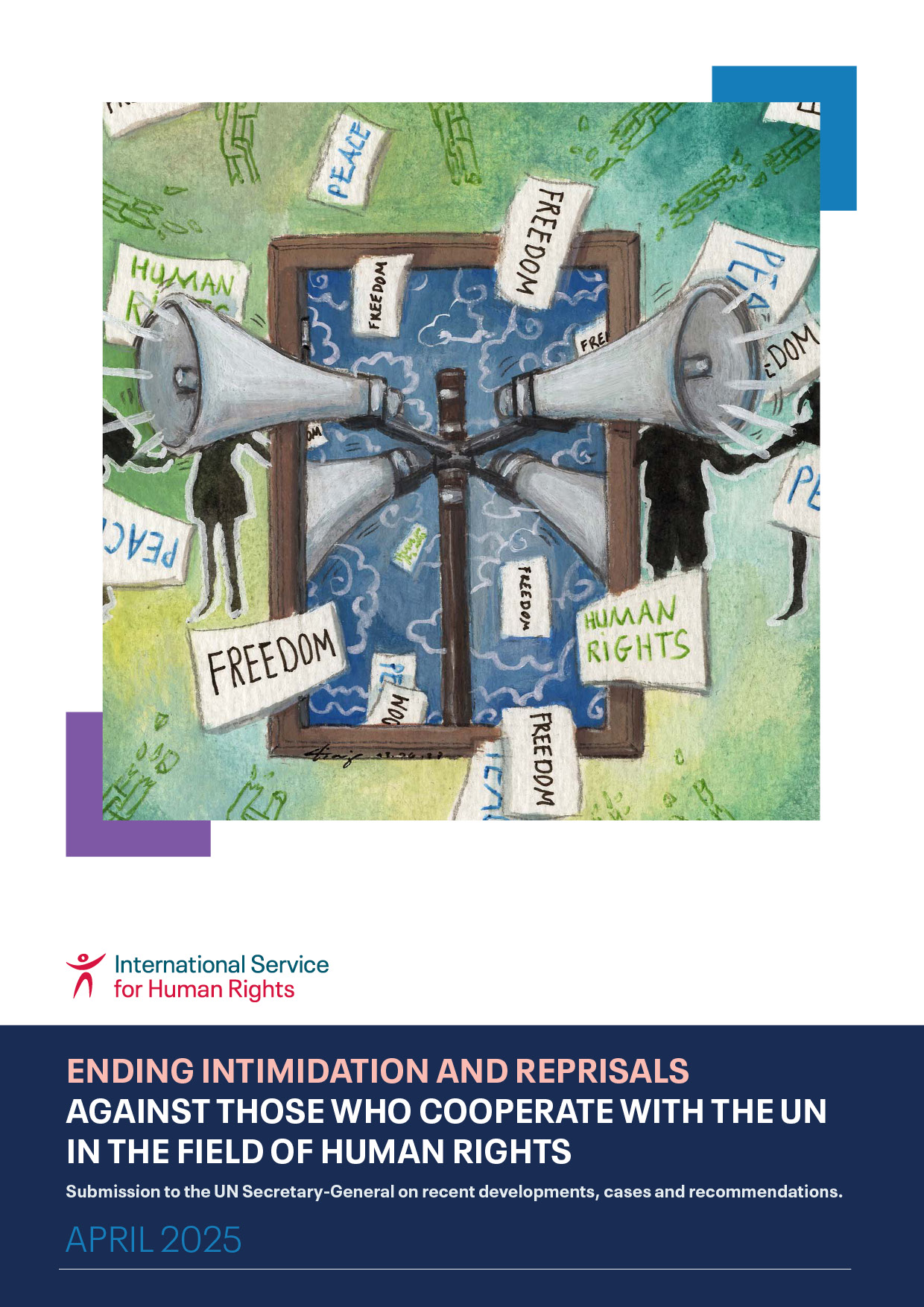
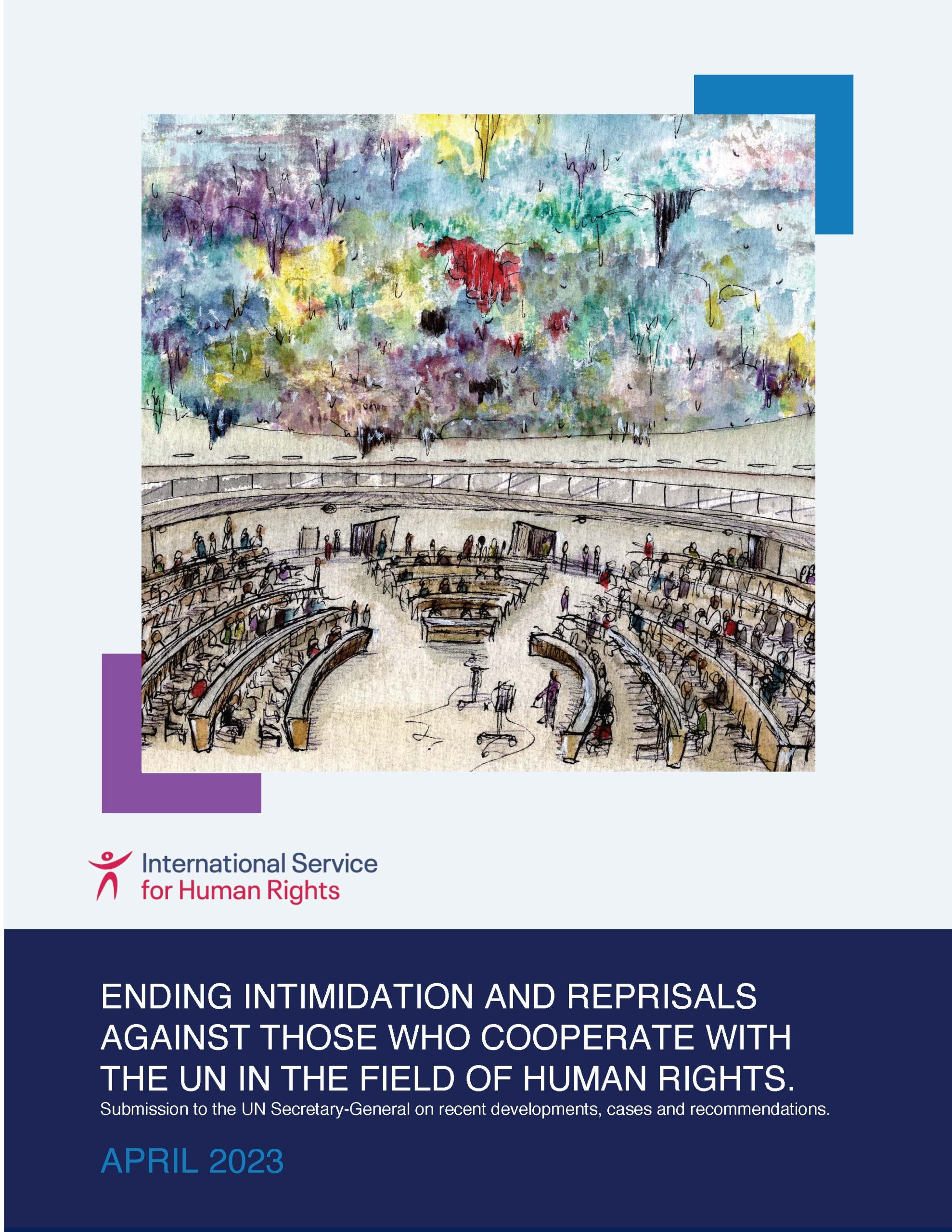
In response to the annual call for inputs from the UN Secretary-General, ISHR has submitted 120 cases of intimidation and reprisals against human rights defenders engaging with the UN from 29 countries.
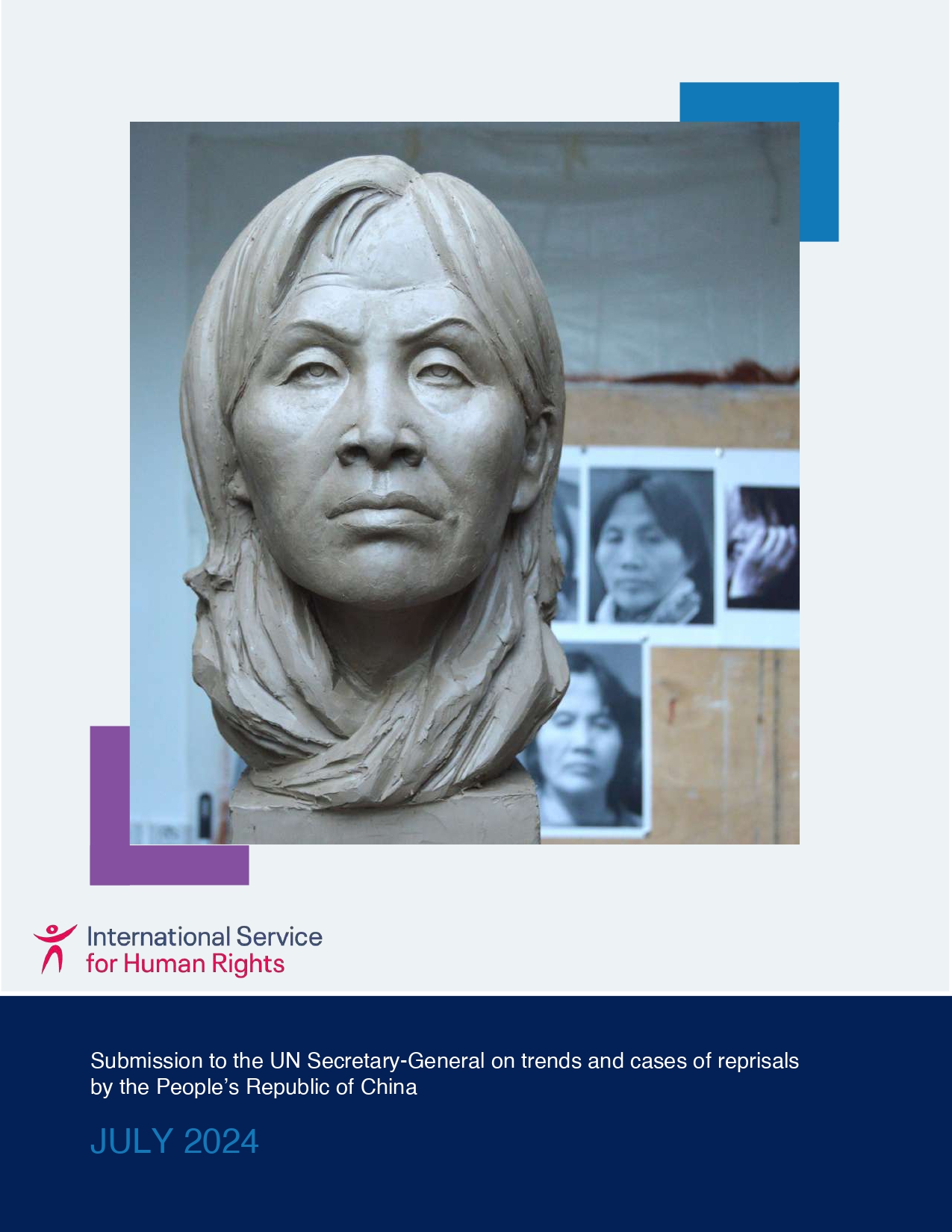
In a new report, ISHR analyses China’s tactics to restrict access for independent civil society actors in UN human rights bodies. The report provides an analysis of China’s membership of the UN Committee on NGOs, the growing presence of Chinese Government-Organised NGOs (GONGOs), and patterns of intimidation and reprisals by the Chinese government.
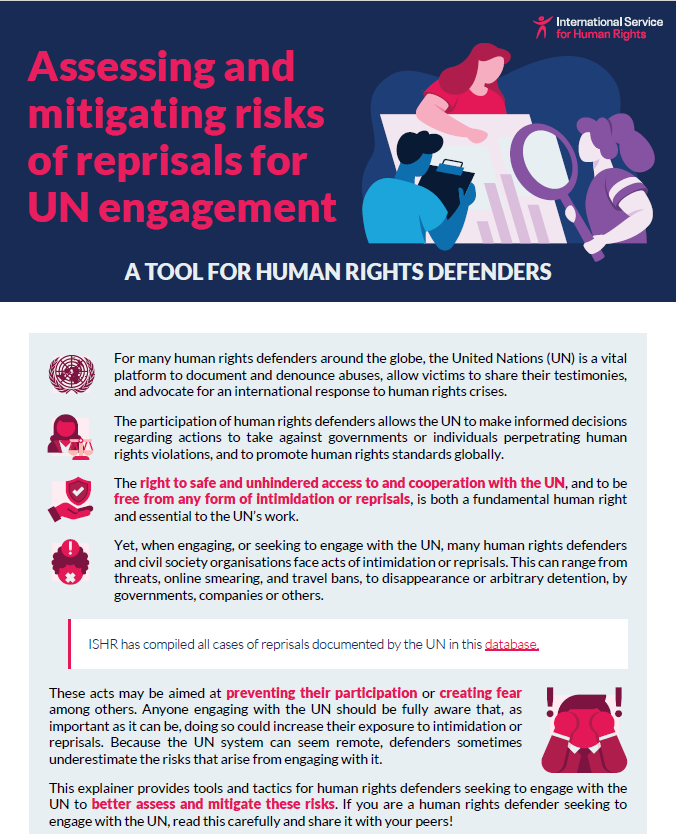
ISHR is pleased to launch a Reprisals Toolkit in four languages, an essential tool for human rights defenders and all stakeholders concerned about intimidation and reprisals against those cooperating with international or regional human rights systems.
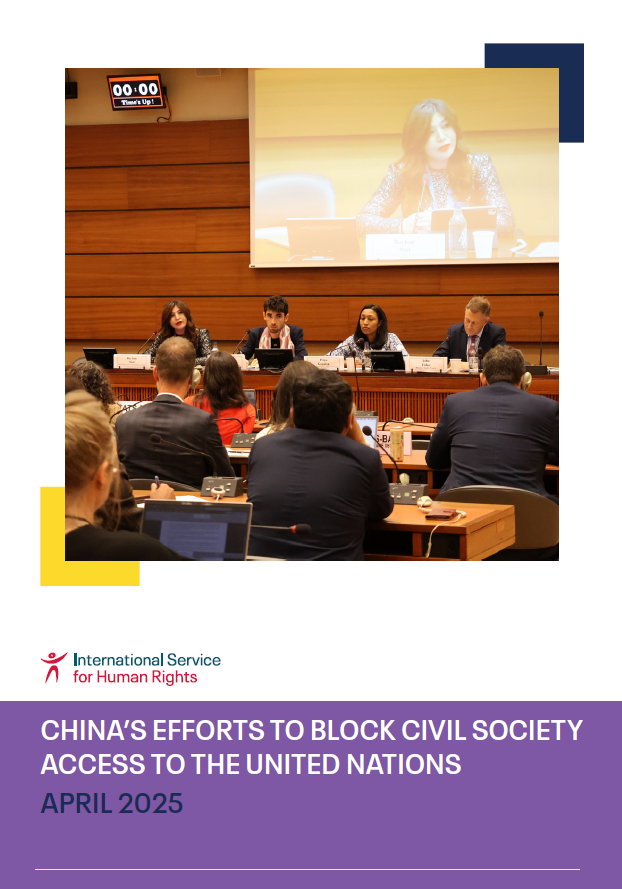
This report examines the troubling trend of reprisals against civil society actors by the People’s Republic of China, particularly those engaging with UN human rights mechanisms. It highlights the systematic measures taken by the Chinese government to suppress civil society's engagement with international bodies, under the guise of national security.
On April 15 2024, ISHR submitted its annual submission to the UN Secretary General on intimidation and reprisals against defenders engaging or seeking to engage with the UN and its human rights mechanisms.
Following an earlier version of this submission of the same title in May 2022, this new ISHR report continues to document trends of reprisals in China in 2022-2023 with an analysis of extant cases, and further summarises the way in which it has portrayed civil society’s cooperation with the UN as a ‘criminal act’.
On 17 April 2023, ISHR submitted its annual submission to the report to the UN Secretary General on reprisals and intimidation against defenders engaging or seeking to engage with the UN and its human rights mechanisms.
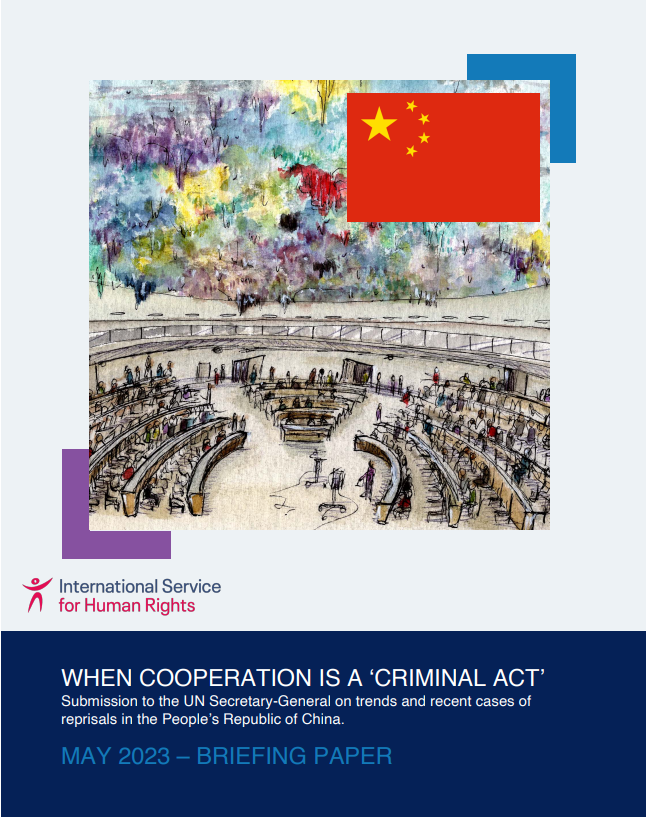
In this briefing paper, ISHR looks at the powerful role of China over the UN human rights treaty bodies (UNTBs), identifying the ways in which China deploys influence, from an official discourse that consistently focuses on restricting their scope of work to direct threats to independent NGOs who wish to engage with the UN experts.