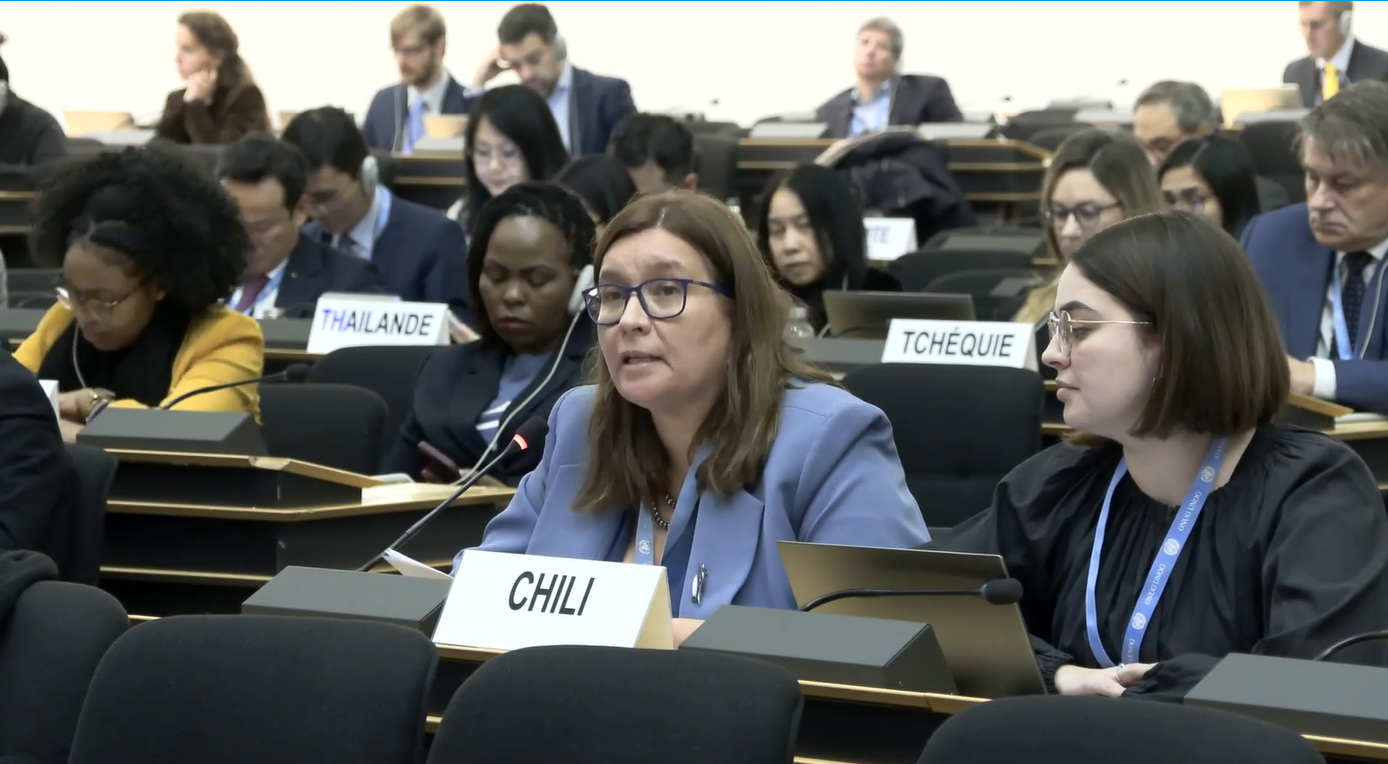
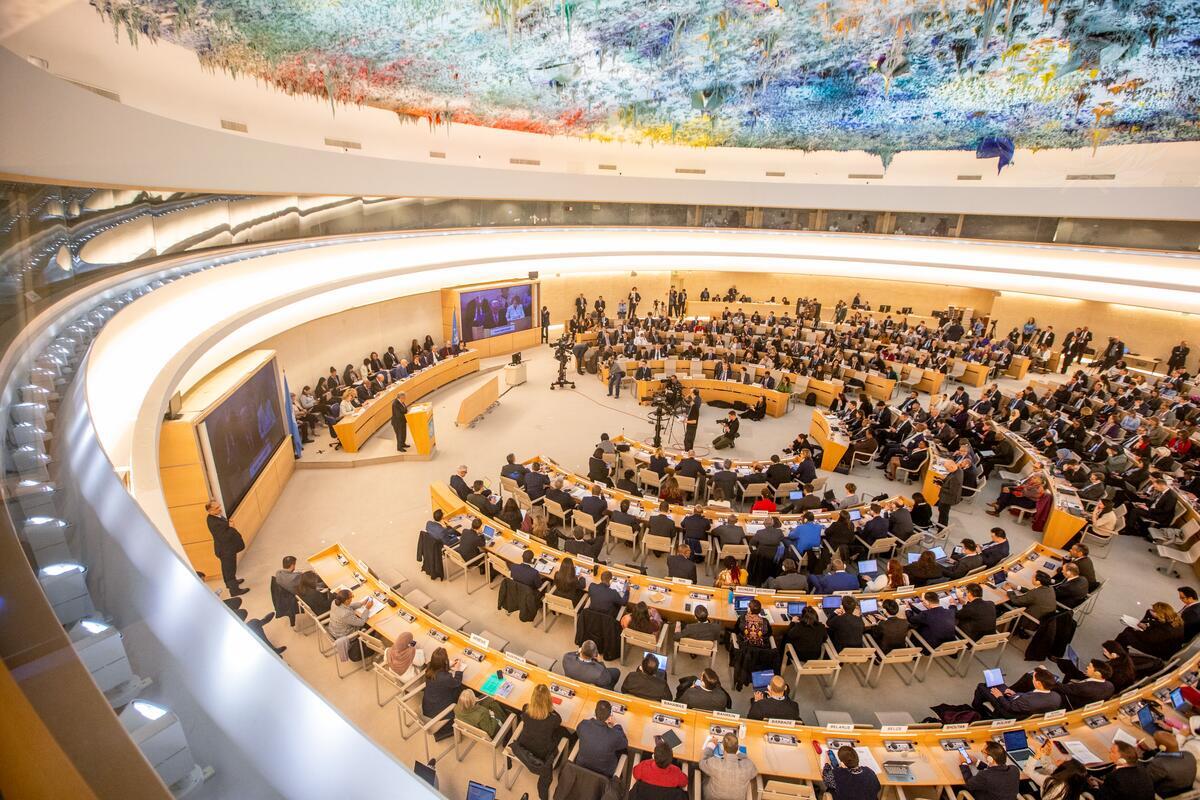
During a preparatory meeting of the Human Rights Council (HRC) on 8 December in Geneva, Chile delivered a joint statement on behalf of 40 countries from all regions* urging governments to work together to safeguard the UN’s human rights pillar from disproportionate budget cuts and ‘ensure equity across the UN’s three pillars’ under the ongoing UN80 reform initiative. These calls were further echoed in complementary statements by Mexico, Uruguay, Sierra Leone, the Dominican Republic, and other delegations which also spoke in their own capacity during the session, as well as in ISHR’s statement.
The group of countries cited ‘serious and systemic budgetary pressures affecting the human rights pillar.’ They raised deep concern about the impact of the Secretary-General’s revised budget proposal released in September of 15% cuts to the Office of the High Commissioner for Human Rights (OHCHR) budget under UN80 (Workstream 1) in comparison with his initial budget proposal for 2026, emphasising that the amount initially requested ‘reflects the budget needed to adequately deliver on the human rights mandates [States] collectively adopted at the HRC and other bodies.’
In its last report on the UN’s human rights funding and its campaign on UN80 reform, ISHR documented a series of long-term and pressing challenges that erode the UN’s ability to fully deliver on its human rights mandates, addressed in this joint statement:
-
- The human rights pillar remains chronically underfunded, historically accounting for only 3-7% of the UN’s regular budget, and less than 1% of the UN’s total expenses when including voluntary donations. The human rights budget is consistently among the budgets that suffer the most significant cuts by the General Assembly’s Fifth Committee on the basis of recommendations from the Advisory Committee on Administrative and Budgetary Questions (ACABQ).
- Budget cuts proposed in the Secretary-General’s revised budget proposal disproportionately target the human rights pillar, with 15% proposed cuts, compared with 11.7% for the development pillar. This runs contrary to the Secretary-General’s reiterated commitment to ‘ensure balance across pillars’, a concern shared by many countries.
- Human rights work is human resources-intensive, yet proposed cuts mostly take the form of post abolitions, with 105 OHCHR posts to be abolished in the revised budget proposal (16.4% of existing posts). Cutting these posts will severely hamper the UN’s ability to assist States in revising laws and policies, improving governance, training officials and participating in global debates, as well as its ability to monitor, document and act on early warning signs to prevent rights violations, and to investigate and promote accountability.
- Given chronic underfunding and human-resources intensive mandates, even cutting all pillars by the same percentage would translate into a significantly greater loss of capacity for OHCHR and all human rights mechanisms it supports, including those adopted by States at the HRC. Year after year, human rights bodies have been asked to do more without a proportionate increase in budget, and with a recent decrease in voluntary donations by States. Forcing OHCHR to work ‘within existing resources’ has greatly reduced OHCHR’s capacity to deliver on mandates across all areas of human rights work.
- The existing resource constraints considerably affect posts created by HRC resolutions adopted in recent years, many of which have remained vacant as a result of the liquidity crisis, across all areas of human rights work, including safeguarding civil society space and investigating atrocity crimes. The further proposed cuts will compound this already dire situation.
- These include priorities for Global South countries in the areas of economic, social and cultural rights, sustainable development, racial discrimination, and climate change, among others. They also include innovative areas of human rights work requiring dedicated external expertise, such as new and emerging technologies, AI or biodiversity.
- Ensuring adequate funding for specific human rights areas, including the above, can only be achieved by preventing disproportionate across-the-board cuts to OHCHR’s regular budget.
- More than any other pillar of the UN, the human rights system draws on and leverages the very substantial pro bono expertise and experience of hundreds of independent human rights experts. Cuts to the human rights pillar will substantially reduce the UN’s capacity to access and leverage this substantial in-kind contribution.
- Cuts to the UN human rights regular budget mean that the system will become more reliant on voluntary donations, which have the potential to skew the work of the system. The best way to ensure that the human rights system is universal and can operate in the most principled, non-selective and non-discriminatory manner is to ensure that it receives adequate regular budgetary contributions and is not unduly reliant on the largesse of certain States.
With the support of developing nations across continents, Chile’s joint statement underscored the ‘concrete and far-reaching implications’ of reduced staffing in OHCHR’s regional offices, such as ‘diminished presence on the ground, capacity to collect information in developing countries and capacity to support States – particularly in the Global South – in building stronger human rights protection systems.’
Outsized impact for minimal cost-saving
In its report circulated last week, the ACABQ broadly endorsed the cuts proposed by the Secretary-General. It accepted the creation of two additional posts but proposed cutting 14 others across regional offices**, increasing the total of post reductions from 105 to 117. This brings the total of recommended post abolitions to 18.3% of OHCHR’s current 2025 posts, and to 16.7% of the initial 2026 budget proposal, which, as stated above, reflects the actual resources OHCHR needs to deliver on new mandates created by Member States.
As documented by ISHR, the protracted inability of States to reach consensus during negotiations at the Fifth Committee, resulting from extreme proposals to slash human rights budgets led by China and Russia, too often lead States to adopt ACABQ recommendations as a default, at the expense of human rights.
The impact of proposed budget cuts will be compounded with that of the liquidity crisis, as was the case in 2025 with OHCHR only receiving 73% of its approved budget. While the US still owes USD 1.5 billion to the UN’s regular budget, China’s late payment of its contributions on 27 December 2024 largely contributed to the return of USD 300 million (8% of the UN’s regular budget) to Member States in the form of credits to future contributions in 2026 – a mechanism the UN has urged States to temporarily suspend.
Proposed human rights cuts do not reflect specific reform proposals and will only generate 8% of the total savings expected under UN80. Yet, they will weaken underfunded human rights bodies, which are increasingly unable to fully deliver their functions. During Monday’s dialogue in Geneva, Deputy High Commissioner for Human Rights Nada Al-Nashif reminded States of activities OHCHR has been unable to implement and drastic measures it has been obliged to take given cash shortages, including: given cash shortages, including:
-
- reduction by half of the number of country visits by Special Rapporteurs, a prime opportunity for in-depth engagement with national authorities to improve policies and laws
- cutting of one session for all Treaty Bodies, which have accumulated significant backlogs in reviewing how States comply with international human rights treaties they voluntarily ratified
- postponing the research and release of HRC-mandated reports in diverse areas such as child digital safety, cyberbullying, domestic violence, adolescent pregnancies, law enforcement and peaceful protest, HIV response, rights to work and social security in the informal sector, accessibility to the HRC for persons with disabilities, and educational practices to combat racism and discrimination
- unavailability of resources for the full operationalisation of the Commission of Inquiry (COI) on grave rights violations in the eastern Democratic Republic of the Congo, and for the release by the COI on the Occupied Palestinian Territory (OPT) of reports on illegal Israeli settlements on the OPT and the transfer or sale of weapons and dual-use items to Israel.
The adoption of cuts at the level recommended by the ACABQ will further entrench such measures. According to standardised budget guidance, a reduction of 1% of OHCHR’s budget at its 2025 level represents, by way of example, over 20 country visits, or one year in costs for up to five thematic or country Special Procedures mandates.
An urgent call for global action
States will imminently start negotiating proposed budget cuts in New York, with only three weeks to adopt a budget for 2026. ISHR echoes the joint statement’s call on ‘all States – in Geneva and in New York – to work together to ensure equity across the UN’s three pillars, to safeguard the capacity of OHCHR, Treaty Bodies and Special Procedures to fulfil their mandates, and to uphold the integrity of the international human rights architecture.’
With regards to UN80 budget reductions, ISHR urges:
-
- States from all regions to recognise their shared interest in defending human rights and multilateralism, work in coalition to stand up for human rights funding in a principled and consistent way, and ensure equity among UN pillars, by preventing budget cuts that would disproportionately affect the human rights pillar, taking into consideration its chronic underfunding and increasingly limited capacity to fully deliver its functions
- G77+China members to ensure a group position against disproportionate cuts to the human rights pillar in comparison with other pillars, taking into consideration the outsized impact of cuts on human rights priorities for developing countries
- all States to vote against any attempt to instrumentalise Fifth Committee proceedings to defund resolutions already adopted by the HRC.
With regards to the liquidity crisis, ISHR urges all States to:
-
- endorse proposals to suspend the return of unspent contributions in the form of credits to future contributions of Member States, during a liquidity crisis;
- pay contributions in full and on time, and urge other States to also do so
- increase voluntary unearmarked donations.
* List of signatories (as of 8 December 2025): Afghanistan, Albania, Andorra, Austria, Bahamas, Barbados, Belgium, Chile, Colombia, Costa Rica, Croatia, Cyprus, Czechia, Dominican Republic, Ecuador, Estonia, Finland, France, Georgia, Germany, Guatemala, Iceland, Ireland, Liechtenstein, Lithuania, Luxembourg, Malta, the Marshall Islands, Mexico, Monaco, Montenegro, the Netherlands, Portugal, Sierra Leone, Slovenia, Spain, Switzerland, Uruguay, Ukraine.
** The ACABQ recommended against the establishment of 19 posts in the P and GS categories across regional offices, requesting 5 of them to be instead established as NPO posts (National Professional Officers).
******************************************************************************************
Background information:
On 12 March 2025, Secretary-General Antonio Guterres launched the UN80 Initiative coinciding with the organisation’s 80th anniversary. The primary aim of the Initiative stated by the Secretary-General is to be ‘more efficient, to simplify procedures, eliminate overlaps and enhance transparency and accountability.’ However, the initiative is also linked to the UN’s ongoing liquidity crisis, driven by Member States’ continued failure to meet their financial obligations in full and on time over the past seven years.
Under the UN80 Initiative, an internal Task Force was appointed to develop concrete proposals around three workstreams: (1) identify efficiencies and improvements in the work of the UN ; (2) review the implementation of all mandates; and, (3) undertake a strategic review of structural changes and programme realignment in the UN System. While Workstream 1 budget cuts are being negotiated this year, reform negotiations under Workstreams 2 and 3 will continue until March 2026.
The UN Secretariat’s proposals under Workstream 1, seeking ‘efficiencies’, are incorporated into a revision of its initial budget proposal for 2026 released in September, known as the ‘Revised Estimates Report for 2026 Proposed Programme Budget’ (or revised budget proposal). Additional budget implications arising from discussions among States on mandate implementation, co-facilitated by Jamaica and New Zealand, under Workstream 2, and from the Secretary-General’s proposals on programme realignment, including the establishment of a ‘Human Rights Group’, under Workstream 3, will be discussed and adopted in 2026 for the budget of 2027.
The Secretary-General’s revised budget proposal shielded select UN entities from budget reductions on Palestinian and other refugees, international cooperation for development, including regional commissions, and development support to the Least Developed Countries, and Africa’s development goals, as well as the International Court of Justice. Human rights bodies targeted with reductions other than OHCHR include investigative mechanisms on Myanmar (14-15%) and Syria (14-16%), the UN’s mechanism for missing persons in Syria (15-17%), and UN Women (15%).
The ACABQ, a subsidiary organ advising the General Assembly’s Fifth Committee, has reviewed the Secretariat’s revised budget proposal, and publicised its recommendations. The ACABQ is yet to make public other recommendations on additional budgetary requirements arising from resolutions adopted by the HRC in its June and September sessions. The General Assembly’s Fifth Committee, where all 193 Member States decide on administrative and budgetary matters, must adopt the UN’s budget for 2026 by 31 December.