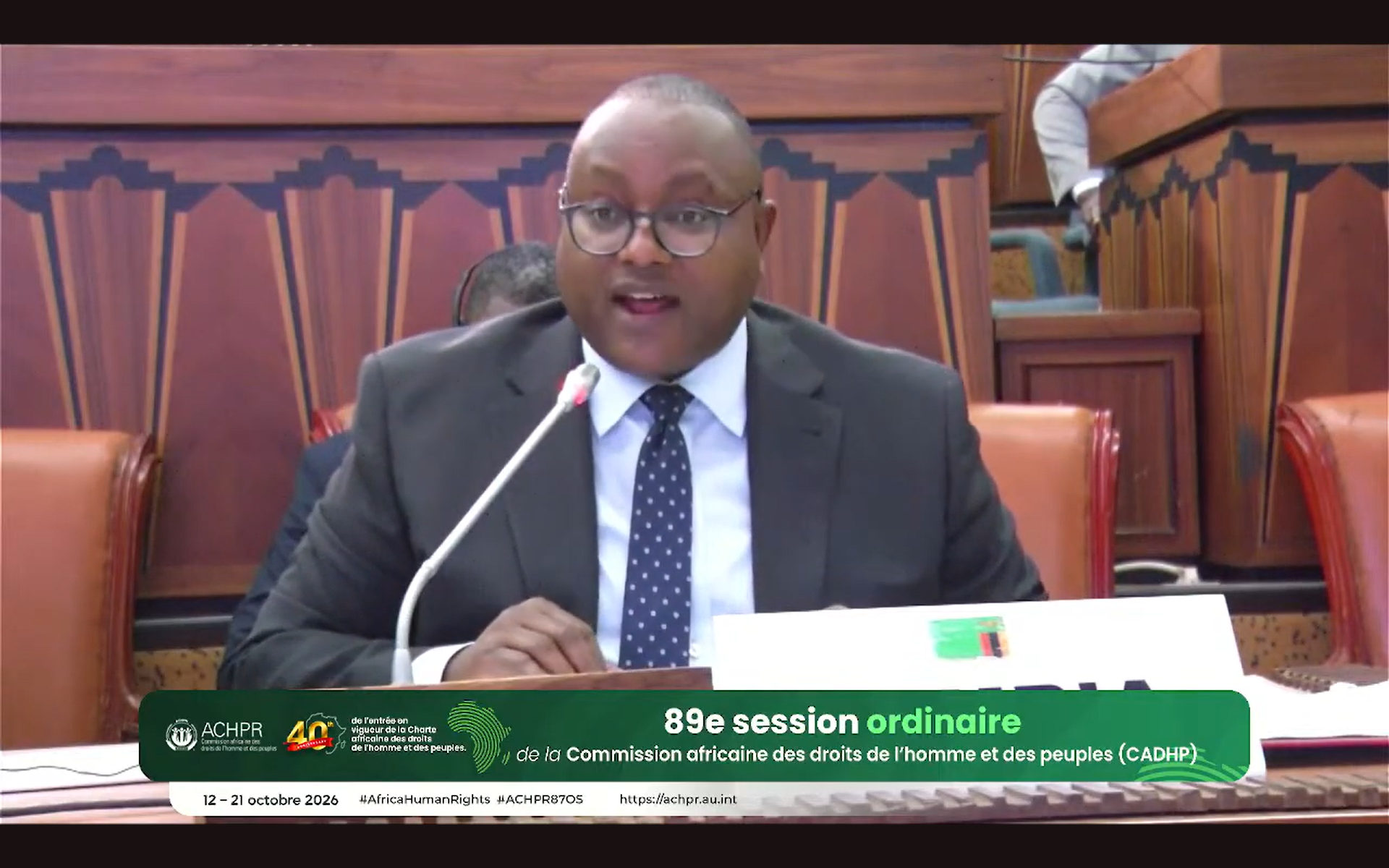
Following its obligation under article 62 of the African Charter, Zambia presented its periodic report informing the African Commission on Human and Peoples’ Rights (the ‘African Commission’) of the steps taken to guarantee the rights enshrined in the Charter.
During the presentation of its report, the delegation of Zambia represented by the Minister of Foreign Affairs and International Cooperation shared some of the country’s main achievements during the reporting period. In December 2022, Zambia abolished the death penalty. Following this measure, the President of Zambia commuted 390 death sentences into life imprisonment. In 2024, the enactment of the human rights commission Act number four, which marked a significant milestone as it expanded the scope of the work of the Commission to cover civil, political, economic, social and cultural rights. In addition, it strengthened its independence, it gave it clearer authority to investigate violations and follow up on recommendations from international and regional human rights mechanisms and made it the oversight body monitoring the implementation of the Access to Information Act adopted in 2023.
Ahead of the review, ISHR submitted a shadow report jointly with the Southern African Centre for the Constructive Resolution of Disputes (SACCORD) and the Zambia Network for Human Rights Defenders (ZNHRD). The report complements Zambia’s State report covering 2020–2025, highlighting gaps in the protection of defenders and the implementation of the African Commission’s recommendations.
The submission raises concerns about laws that restrict freedom of expression, association and peaceful assembly. It also highlights the lack of a dedicated legal framework to protect defenders from intimidation and reprisals.
With our Zambian partners, ISHR highlighted the following:
- The use of the Public Order Act to restrict meetings and peaceful protests. A proposed replacement, the Public Gatherings Bill, passed Parliament in May 2026 but was subsequently rejected by the President, leaving the existing Act in force. The report also raises concerns about insufficient transparency and consultation during the reform process.
- Continuing restrictions on expression under the Penal Code. Although the offence of defaming the President was repealed in 2022, criminal libel, insulting language and sedition provisions remain. The “false news” provision has also not been removed from the legislation, despite being declared unconstitutional in 2014.
- Restrictions under the State Security Act and the use of cyber laws against defenders and journalists, raising concerns about access to information, surveillance, privacy and freedom of expression online.
- Broad government powers under the NGO Act to control registration and organisations’ areas of work, alongside mandatory re-registration every five years, which threaten civil society’s independence.
The report also identifies a gap between legislative commitments and implementation. Despite the adoption of the Access to Information Act, the Alliance for Community Action reported that five information requests to public institutions remained unanswered after more than 130 days.
Finally, a proposed law to recognise and protect human rights defenders has been under discussion since 2018 but remains unenacted. The submission asks the government to establish a clear timetable for developing and adopting the law, with meaningful civil society consultation. It also asks how the legislation will address the specific risks facing women defenders and vulnerable groups, and how oversight bodies will monitor its implementation.