One year after Nicaragua’s disengagement from the Human Rights Council in Geneva, States gathered at the UN’s General Assembly renewed their scrutiny over the human rights crisis in the country. UN experts called on States from all regions to take concrete steps to address and end impunity for crimes against humanity, including by supporting UN-mandated investigations and proceedings in national and international courts, as well as strengthening protection and support for human rights defenders in the country and in exile.
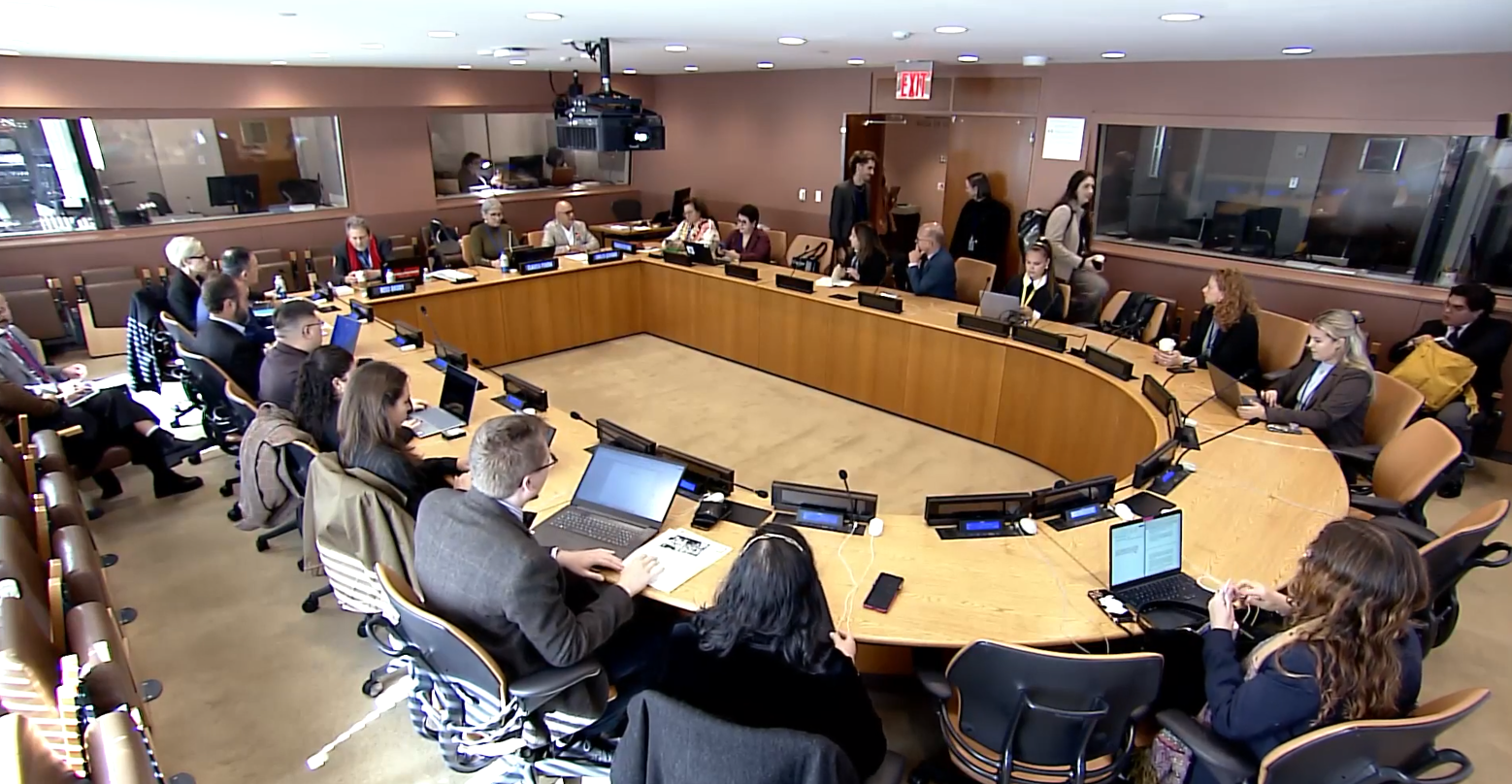
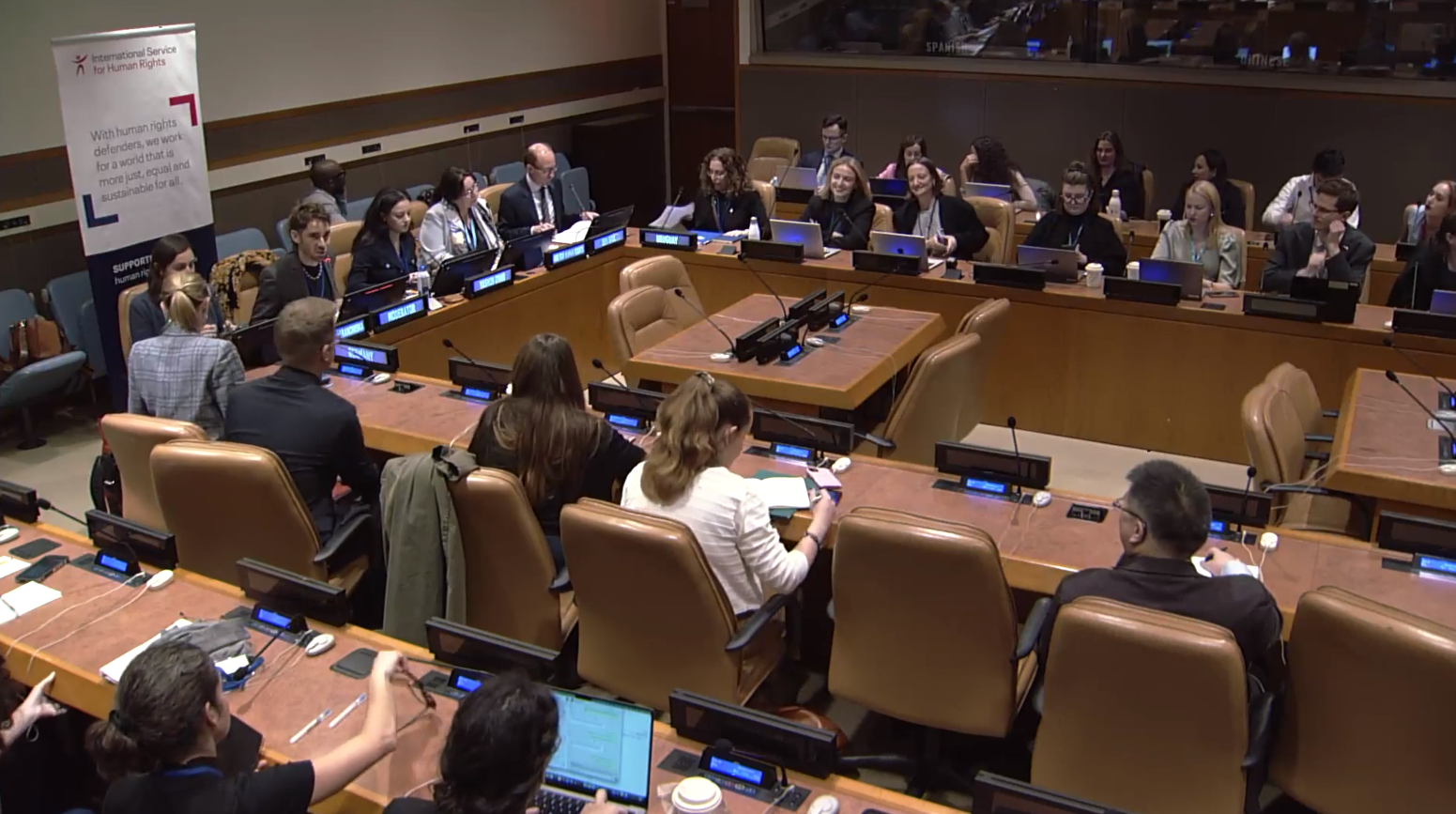
On 27 October, ISHR organised with Colectivo 46/2, a coalition of 23 Nicaraguan, regional and international organisations, the side event ‘Human rights in Nicaragua: advancing towards accountability’ at the UN Headquarters in New York. The event was sponsored by the Permanent Mission of Chile and took place on the margins of the Third Committee of the 81st session of the General Assembly. It is available on UN WebTV.
Held a day after the Committee’s interactive dialogue with the Group of Human Rights Experts on Nicaragua (GHREN), the event brought together a member of the GHREN, the UN Special Rapporteur on the independence of judges and lawyers, and Nicaraguan civil society to take stock of grave violations committed by the Nicaraguan State, and identify concrete avenues to end impunity. The event comes at a time when Nicaragua continues to refuse any cooperation with UN human rights mechanisms. During the event, speakers emphasised the following points:
-
- In a pre-recorded message, Rosa María Payá, Commissioner and Rapporteur for Nicaragua of the Inter-American Commission on Human Rights, emphasised the need to turn documentation into effective protection, preservation of evidence and access to justice. She described how the dismantling of democratic institutions has left victims with virtually no effective remedies inside the country, and called on States to use all legal and diplomatic tools to fight impunity.
- Claudia Pineda, Director of the NGO ‘Asociación Memoria y Justicia’, outlined the evolution of Nicaragua’s repression of civil society actors since 2018, and its current transnational aspect. This includes over 5,660 civil society organisations being shut down, 452 individuals stripped of their nationality, and around 800,000 Nicaraguans (12% of the population) who have left the country. As of October 2026, 72 individuals remained deprived of liberty for political reasons and 33 had been forcibly disappeared, figures likely under-reported. Her organisation also documented over 200 cases of transnational repression, including surveillance, threats, killings and attempted killings in Costa Rica and Honduras. They also documented the abuse of INTERPOL Red Notices and extradition proceedings, and reprisals against relatives who remain in Nicaragua.
- Claudia Paz y Paz, of the Center for Justice and International Law (CEJIL), underlined the differentiated impact of repression for women, Indigenous Peoples and Afro-descendants. She cited nearly 14,000 attacks against more than 1,700 women human rights defenders between 2018 and 2025, and the persecution of Indigenous leaders linked to land invasions and extractive concessions, recalling the enforced disappearance and subsequent death in custody of Miskito leader Brooklyn Rivera. She called for justice processes to recognise the impact on such groups and communities, and to guarantee effective participation of victims.
- Reed Brody, member of the GHREN, presented four avenues for accountability: (1) a case before the International Court of Justice (ICJ) brought by one or more States against Nicaragua for arbitrary deprivation of nationality, in violation of the Convention on the Reduction of Statelessness, which could lead to provisional measures within months; (2) a referral to the International Criminal Court (ICC), as Nicaragua’s deportation of 135 people to Guatemala, an ICC State party, could ground jurisdiction; (3) the exercise by States of universal jurisdiction, such as the arrest warrant already issued in Argentina; and (4) targeted sanctions, noting that half of the 56 individuals the Group has identified as likely responsible have yet to be sanctioned in key jurisdictions.
- Margaret Satterthwaite, UN Special Rapporteur on the independence of judges and lawyers, described the dismantling of an independent judiciary and the removal in July 2026 of some 2,000 lawyers from the official register, without notice, justification or due process. She also urged States to protect those targeted by transnational repression, pointing to the September 2026 joint statement on transnational repression by over 130 UN human rights experts and to the need for States to take the lead in addressing INTERPOL’s abuse of Red Notices.
In his opening remarks, Ambassador Roberto Ampuero, Permanent Representative of Chile, called for an end to enforced disappearances and the release of those arbitrarily detained. He also called for family members to be given information about their loved ones’ whereabouts. Ampuero highlighted the GHREN’s documentation of surveillance, threats and harassment of Nicaraguans abroad, and the recent constitutional reforms restricting political participation.
Ambassador Ampuerto further urged Nicaragua to cooperate with international mechanisms. Despite initially participating in its 2024 Universal Periodic Review (UPR) by presenting its national report and receiving recommendations by States from all regions, Nicaraguasubsequently discontinued its cooperation with the Human Rights Council and with the UPR in 2025, and did not participate in the adoption of its UPR outcome report. The Council adopted several decisions to postpone the consideration of the outcome of the UPR of Nicaragua three times, now re-scheduled for the Council’s 65th session in the summer of 2027.
In her intervention, Paz y Paz also welcomed the joint statement on Nicaragua delivered by Costa Rica at the Human Rights Council in September on behalf of 47 States and called for similar initiatives at the Third Committee.
In the discussion, panellists called on host States such as Costa Rica to establish protection systems for exiled human rights defenders, including through a protocol in the Inter-American system to address transnational repression. They also raised the need to condition loans and trade agreements with Nicaragua on human rights considerations, noting limited transparency in the use of funds from international financial institutions, including the Central American Bank for Economic Integration (BCIE), and the opaque data on remittances. Participants also questioned why the EU has not enforced the human rights clause of its Association Agreement with Central America, and why international financial bodies have not flagged Nicaragua’s integrity risks.
Concerns sustained at second General Assembly dialogue on Nicaragua
On the eve of the event, States gathered at the Third Committee to hold a dialogue with the GHREN, the second ever such dialogue as mandated in the Human Rights Council’s latest resolution on Nicaragua.
Following the presentation of the GHREN’s latest report on enforced disappearances, including its reiterated findings of the commission of crimes against humanity by Nicaraguan officials, 11 delegations thanked the Group’s work and raised a range of concerns. This included the EU, Costa Rica, Chile, Georgia, Poland, Uruguay, Canada, United Kingdom, Ireland, Panama, Brazil, and the Sovereign Order of Malta.
Speaking on behalf of the EU and its Member States, the EU denounced generalised impunity and severe reprisals, including enforced disappearances and deaths in custody, and asked the Group how to better address and prevent transnational repression targeting Nicaraguan dissidents, human rights defenders and journalists abroad.
As in previous years, a small group of States rejected the Group’s work, including North Korea, Russia, China, Belarus, Cuba, Burundi, Eritrea, Venezuela, Vietnam, Niger, Iran, and Algeria.
ISHR urges States to follow the roadmap set out by the GHREN and civil society, and to adopt the following measures:
- Support legal action before the ICJ and the ICC, and open universal jurisdiction cases, as per the GHREN’s recommendations;
- Strengthen protection for Nicaraguans in exile, including developing protection mechanisms against transnational repression;
- Ensure broad support for the renewal of the mandates of the GHREN and the Office of the High Commissioner for Human Rights (OHCHR) on Nicaragua at the upcoming 64th session of the Human Rights Council;
- Require heightened human rights due diligence by States and international financial institutions in loans and trade agreements with Nicaragua; and
- Proceed to the adoption of Nicaragua’s UPR report in absentia, guaranteeing the opportunity for civil society statements during the adoptionat the Human Rights Council.