We, the undersigned Afghan and international civil society organisations, write to you, once again, to share our grave concerns regarding the deepening human rights and humanitarian crisis in Afghanistan. We also reiterate the urgent need for the UN Human Rights Council (HRC) to establish an independent international accountability mechanism for Afghanistan (hereafter accountability mechanism) to support accountability for gross and systematic human rights violations and abuses and crimes under international law, including those that were committed in the past and those that continue to be committed across Afghanistan.
Since 2021, a growing number of civil society organisations, including this broad-based group of Afghan and international human rights organisations, have called on the HRC to establish an accountability mechanism, with a mandate to investigate and to collect, preserve and analyse evidence of crimes under international law and other grave human rights violations and abuses in Afghanistan. This appeal* is based on consultations and continued, consistent advocacy by and among Afghan civil society and human rights defenders inside and outside of the country.
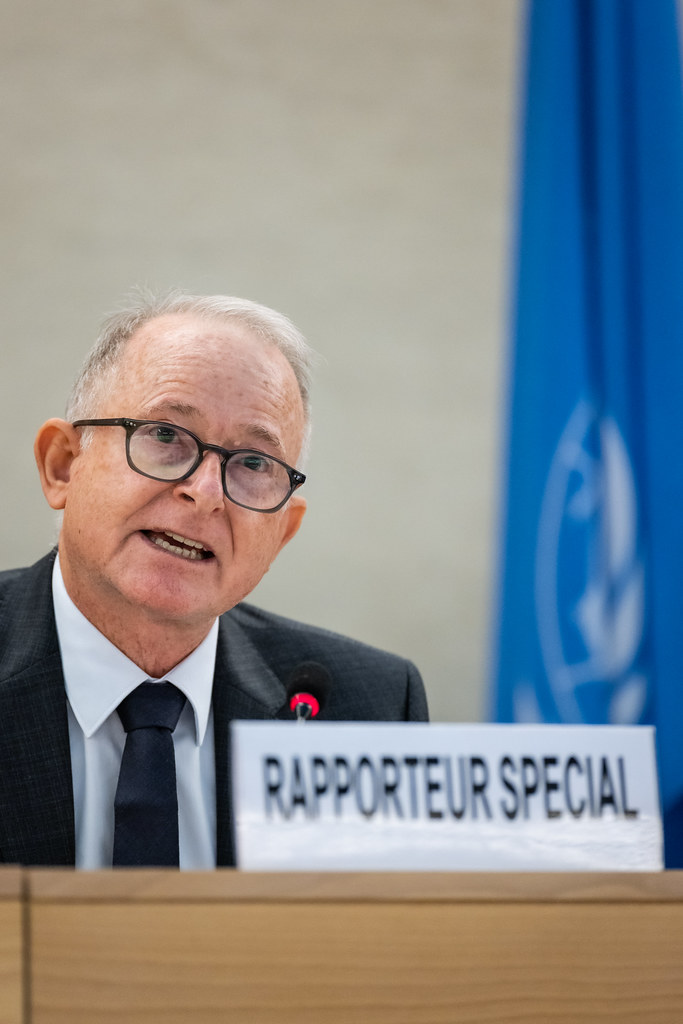
More recently, the UN Special Rapporteur on the human rights situation in Afghanistan and a cross-regional group of States** have also added their voices to the appeal. In 2024, the HRC itself recognised the need to ‘give consideration to ensuring the capacity for collecting, preserving and analysing evidence of the most serious international crimes and violations of international law in a way that could be used to facilitate future accountability and transitional justice processes.’ (A/HRC/RES/57/3, OP21).
In addition, the UN General Assembly recently adopted a resolution (GA/12469) emphasising ‘the necessity of investigating allegations of current and past human rights abuses and violations, as well as violations of international humanitarian law, in Afghanistan, and stress[ing] the importance of facilitating the provision of efficient and effective remedies to the victims and survivors and of bringing those responsible to justice in accordance with national and international law.’
An accountability mechanism for Afghanistan would be a key tool in addressing the decades-long, entrenched impunity at the heart of the current crisis in the country, as well as for supporting access to justice, truth and reparation for victims and survivors of rights violations.
The accountability mechanism could work to strengthen pathways to victim- and survivor-centred justice and accountability in Afghanistan; ensure robust and comprehensive investigations of serious human rights violations and abuses across the country, including sexual and gender-based violence; and contribute to preventing the recurrence of human rights violations and abuses: and end the vicious cycles of violence and impunity in the country.
It would be distinct and complementary to the vital mandate of the UN Special Rapporteur on the situation of human rights in Afghanistan, which should also be renewed and fully resourced. Furthermore, it could complement and support ongoing and possible future efforts at the International Criminal Court, the International Court of Justice, and at national level, including through the use of universal or other forms of extraterritorial jurisdiction in the courts of third countries, as well as potential future transitional justice initiatives.
Afghanistan has experienced 47 years of armed conflict, and two generations of Afghans have been trapped in cycles of conflict. The Bonn Agreement of 2001, which laid the foundation of the Islamic Republic of Afghanistan, started with a determination ‘to end the tragic conflict in Afghanistan and promote national reconciliation, lasting peace, stability and respect for human rights in the country’.
In 2005, the Afghan Independent Human Rights Commission (AIHRC) published A Call for Justice — a landmark report that gathered the voices of thousands of Afghans demanding truth, accountability, and redress for decades of conflict-related atrocities. It showed that victims and survivors and communities across Afghanistan wanted the prosecution of alleged perpetrators of crimes under international law, an end to the culture of impunity, and meaningful transitional justice to heal the country’s deep wounds.
Several important initiatives took place between 2004 and 2012, namely the above-mentioned Call for Justice, The UN Mapping Report, the Afghanistan Justice Project and, most importantly, the AIHRC Conflict Mapping Report, which remains unpublished.
In the past four years, the Taliban have reversed previously-adopted legal and policy measures for the promotion and protection of human rights in Afghanistan. The Taliban, as the de facto authorities, have spurned Afghanistan’s international obligations and have continued to introduce arbitrary, unlawful and wide-ranging restrictions on human rights.
The Taliban have engaged in efforts to effectively erase women and girls from society. Women and girls continue to face bans on access to secondary and higher education, restrictions on employment, freedom of movement, prohibitions on showing their faces and using their voices in public, and other severe restrictions on human rights and fundamental freedoms codified in the Propagation of Virtue and Prevention of Vice (PVPV law issued on 21 August 2024), as well as access to essential services.
Moreover, women and girls belonging to minority communities and/or with disabilities, as well as LGBTQI+ people, continue to experience multiple layers of discrimination. On 8 July 2025, the International Criminal Court issued arrest warrants for Haibatullah Akhundzada, the Taliban’s supreme leader, and Abdul Hakim Haqqani, the chief justice, for crimes against humanity, including the persecution of women, girls, and LGBTQI+ individuals based on gender.
Marginalisation and exclusion of religious and ethnic minorities in Afghanistan have been compounded under the Taliban. Religious communities, including Hazaras, Shias, Ismailis, Sikhs and Hindus, face limitations in organising and participating in their religious and cultural ceremonies. Amid the deepening humanitarian and economic crises, the restrictions imposed by the Taliban on women’s work have obstructed monitoring of aid deliveries, notably to women-headed households and other marginalised and vulnerable groups.
All forms of public dissent and criticism of the Taliban result in harsh, arbitrary punishment and violent reprisals. Women who peacefully advocate for their rights, human rights defenders, civil society activists, journalists, artists, musicians, judges and lawyers, educators, critics, and others continue to be targeted.
They have been threatened, arbitrarily arrested and detained, as well as tortured and otherwise ill-treated. Former government and security officials have been subjected to extrajudicial, arbitrary, and summary executions and enforced disappearances. The Taliban have carried out cruel and inhumane punishments, including public executions, flogging and other forms of corporal punishment of men and women, including LGBTQI+ people. LGBTQI+ people face compounded exclusion, as well as unlawful detention, extortion, torture and killing.
Afghanistan’s independent legal and judicial systems have been replaced by a system that is based on the Taliban’s arbitrary interpretation of religious edicts and rulings and no longer functions in a way that could protect the rights of the people of Afghanistan. As a joint statement by over 28 UN Special Procedure mandates on 14 August 2024 makes clear, ‘avenues for justice within Taliban-controlled Afghanistan [are] virtually non-existent.’ Under these circumstances, the Taliban have prohibited the Special Rapporteur from having on-the-ground access to closely monitor and report on their ongoing pervasive and continue human rights violations and abuses.
The vast majority of crimes under international law committed in the past, including extrajudicial executions and other unlawful killings, tens of thousands of enforced disappearances, sexual and gender-based crimes, and torture and other ill-treatment, by the former government, international forces, and other militias that previously held power in parts of the country, remain undocumented and unreported.
All of these violations have been committed with complete impunity, fuelling further cycles of human rights violations and abuses and highlighting the need for an independent international accountability mechanism for Afghanistan.
In light of the above, we reiterate our calls and urge Member and Observer States of the HRC to build on the consensus found in resolution 57/3, and urgently establish an independent international accountability mechanism for Afghanistan when the HRC meets for its 60th session, with a mandate to:
- investigate all allegations of past and ongoing violations and abuses of international humanitarian law and international human rights law, as well as crimes under international law, including the crime of gender persecution against women, girls and LGBTQI+ people
- consistent with international standards, collect, consolidate, preserve and analyse evidence, and prepare files, of such past and ongoing violations and abuses, including sexual and gender-based crimes, in view of any future legal proceedings and accountability efforts
- identify, where possible, individuals alleged to have committed such violations and abuses, including those amounting to crimes under international law, with a view to ensuring they are held accountable
- support relevant judicial and other proceedings, including in national courts through the use of universal and other forms of jurisdiction, and through international judicial institutions, including ongoing and possible future proceedings at the International Criminal Court (ICC) and the International Court of Justice (ICJ)
- make recommendations with a view to ending impunity and ensuring accountability, including access to justice, truth and reparations for victims and survivors
- present recommendations to tackle impunity for ongoing and past crimes under international law and other serious human rights violations to the UN Human Rights Council and to other UN bodies, such as the UN Security Council and UN General Assembly
- collaborate with and complement the work of the UN Special Rapporteur on the human rights situation in Afghanistan and other UN bodies and mechanisms.
Such a mechanism should integrate a gender perspective and a children’s rights perspective, and ensure an intersectional, and victims- and survivor-centred approach throughout its work. Finally, it should ensure extensive engagement with Afghanistan’s civil society.
At its 60th session, the HRC should also renew and support with necessary resources, the vital mandate of the UN Special Rapporteur on the situation of human rights in Afghanistan, and ensure the continuation of a dedicated space for an enhanced interactive dialogue on the human rights situation, in particular of women and girls, in Afghanistan. The HRC should also take action to meaningfully follow-up on the recommendations of the Special Rapporteur.
We urge member and observer States of the HRC to take concrete action without further delay, and to stand in solidarity with the people of Afghanistan in supporting victims, survivors, and their loved ones seeking justice and accountability for violations and abuses committed against them, and the human rights defenders who continue their work at great personal risk.
Supported by: national organisations (alphabetical order):
- Afghan Canadian Civil Society Forum – ACCSF
- Afghan Human Rights Defenders in Exile – AHRDE
- Afghan Journalists in Exile – AJE
- Afghan Women Coordination Umbrella – AWCU
- Afghan Women Education and Vocational Services Organization – AWEVSO
- Afghan Women News Agency – AWNA
- Afghan Youth in New Era Organization – AYNEO
- Afghanistan Civil Society Forum Organization – ACSFO
- Afghanistan Democracy and Development Organization -ADDO
- Afghanistan Human Rights and Democracy Organization – AHRDO
- Afghanistan Human Rights Center – AHRC
- Afghanistan Human Rights Defenders Committee – AHRDC
- Afghanistan LGBTIQ+ Organisation – ALO
- Afghanistan Powerful Women Movement – APWM
- Afghanistan Research & Advocacy Institution for Human Rights – ARAIHR
- Afghanistan Service, Cultural and Rehabilitation Center -– ASCRO
- Afghanistan Vision Forum 2030
- Afghanistan Womenn’s Studies Academy (AWSA)
- Afghanistan Women’s Solidarity Movement – AWSM
- Afghanistan Women’s New Future Movement – AWNFM
- Afghanistan Women’s Political Participation Network – AWPPN
- Afghanistan’s Powerful Women’s Movement – APWM
- Alternative Links for Training and Development – ALTD
- Aria Afghan Media Group – AAMG
- Armanshahr | OPEN ASIA
- Assembly of Scientists and Experts of Afghanistan – ASEA
- AWA Legal and Social Advisory Hub – AWA
- B-BOLAQ
- Borderless Amu Movement – BAM
- Cultural Front of Afghanistan – CFA
- Civil Society and Human Rights Activists Network – CSHRAN
- Civil Society and Human Rights Network – CSHRN
- Civil Society Joint Working Group – CSJWG
- Community Relief and Care Organization – CRCO
- Development and Support of Afghan Women and Children Organization – DSAWCO
- Dialogue Hub – DH
- Digital Civil Society Institute – Azady
- Edmonton Hazara Association – EHA
- Education Defenders Network – EDN
- Equality and Social Cultural Organization – ESCO
- Fatema Foundation – FF
- Fekr-e-Sabz Organization – FSO
- Femena
- Feminine Solidarity for Justice Organization – FSJO
- Generation of Peace Society – GPS
- Generation Positive – G+
- HAMRAH
- Hazara Council of Great Britain – HCGB
- Human Rights Defenders Plus – HRD+
- Humanitarian Assistance Empowerment Organization – HAEO
- Incident Prevention to Assist the People Organization – IPAPO
- Independent Coalition of Afghanistan Women’s Protest Movements – ICAWPM
- Lajivard Yolu Research & Policy Center – LYRPC
- LEARN Afghan
- Mawoud Academy – MA
- Multi culturele Vruwen Vereniging – McVV
- Nationals Movement Against Discrimination – NMAD
- Network of Afghan Women in Urban Government – NAWUG
- New-Naweed Weekly
- Not To Rigor Organization – NRO
- Organization for Policy Research and Development Studies – DROPS
- Par Cultural Center – PCC
- Pol Non-Profit Organisation – PNPO
- Progressive Forces of Afghanistan Movement – PFAM
- Rah-e-Madanyat Daily
- Rawadari
- Shahrvand Social and Legal Research Organization – SSLO
- Spontaneous Movement of Afghan Women Protesters – SMAWP
- Support for Afghan Girl’s Education – SAGE
- Tabesam Cultural and Social Services Institute – TCSSI
- Terrorism Victims Protection Organization- TVPO
- The Rahyab Initiative – RI
- Together for Equality Organization -T4E
- Tolo Social and Civic Organization – TSCO
- Transitional Justice Coordination Group – TJCGJ
- Verband afghanischer Organisationen in Deutschland e.V. – VAFO
- Wahaj Welfare Organization for Afghanistan – WWOA
- Window For Hope – W4H
- Women Advocacy Committee – WAC
- Women and Children Advocacy Network – WCAN
- Women Beyond Borders – WBB
- Women Media Advocacy Group – WMAG
- World Council of Panjshirians
- Yaar.e.V
- Youths Foundation of Democracy Proponents – YFDP
We have also received endorsements from dozens of national and three international human rights and humanitarian organisations operating within Afghanistan. However, due to security considerations, we are not in a position to disclose their names.
Supported by: international organisations
- Amnesty International – AI
- Asia Democracy Network – ADN
- Asian Forum for Human Rights and Development – FORUM-ASIA
- Center for Human Rights Advocacy – CHRA
- Centre for Dialogue and Progress- Geneva – CDP-G
- Coalition for Genocide Response – CGR
- Freedom Now
- Global Justice Center – GJC
- Human Rights Activists Union – HRAU
- Human Rights Watch – HRW
- International Bar Association’s Human Rights Institute – IBAHRI
- International Federation for Human Rights – FIDH
- International Service for Human Rights – ISHR
- MADRE
- South Asia Collective – SAC
- South Asia Justice Campaign– SAJC
- South Asians for Human Rights – SAHR
- The Alliance for the Prevention of Atrocity Crimes – APAC
- The Duty Legacy – TDL
- The International Commission of Jurists – ICJ
- Women’s International League for Peace and Freedom – WILPF
- World Organisation Against Torture – OMCT
*Including previous letters in 2023 and 2024 ahead of the 54th and 57th sessions of the HRC.
**Iceland, South Africa, Chile, Costa Rica, Liechtenstein, Switzerland, Luxembourg, Colombia, Slovenia, Spain, Czechia, Mexico, France, Afghanistan.