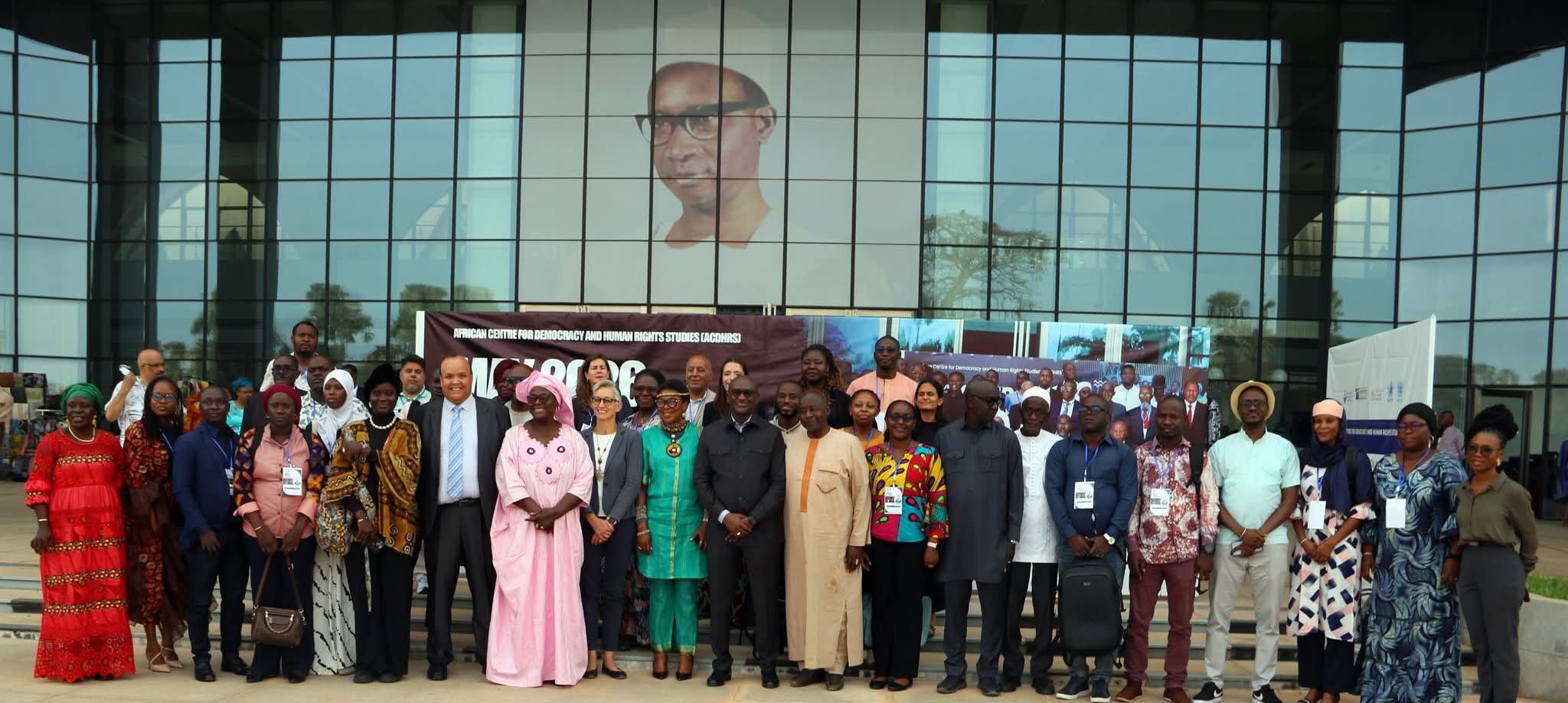
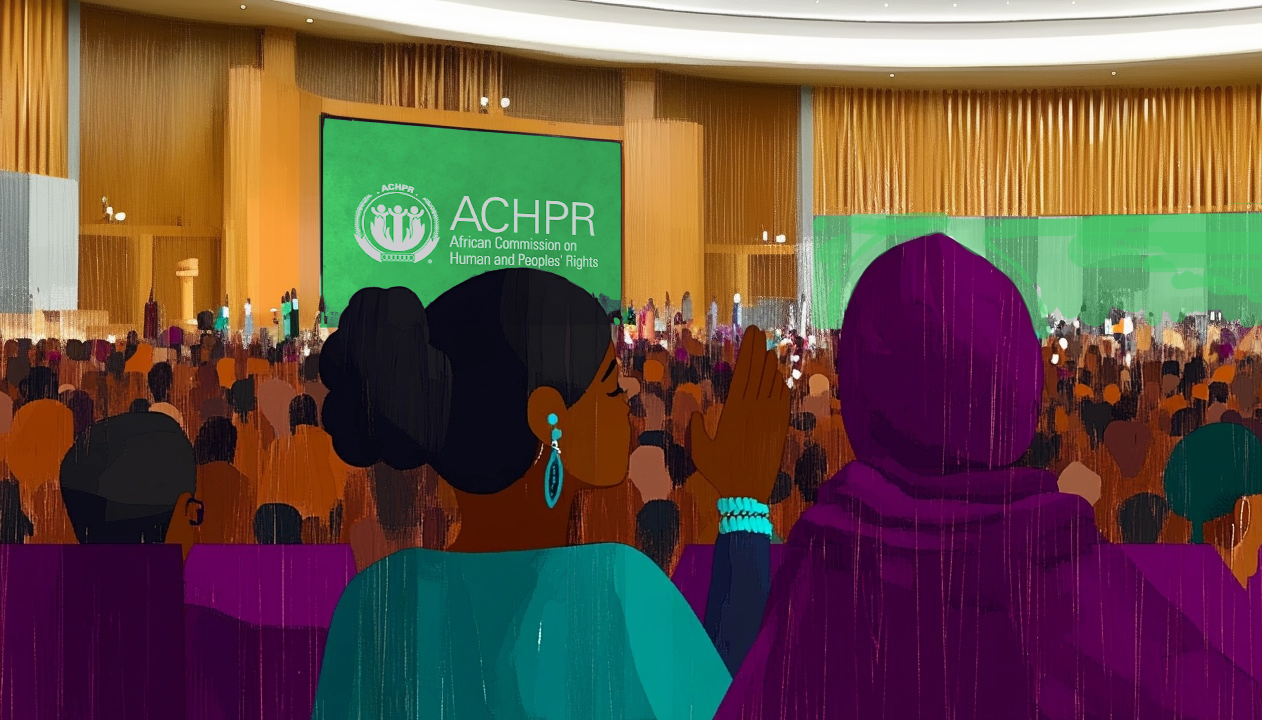
The NGO Forum ahead of the 87th session of the African Commission on Human and Peoples’ Rights (ACHPR) welcomed 160 participants and hosted ten panels during which the participants discussed and evaluated human rights in Africa, and formulated recommendations to mitigate the identified challenges, including toward defenders.
To set the scene for the discussion, the sub-regional focal points presented the overview and update on the situations of human rights and democracy in Africa. Essentially, the protection of human rights, defenders’ rights and civic space is getting worse, in the different regions. Giving the diaspora view of the current situation, ISHR (also member of the steering committee of the NGO Forum) emphasised the need for adequate legal protection framework for HRDs and their collaboration with Special Procedures of the United Nations (UN) inline with the Addis Ababa road map for coordinated action to protect human rights.
During this May session, the Forum had two panels related to the AU 2026 theme:
- From invisibility to accountability to secure sanitation as a right for women and girls in Africa.
- Access to safe drinking water and sanitation for communities discriminated on the basis of work and descent (CDWD): between structural exclusion, violation of dignity, and the imperative of social justice in Africa.
Acknowledging the importance of water and sanitation, those panels highlighted their contribution in preserving health and dignity of some vulnerable groups, especially of women and girls in Africa.
On women rights, including their access to sexual and reproductive rights, the Forum hosted three panels:
- Customary and traditionalist practices affecting the enjoyment of women’s health, economic, and social rights in Africa.
- Beyond ceasefires: countering backlash through feminist approaches to peace and justice.
- Defending rights in hostile contexts: attacks on human rights actors advancing sexual and reproductive health and rights in the context of shrinking civic space and gender backlash”.
Before establishing the contexts undermining the efforts to protect women rights, the above-mentioned panels looked at ways to better mitigate their challenges and make women rights effective in all contexts.
The NGO Forum also had panels on:
To deepen the discussions between participants and facilitate the collect of further recommendations, the following special interest groups were organised :
- Peacebuilding and Conflict Resolution: Armed conflicts, Military Coups and Political tensions.
- Rights of women and GBV in Africa.
- Migration, Internally Displaced Persons and Refugees in Africa.
- Healthcare Services for women, children, and marginalized individuals.
- AfCFTA and Sustainable Development.
- Freedom of Assembly and Association (Human Rights Defenders).
- Economic Challenges: Youth Unemployment and Poverty.
- Safeguarding People and the planet; Addressing Human Rights, Environmental Justice and Ecocide in Africa.
- Xenophobia and Discrimination of persons of color and sexual minorities in Africa.
- Rights of older and differently-abled persons in Africa
- Communities Discriminated on Work and Descent in Africa
At the end of the Forum, the participants adopted the recommendations and resolutions to be proposed to the African Commission for consideration and adoption.
- A thematic recommendation on digital rights.
- Seven thematic resolutions including one on people of African descent, one on the protection of the access of women to adequate sexual and reproductive healthcare and on civic space.
- Nine country resolutions of which: Cameroon, Mauritania, Tchad and Zimbabwe.
During the closing of this NGO Forum, Hon. Idrissa Sow, the Chairperson of the ACHPR , recognised that:
‘The Forum has demonstrated that it remains an essential space for dialogue, reflection and mobilisation, where African civil society plays a decisive role in advancing human rights on our continent’
He further called on the Forum to continue their advocacy to call on States party to reinforce their preventive mechanisms ensuring the effective respect of human rights including the political rights in electoral contexts.
To end his closing speech, the Chairperson revealed that the 89th session of the African Commission will be held in Dakar, Senegal.