Navigating the United Nations system can be daunting for human rights defenders. This concise, one-hour course is built specifically for NGOs and defenders aiming to deepen their engagement with the UN, by applying to the ECOSOC status. It offers a strategic and practical roadmap based on real-world experiences from defenders across Colombia, the United States, Lebanon, and beyond.
The course is available in English, French and Spanish.
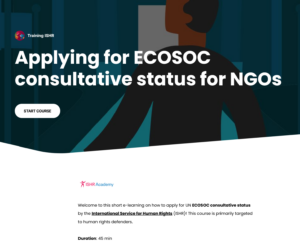
Overview of the ECOSOC course displayed on ISHR Academy
What you will learn?
- Strategic assessment: Determine if securing ECOSOC consultative status aligns with your organisation’s goals and understand the tangible benefits of the three status categories (General, Special, and Roster).
- Application mastery: Step-by-step guidance on creating your profile, completing the application questionnaire, and avoiding common pitfalls that lead to delays.
- Navigating political hurdles: Insights into the Committee on NGOs review process, including how to handle repetitive questioning, technical rejections, and political obstruction.
- Rights & responsibilities: Understand your options if your application is approved, denied or deferred.
Why this matters?
As Lucía Galoppo from Argentina notes, ‘the status itself is a door-opener […] it gives you the possibility to navigate UN spaces more comfortably’. Yet, the process is rigorous.
Based on ISHR’s decades long experience of engaging with the Committee on NGOs, along with stories from organisations like the International Dalit Solidarity Network—which faced a 15-year deferral—and the Gulf Center for Human Rights, this module provides first-hand insights into the process.
What are some key features?
- Practical tools: Checklists for document preparation, drafting tips for the questionnaire, and strategies for engaging with Member States during Q&A sessions.
- Real stories: Learn from the challenges and victories of defenders who have faced language barriers, technical glitches, and geopolitical tensions.
- Interactive elements: Test your knowledge with quizzes and access essential resources like ECOSOC Resolution 1996/31 regarding the ECOSOC Committee on NGOs and ISHR’s practical guides.
Whether you are a grassroots organisation seeking to bring local issues to the global stage or an established NGO looking to refine your UN advocacy, this course provides insights regarding a foundational step for effective UN engagement.
Access the course in English, French and Spanish.
ISHR warmly thanks all the human rights defenders who accepted to share their experience and provided valuable feedback from the course.