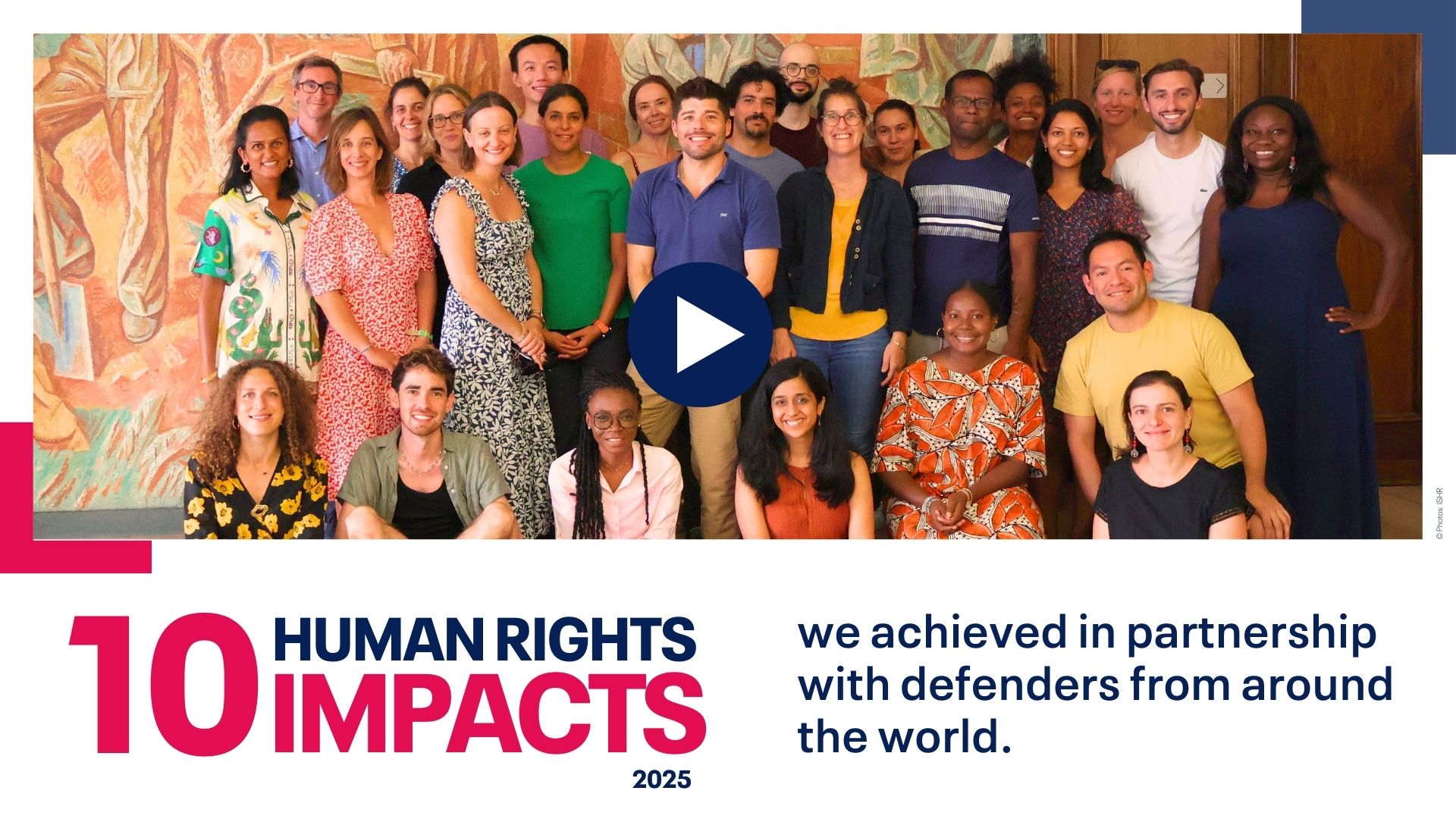
Looking back at 2025, we reflect on a year during which, despite tremendous challenges around the world, ISHR has continued to believe in and promote dignity and justice for all by supporting those who defend human rights worldwide. Thanks to the support of our partners and donors, we led key activities, from establishing new international standards on the protection of defenders, to building the capacity of thousands of grassroots defenders to drive positive change in their communities and countries.
Watch our video highlighting ten examples of our impact this year!
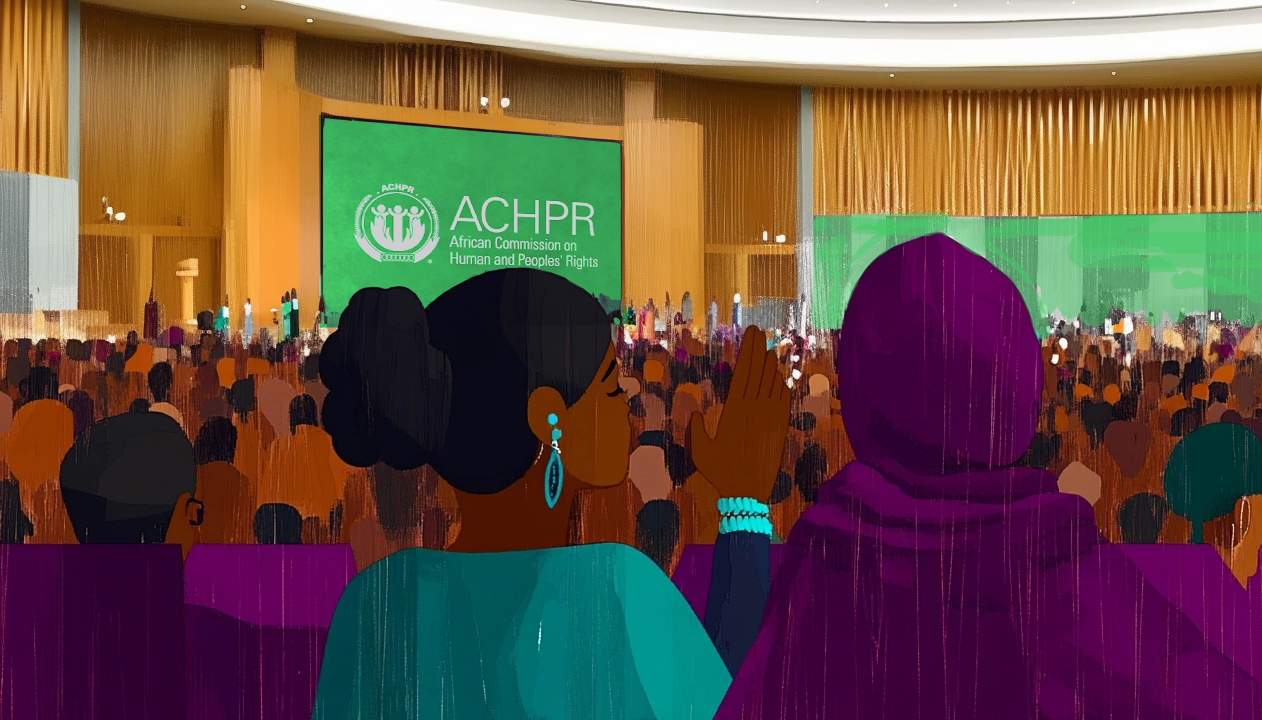
ISHR’s new intensive training programme in Banjul, The Gambia, enabled 16 African human rights defenders to engage effectively with the NGO Forum and the African Commission on Human and Peoples’ Rights (ACHPR). Through capacity strengthening, mentoring, and tailored advocacy support, ISHR helped participants influence debates on civic space, extractive industries, gender equality, and environmental protection. The hybrid training involved pre-learning sessions from ISHR’s new online learning module on the ACHPR.
Nominated by the UN Antiracism Coalition (UNARC), Ana Paula Oliveira received the prestigious Martin Ennals Award for Human Rights Defenders. Ana Paula, as a result, has been able to amplify her ongoing push for justice for her son, Johnatha Oliveira, who was killed by police in Rio de Janeiro, Brazil. Furthermore, this international recognition and visibility contributes to her protection, as her activism constantly exposes her and her family to risks. With this award, UNARC has specifically supported Ana Paula so that her work is acknowledged and she can feel safer in her fight for her son’s case.
ISHR, as part of a broader coalition, contributed strategic advocacy, legal analysis, capacity strengthening of Afghan defenders and civil society coordination to push for a robust UN mechanism on Afghanistan. The resulting mechanism enhances international monitoring of grave human rights violations, especially against women and girls, human rights defenders, and ethnic and religious minorities. The mechanism’s mandate and narrative were shaped by Afghan civil society voices. This mechanism is now a critical tool for accountability, documentation, and global pressure amid one of the world’s gravest human rights crises.
ISHR also helped secure the renewal of the UN Fact-Finding Mission on Sudan and supported calls for a UN Human Rights Council special session as atrocities intensified. By facilitating the direct engagement of Sudanese women human rights defenders with States and supporting their expert submissions, ISHR strengthened the international response to mass killings, gender-based violence, and displacement. By driving international action when Sudanese civilians most needed protection, ISHR reinforced the UN’s responsibility to act and ensured that the Sudan crisis remained on the global agenda.
ISHR helped shape and secure a robust Human Rights Council resolution addressing the risks and opportunities posed by new and emerging technologies for human rights defenders. ISHR developed a coalition of defenders and NGOs with expertise in defender protection and on human rights and technology to provide substantive and strategic support to the resolution process led by Norway. The resolution tackled surveillance, AI-driven repression, digital threats, and the need for tech governance grounded in rights. The result is one of the strongest UN texts to date on technology and human rights. It equips defenders with new international standards and pushes governments and companies to adopt rights-respecting digital policies.
Through sustained advocacy, legal analysis, and support for national and regional defenders, ISHR helped secure the Human Rights Council’s endorsement of the Declaration on Human Rights Defenders +25 and strengthened the normative framework for protections within the civil society space resolution. These achievements reaffirm States’ obligations to protect defenders and create enabling environments for activism. ISHR’s contribution ensured key language on participation, safety, and accountability was retained, reinforcing the legitimacy of civil society at a time of shrinking civic space worldwide. This recognition helps defenders push back against repression using clear, authoritative international standards.
ISHR has played a leading role in shaping emerging international norms to protect human rights defenders from transnational repression. Working closely with OHCHR, ISHR contributed research, case studies, and legal analysis and facilitated inputs from victims to the UN’s civic space brief on transnational repression, helping establish a clear global framework to identify, prevent, and respond to cross-border attacks. ISHR also played a key role in strengthening the Human Rights Council resolution on civil society space and safety of journalists, ensuring they express grave concern about States and their agents targeting defenders and journalists abroad through digital, physical, and other means, including spyware, surveillance, and the targeting of families and associates.
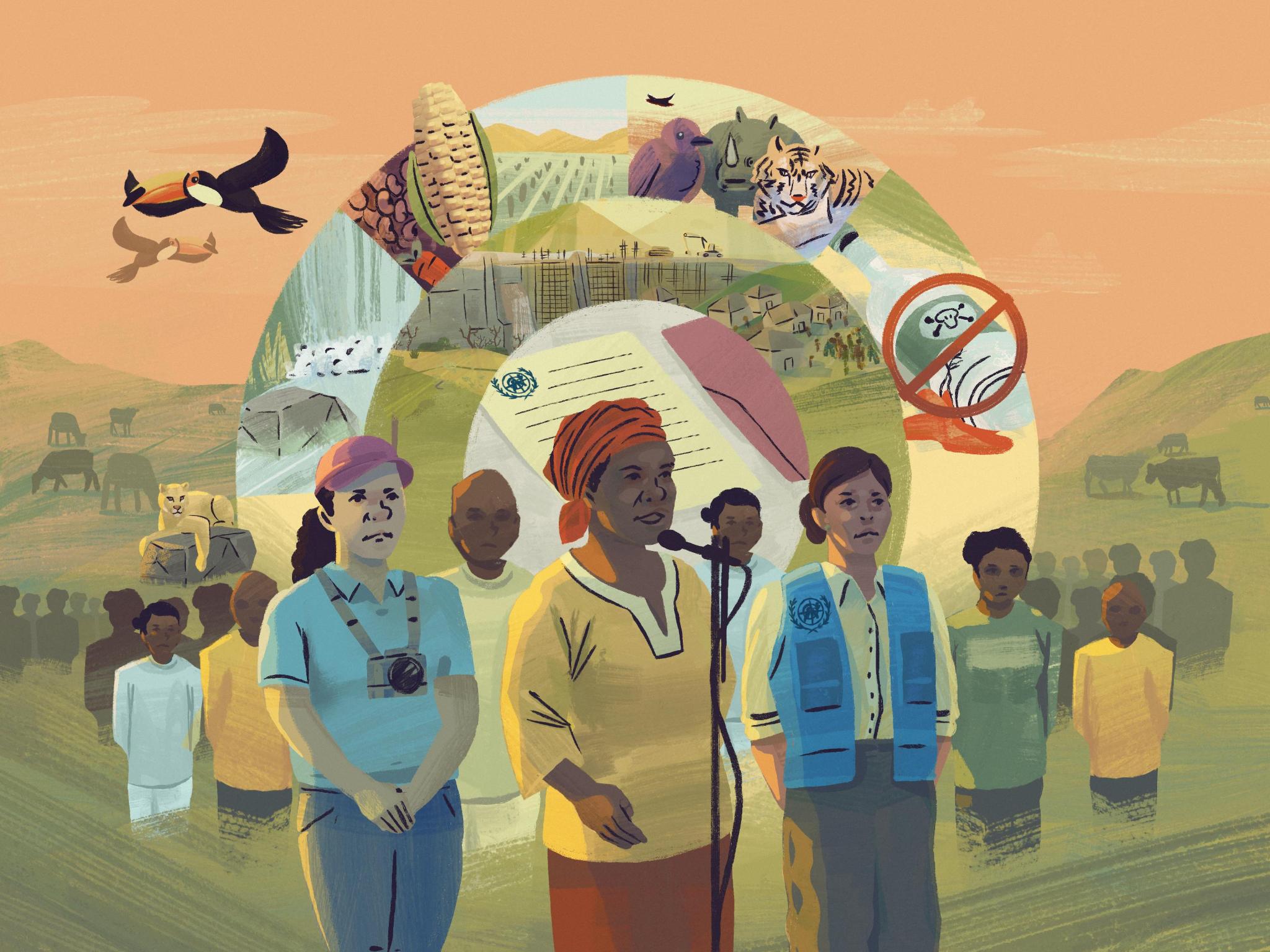
ISHR’s advocacy contributed to the first-ever activation of the Escazú Agreement’s Rapid Response Mechanism to protect the relatives of Chilean environmental woman human rights defender Julia Chunil. This decision sets a powerful regional precedent: threats against families of defenders demand urgent international response. ISHR’s work ensured the mechanism functioned effectively and in close coordination with local organisations. The decision strengthens environmental protection across Latin America, affirms States’ obligations to safeguard those who defend land and nature, and demonstrates how international mechanisms can provide real protection when local systems fail.
ISHR and partners contributed to advocacy that helped secure a landmark Inter-American Court judgment affirming the right to defend the environment and States’ obligations to protect environmental human rights defenders. This ruling strengthens regional protections and provides powerful jurisprudence for defenders across the Americas. ISHR’s work ensured that the voices of affected communities were heard and that the Court recognised the essential role of defenders in safeguarding ecosystems and Indigenous territories. The decision reinforces that protecting defenders is integral to addressing climate and biodiversity crises.
Our ‘Budget Battles at the UN’ report on how States defund the UN generated high-level attention: ISHR’s groundbreaking analyses on China’s influence within multilateral institutions and on States’ behaviours at the Fifth Committee of the UN General Assembly generated major international media coverage. The reports exposed trends in voting behaviour, political pressure, and attempts to reshape global human rights norms. ISHR’s data-driven approach equipped journalists, diplomats, and civil society with tools to understand geopolitical dynamics and defend the integrity of the UN system. The widespread coverage magnified accountability and helped shift global conversations on safeguarding multilateralism from authoritarian influence.
ISHR has played a central role in shaping the UN80 reform process by convening diverse human rights groups to develop joint proposals and a unified civil society position. Recognising the urgent need for substantive, long-term reform, ISHR emphasised that UN80 must strengthen – not weaken – the effectiveness, reach, and responsiveness of UN human rights mechanisms, rather than focus narrowly on efficiency or cost-cutting. Together with 16 partners, ISHR submitted principles, criteria, and concrete proposals to the UN Secretary-General and High Commissioner. ISHR has also provided submissions to workstream 2 and workstream 3 and convened civil society and States to build coordinated approaches to ensure reforms meet the needs of defenders, victims, and survivors.
In 2026, with the support of our partners and donors, ISHR will continue to stand with and serve defenders, enabling them to expose injustice, pursue accountability, seek international solidarity, and help shape community-based solutions to the multiple crises humanity faces.
DefendDefenders, Front Line Defenders and ISHR are organising an in-person training to equip African defenders with the knowledge and skills to integrate the African Commission on Human and Peoples’ Rights into their existing work at the national level in a strategic manner.
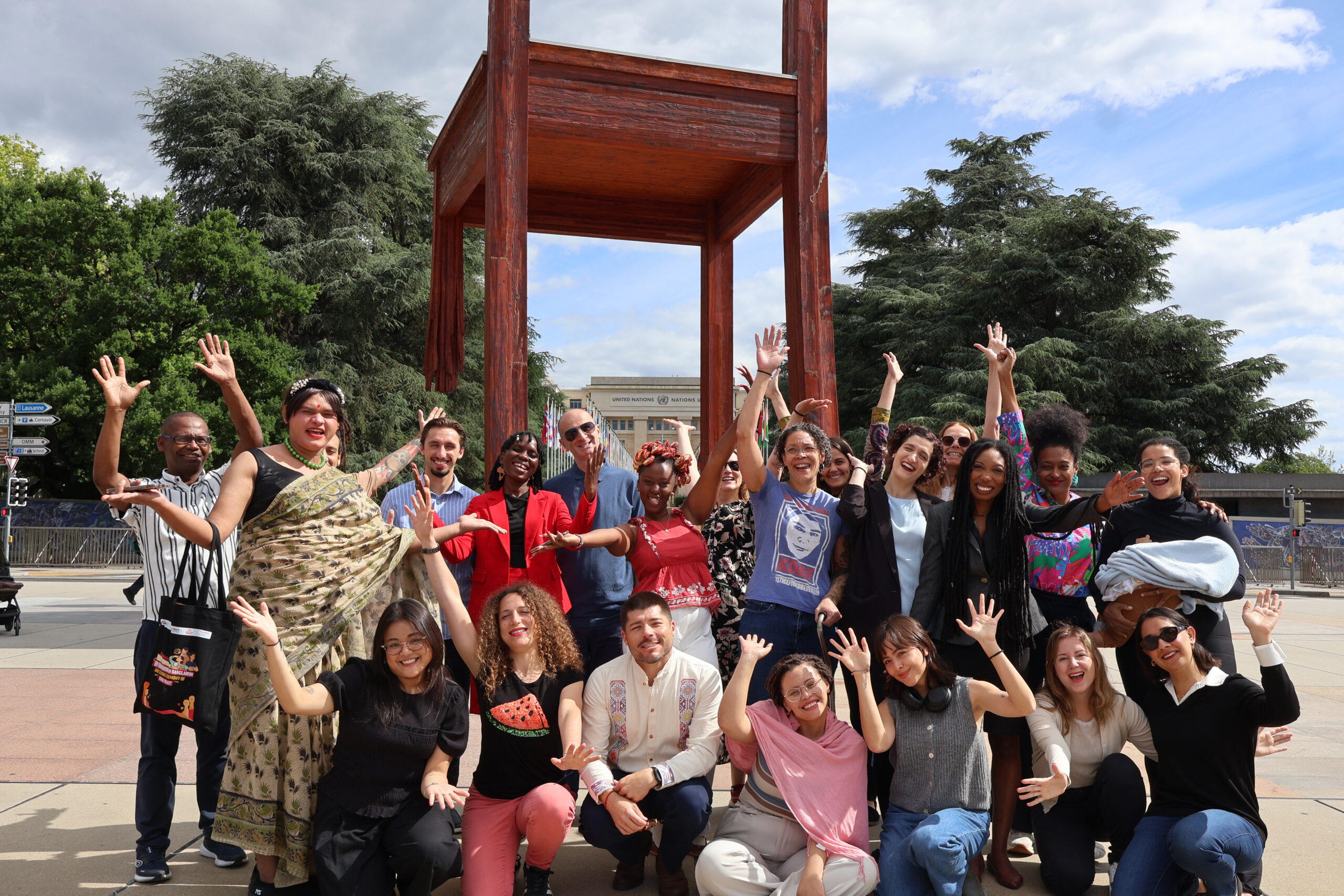
This year eleven activists completed ISHR’s flagship training, the Human Rights Defender Advocacy Programme, to strengthen their advocacy skills and develop an individual roadmap to push for change in their country.
ISHR introduces a new on-line course on advocacy for environmental human rights defenders, a practical, self-paced resource for activists, community leaders, and allies to defend the right to a clean, healthy and sustainable environment using UN and regional mechanisms.