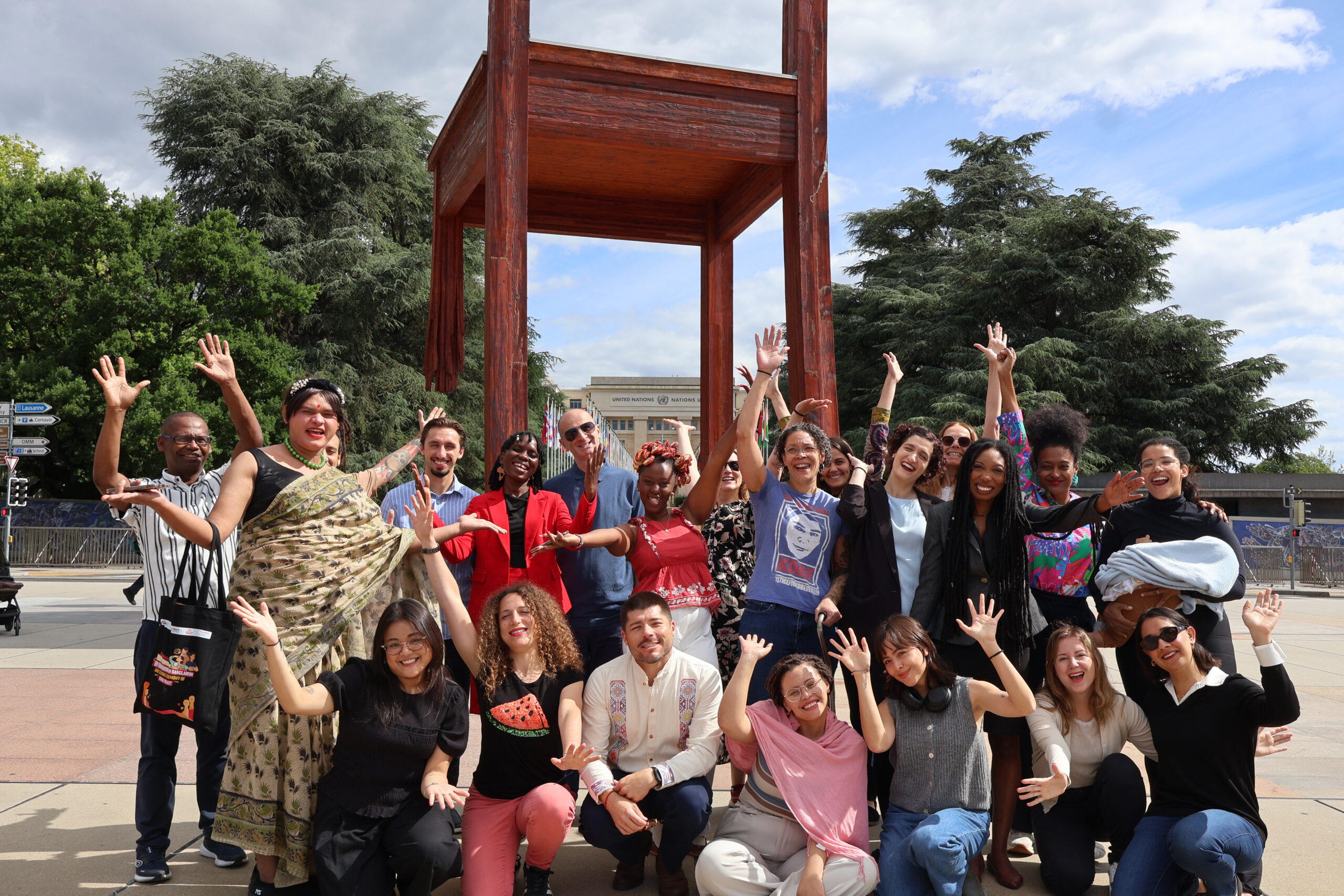
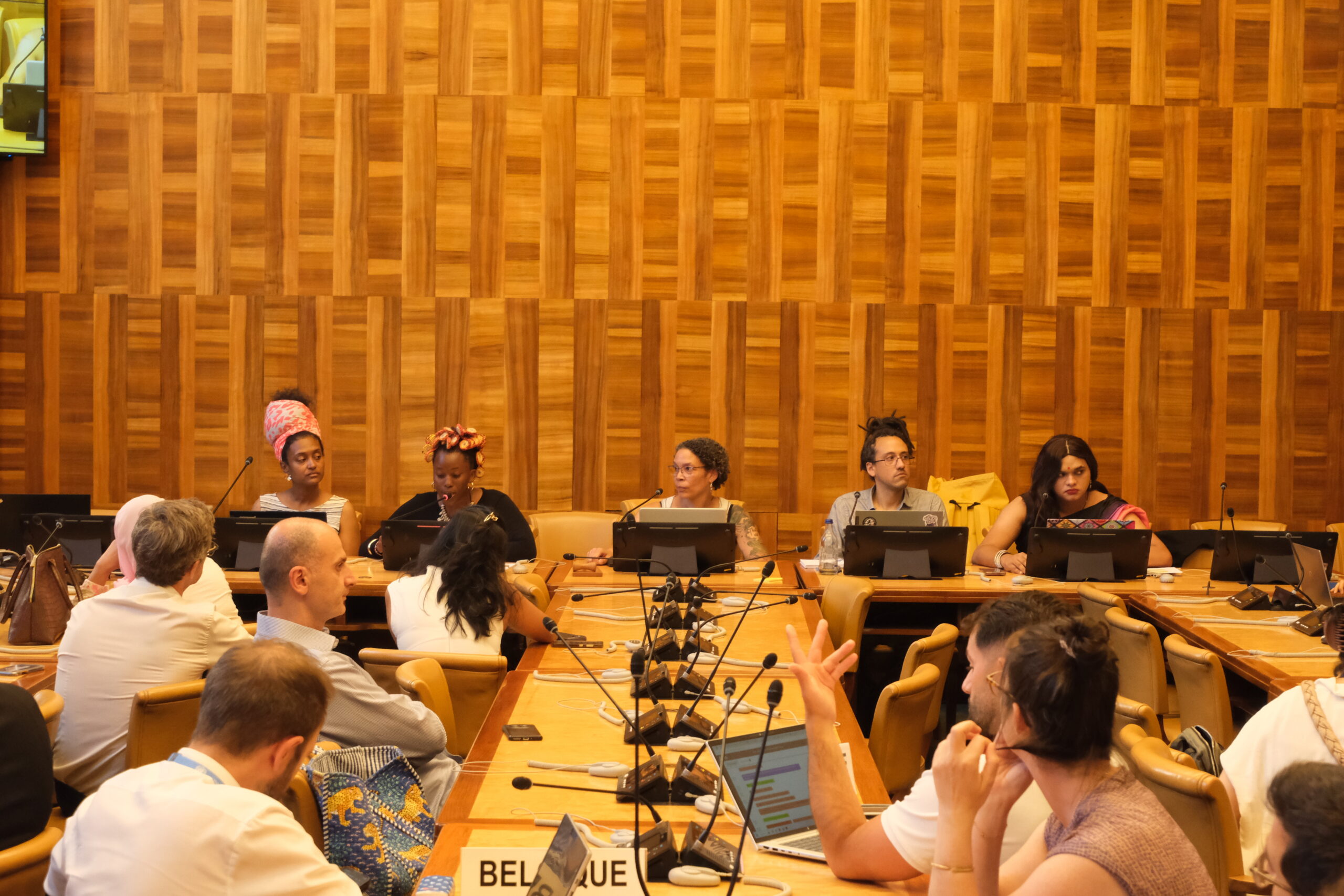
On 23 September, Geledés – Black Woman Institute, the Stakeholder Group for People of African Descent and ISHR held an event called ‘Public Security, Racial Justice and Responses to the Multiple Crises’ as part of a wider civil society mobilisation around the 25th anniversary of the Durban Declaration and Programme of Action (DDPA).
Moderated by Geledés’ Ester Sena, the even had four panellists: Gay McDougall, former vice chair of the UN Committee on the Elimination of Racial Discrimination, Carl Murrell of the Bahaí community, Lia Manso of the Brazilian NGO Criola, and ISHR’s Lamar Bailey Karamañites.
The event was set against the backdrop of current multiple crises shaping the international landscape, including the weakening of democratic institutions, the rise of authoritarianism, the expansion of conflicts, growing inequalities, the climate crisis, and the spread of hate speech and disinformation.
These dynamics disproportionately affect historically and currently oppressed populations such as people of African descent and deepen historical and structural inequalities and have specific impacts on young people, women, migrants, human rights defenders, and African descendant communities.
What was achieved through Durban and why civil society must keep it alive
Opening the panel, Gay McDougall traced three enduring outcomes of the DDPA. The first was recognition: for the first time, the international community acknowledged the descendants of those trafficked through the transatlantic trade in enslaved persons, and named the enduring harms they continue to carry. The second was redress for the trade, which has been picked up in many documents since then. The third was the architecture created by the DDPA, which included several UN mechanisms, each with a distinct and unique mandate, built to confront racial discrimination and the structures that sustain and perpetuate it.
Gay McDougall explained to the audience the UN anti-racism architecture, from the bodies that existed prior to Durban to those that this conference created and inspired. Although these mechanisms produce public reports and statements, McDougall said, these are not an end in themselves. It is civil society and human rights defenders, McDougall added, who must ‘breathe life into them’ by using and disseminating their findings in their advocacy work, channelling them into national advocacy campaigns, legal proceedings and the communities they serve. In other words, the tools created at Durban are only as powerful as the use given to them by movements.
When the justice system is part of the crisis
‘First, we need to understand that the justice system itself is part of this crisis,’ said Lia Manso. ‘For many communities of African descent, institutions that should guarantee rights can also reproduce racial discrimination. We see this in racial profiling, police violence, mass incarceration, barriers to access to justice, and the lack of accountability for State violence.’
Manso argued that the answer cannot stop at reform. Instead, it should aim at transforming oppressive systems. ‘We need institutions able to recognise structural and institutional racism, produce racial and gender-disaggregated data, guarantee accountability, and listen to communities of African descent,’ Manso stressed, adding that public security cannot be understood without gender as women of African descent experience this violence in multiple ways: as direct victims, and as the mothers, daughters, partners and community leaders who absorb the aftermath of killings, incarceration and militarisation. For Criola, then, public security is inseparable from racial justice, gender justice, social justice and reproductive justice.
The myth of neutrality
Several speakers challenged the notion that institutions and processes are neutral.
Lia Manso extended the argument to the climate emergency, which is too often treated as a threat that falls equitably on everyone. ‘Floods, extreme heat, lack of water and sanitation, food insecurity, environmental degradation and forced displacement affect territories differently,’ she noted.
Women human rights defenders of African descent stand at the sharp intersection of these harms defending their communities, territories, water, health, housing, food, cultural traditions and the environment and for doing so they face threats, criminalisation, surveillance and violence. Climate justice, in this view, must also be racial and gender justice.
The same logic drove the panel’s discussion of peace and security. ISHR’s Lamar Bailey Karamañites argued that the UN’s peace and security pillar has long been treated as though it were race-neutral and that this neutrality is precisely the problem, rendering the experiences of people of African descent invisible within the very frameworks meant to prevent violence.
The UN’s own Framework of Analysis for Atrocity Crimes already lists risk factors such as entrenched patterns of discrimination against a group and serious human rights violations carried out with impunity. In this sense, a systemic pattern of racialised violence by security forces, which goes on with impunity over a period of time, such as the examples highlighted in several EMLER reports, are a textbook instance of exactly those conditions classified as risks.
What is missing, Bailey Karamañites said, is integrating the tools we already have. Concretely this would mean three things. First, taking the disaggregation of data by race seriously, because a pattern that is never counted can never be addressed. Second, naming structural racism, DDPA borrowed language, in the UN prevention frameworks, and last, widening our understanding of peace from the absence of conflict toward the fuller conception.
In other words, if a stable democracy is not at war and does not have an armed conflict yet it is systematically inflicting violence on a racialised part of its own population, could that democracy be considered, in the full sense, at peace?
Beyond the anniversary
The anniversary of the DDPA was never the end goal for grassroots movements and human rights defenders, the goal remains the transformation of oppression, racial justice, to achieve accountability and to strengthen the community. Twenty-five years on, the world has changed in many ways, but in many cases oppression has merely changed its face or its tactics. We still need the DDPA, including the UN mandates it established, to continue the struggle for justice.