
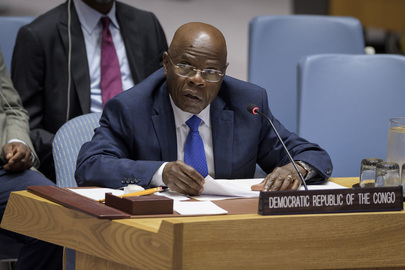
HRC 42 | DRC must bring all perpetrators of human rights violations to justice
Since the recent change in leadership in the Democratic Republic of Congo, the OHCHR noted an improvement in the protection of human rights. However, defenders and other civil society actors are still being attacked, intimidated and threatened.
On 24 September, OHCHR joint human rights office presented its report on the human rights situation in the DRC. Among other things, the report highlights the violations committed during the last presidential elections as well as the lack of action by the two joint commissions set up to investigate the violations committed during protests that took place between 2016 and 2018.
Moreover, the joint office emphasised the relevance of the MONUSCO as the country still faces challenges in regards to the protection of human rights in some of its regions and the important and crucial role the Human Rights Council can play throughout, among other things, its Special Procedures.
During this interactive dialogue, ISHR delivered a statement echoing the report of the joint office by calling for the DRC to fight impunity by taking all necessary legal actions to bring to justice perpetrators who committed human rights violations during the election period.
“The violent suppression of certain peaceful demonstrations is still ongoing. In that regard, ISHR notes that, regrettably, perpetrators of human rights violations committed during protests which took place between 2016 and 2018 are yet to be arrested and charged” added Salma El Hosseiny, ISHR Human Rights Council Advocate.
Finally, El Hosseiny concluded by asking the joint office what actions it envisages to take to ensure that the bill on the protection and accountability of human rights defenders currently being reviewed by the National Assembly in the DRC, is in line with international standards and doesn’t restrict he rights of civil society.
Watch the statement here:
Contact: Adélaïde Etong Kame, Africa Advocacy Consultant, [email protected]
Photo: UN Photo