HRC50: Uganda must better protect women defenders and LGBTIQ+ persons
On 1 July 2022, during the 50th session of the Human Rights Council, Uganda presented the outcome of its 3rd Universal Periodic Review. Only 54% of the recommendations given for review were accepted by Uganda and none of them were related to the protection of human rights defenders. Uganda can and should do better!
Uganda has accepted 149 recommendations out of the 273 received at its third Universal Periodic Review. During the report of the outcome, Uganda’s Permanent Representative to the UN in Geneva, Marcel Robert Tibaleka, stressed the efforts made by his government to welcome refugees within their borders, as well as the measures taken to better protect people with disabilities. Although those efforts have been commended by both States and civil society organisations, Uganda still needs to fulfill other obligations to comply with the international human rights standards.
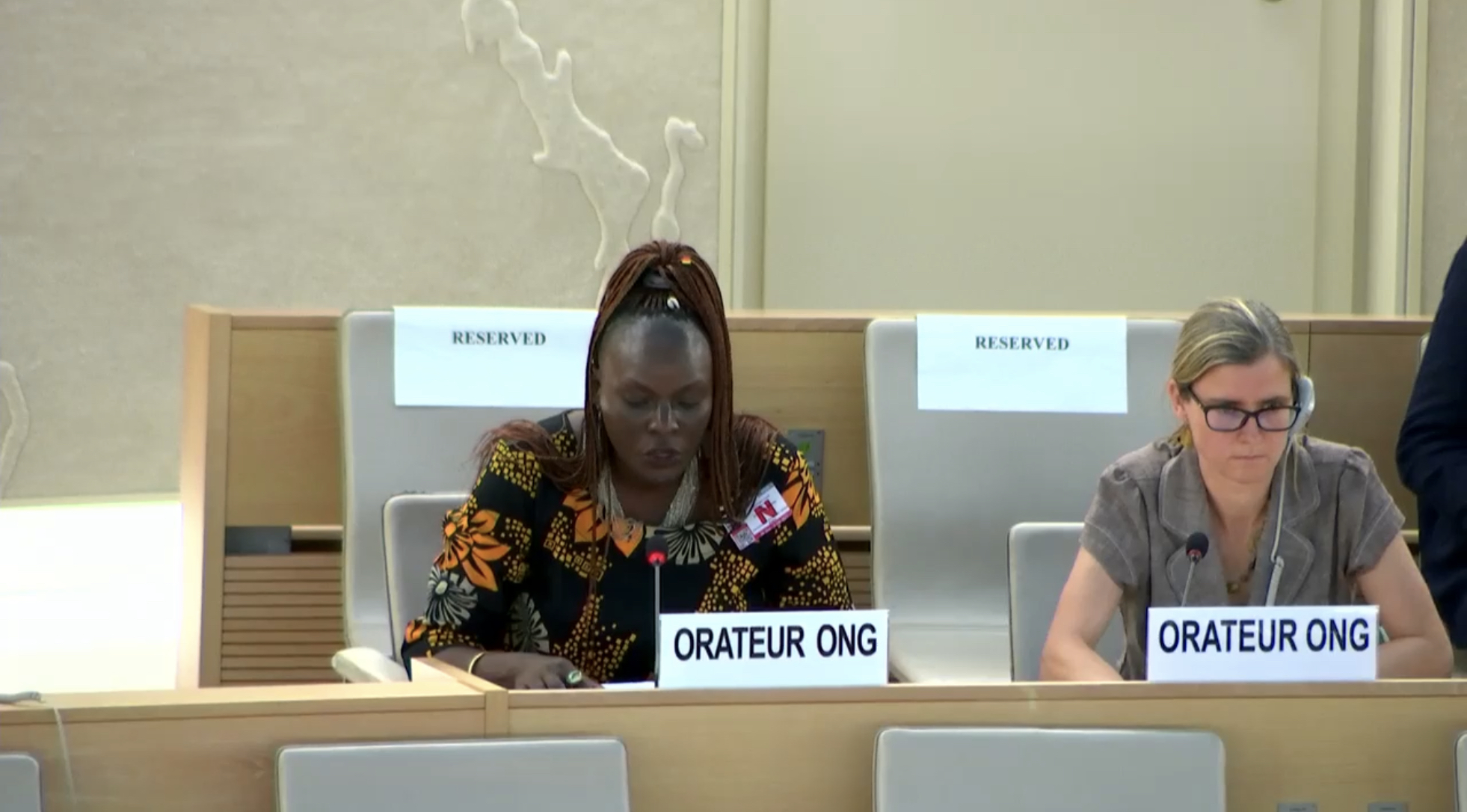
The joint statement delivered by ISHR and Women Human Rights Defenders Network Uganda (WHRDN-U) highlighted that the government has shown very little will to change the situation of human rights defenders by noting recommendations on the excessive use of force, the need to combat impunity, freedom of expression and peaceful assembly, and the 16 recommendations concerning civic space and human rights defenders that were offered by all regional groups. The situation is even more difficult for women defenders working to protect the rights of sex workers and the LGBTIQ+ community. Indeed, Uganda accepted none of the recommendations pertaining to the rights of LGBTIQ+ persons. They are still at risk of facing jail sentences that can go up to life. Moreover, Uganda only noted recommendations on the rights to freedom of peaceful assembly and of association.
Therefore, ISHR calls on Uganda to :
Adopt the Human Rights Defenders Bill and ensure it is gender-sensitive to give full force and effect to the UN resolution on the Protection of women defenders and the UN Declaration on Human Rights Defenders
Publicly affirm the legitimate role of women defenders and protect them from violations by State and non-State actors by acknowledging such violations and implementing security measures for them
Finally, refrain from criminalising the legitimate activities of defenders including women defenders, and repeal all laws and policies that restrict their activities and rights, including the Public Order Management Act, the Anti-Pornography Act, Anti-Money Laundering Act, Anti-Terrorism Act ( as amended), and the Computer Misuse Act.
Author
Adélaïde Etong Kame
Adélaïde has a Master in International Law and Relations from the University of Clermont-Ferrand. Adélaïde worked with indigenous people and minorities in Mauritania for better protection of their rights, especially victims of slavery. Previously, she advocated for the rights of women in Poland and Macedonia as well as the advancement of freedom of expression in Central Africa.
Author
Samira Ben Ali
Samira has joined the Geneva team as a programme Intern. She is actually completing a Master’s degree at Sciences Po Rennes that focuses on the upcoming transitions, with a focus on legal transitions. She also likes to get involve in actions that promote climate justice wether it is locally, with her local Oxfam group, or regionally, with the World’s Youth for Climate Justice Campaign.
During the 89th ordinary session of the African Commission on Human and Peoples Rights (‘the African Commission’), ISHR shared concerns about the situation of human rights defenders in Cameroon, Zambia and Guinea, especially in regards to the restrictive legal framework they work in and drew their attention to the state of civic space in Africa.
At the Human Rights Council's session, 47 States jointly denounced the dismantling of democracy in Nicaragua, while UN experts presented new evidence of systematic repression, enforced disappearance and deaths in State custody.
The Human Rights Council has renewed the mandate of the Special Rapporteur on Afghanistan for another year, maintaining dedicated scrutiny of the rights of women and girls. ISHR welcomes the renewal and calls on States to make sure the new Independent Investigative Mechanism for Afghanistan is up and running without delay.