Logo of the organization Eu sou eu: a ferrugem, from Brazil.
Brazil
News
HRC57: Urgent call for racial justice within the prison system in Brazil
During the General Debate on Item 9, Cristiano Silva denounced the ongoing human rights violations against Brazil's Black population, particularly in the prison system, and called the Brazilian authorities to change this.
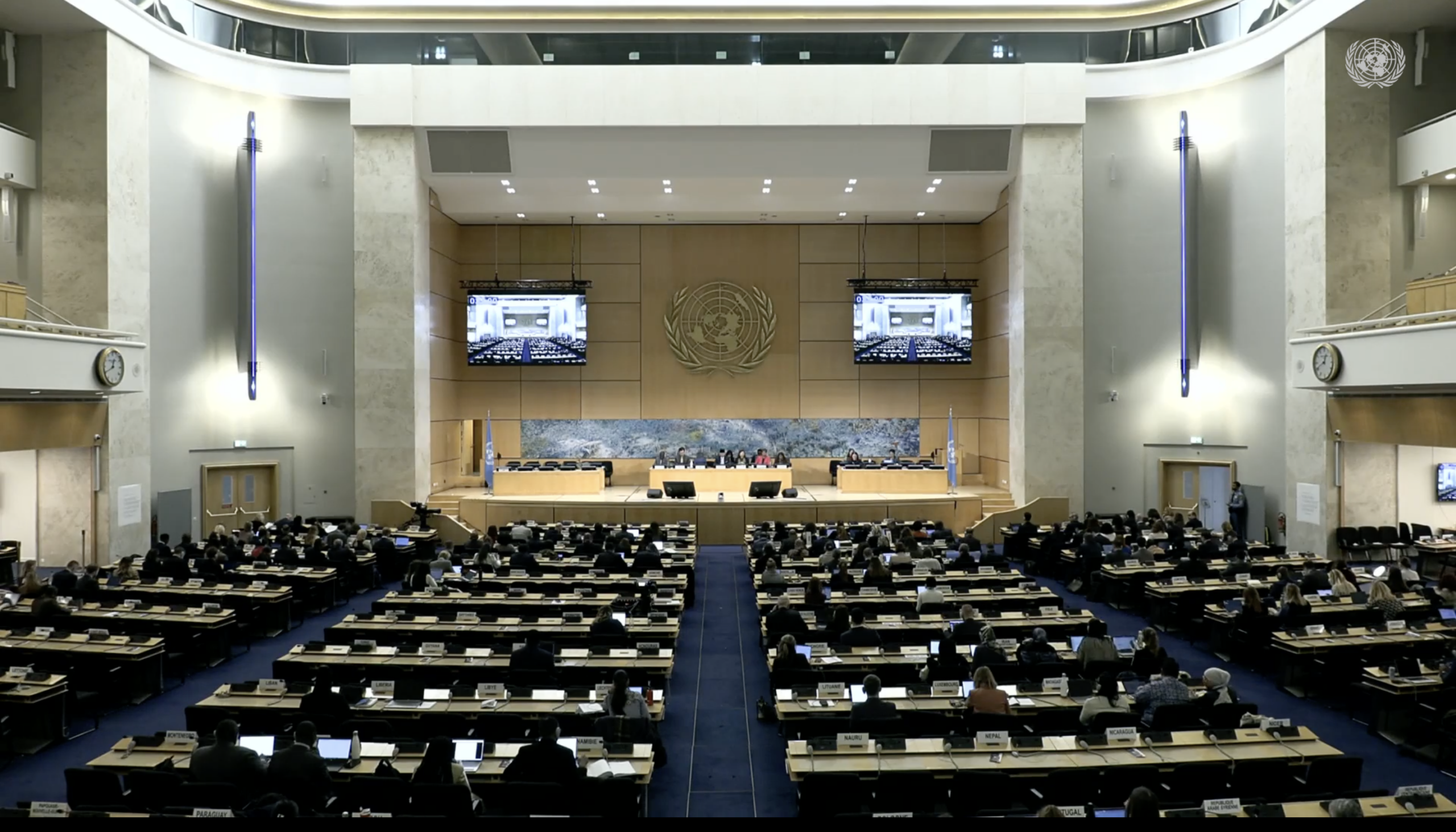
On 3 and 4 October 2024, the Human Rights Council held its General Debate on Item 9, focusing on issues of racism, xenophobia, and the intolerance that accompanies these social challenges. The discussions emphasised the urgent need for a global commitment to implementing the Durban Declaration and Programme of Action (DDPA) and recognising the importance of a Second International Decade for People of African Descent.
These frameworks serve as essential instruments for enhancing the protection of fundamental rights for individuals of African descent, while also acknowledging their significant contributions to society.
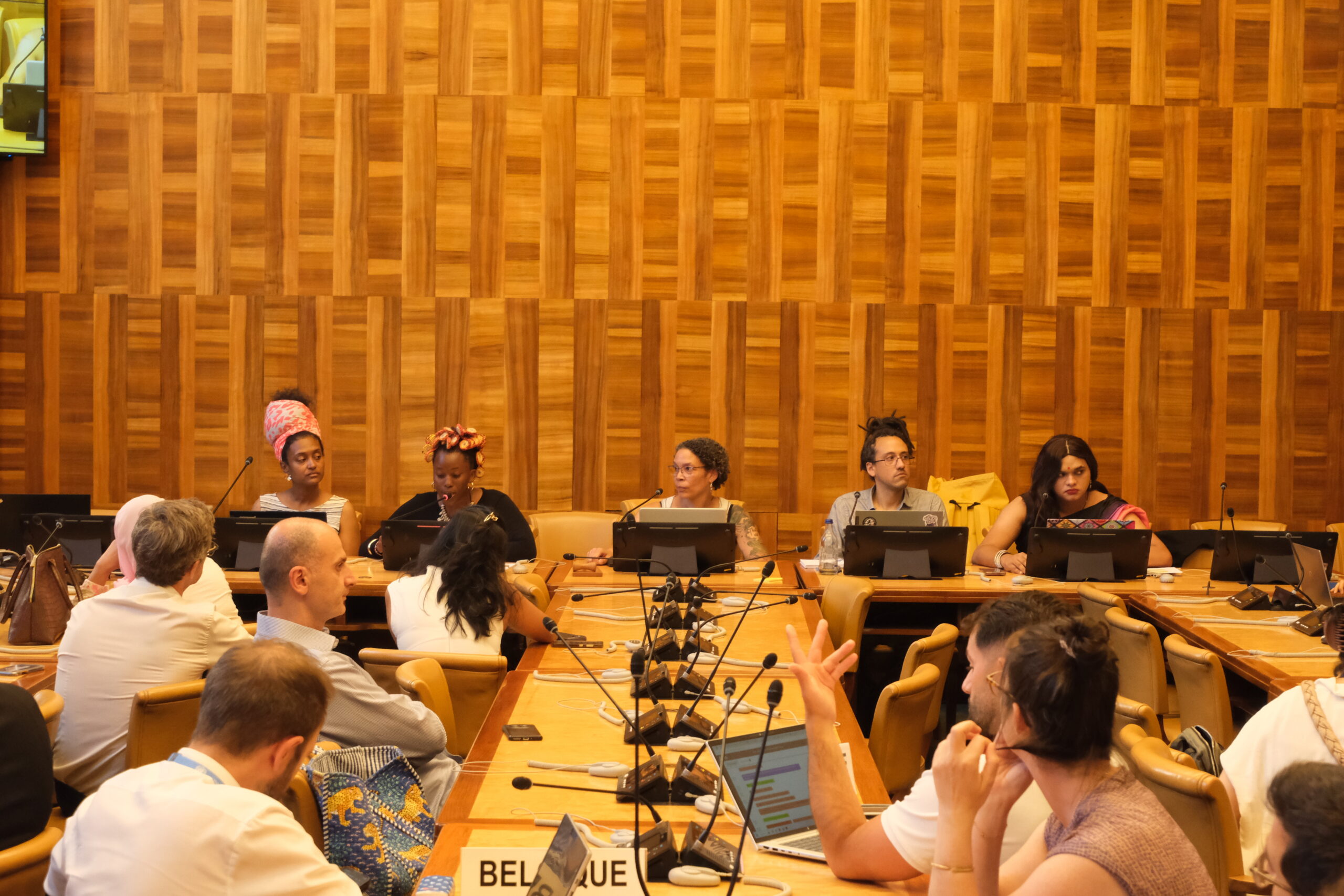
During the debate, Cristiano Silva made an impactful statement on behalf of Eu sou Eu: a ferrugem, the UN Antiracism Coalition (UNARC) and ISHR, highlighting the ongoing violations faced by the Black population in Brazil, especially those incarcerated. He pointed out the need for solidarity among social movements and institutions that combat structural and systemic racism.
Cristiano noted that the Brazilian State has failed to acknowledge the violence inflicted upon marginalised communities, asserting that ‘our bodies have borne unhealable wounds’ due to centuries of oppression and discrimination.
He also outlined the urgent need to address the human rights violations prevalent in Brazil’s prison system, which has become a focal point of systemic racism. Moreover, he called to end the criminalisation of poverty as an instrument of incarceration in the war on drugs and highlighted how this systemic approach disproportionately targets marginalised communities.
Watch his statement here:
Read the full joint statement below:
Thank you Mr. President, my name is Cristiano Silva, I am a survivor of the Brazilian penitentiary system. This is a joint statement. Together with various social movements and institutions that confront structural, and systemic racism, faced with the countless violations suffered daily, we denounce racism in its many forms.
Statistics show that violence in peripheral and favela territories, homicides, forced disappearances and imprisonment are high. We call on the Human Rights Council and the Brazilian State to urgently respond to the ongoing human rights violations in the Brazilian prison system and implement anti-racist actions so that the Carandirú massacre in São Paulo and the Pedrinhas massacre in São Luís do Maranhão are not repeated.
We urge the Brazilian State to:
Ensure non-discrimination in use of digital facial recognition
End the criminalisation of poverty
Ensure that the prison administrations take responsibility for their actions
Guarantee rights to health and education within the prison system
Ensure social inclusion policies for people leaving the prison system
Ensure humane detention conditions including addressing overcrowding and considering decarceration policies
Ensure an enabling environment for human rights defenders working on racial justice to safely conduct their work.
This year eleven activists completed ISHR’s flagship training, the Human Rights Defender Advocacy Programme, to strengthen their advocacy skills and develop an individual roadmap to push for change in their country.
At the 62nd Human Rights Council session, civil society organisations shared reflections on key outcomes and highlighted gaps in addressing crucial issues and situations.
On the sidelines of the 62nd session of the Human Rights Council, defenders and activists examined how systemic discrimination and democratic backsliding are deeply intertwined. Drawing on lived experience, speakers argued that marginalised communities are often the first to detect authoritarian practices, and offered concrete recommendations for building more inclusive, resilient democracies.