During the review, the Mauritian delegation stressed that their country is fully committed to the promotion and protection of human rights as enshrined in its Constitution. Furthermore, the delegation informed the Council that Mauritius has, in line with its reporting obligations, submitted its 6th periodic report to theCommittee on Economic, Social and Cultural Rights (CESCR), as well as its 11th periodic report on the African Charter on Human and People’s Rights.
Mauritius was commended for upholding human rights by intervening States and civil society, including the decriminalisation of same-sex conduct as ruled by the Supreme Court, a significant step in achieving human rights.
However, there were concerns over the protection of social, economic and cultural rights that are not adhered to, creating a hostile working environment for journalists and human rights defenders.
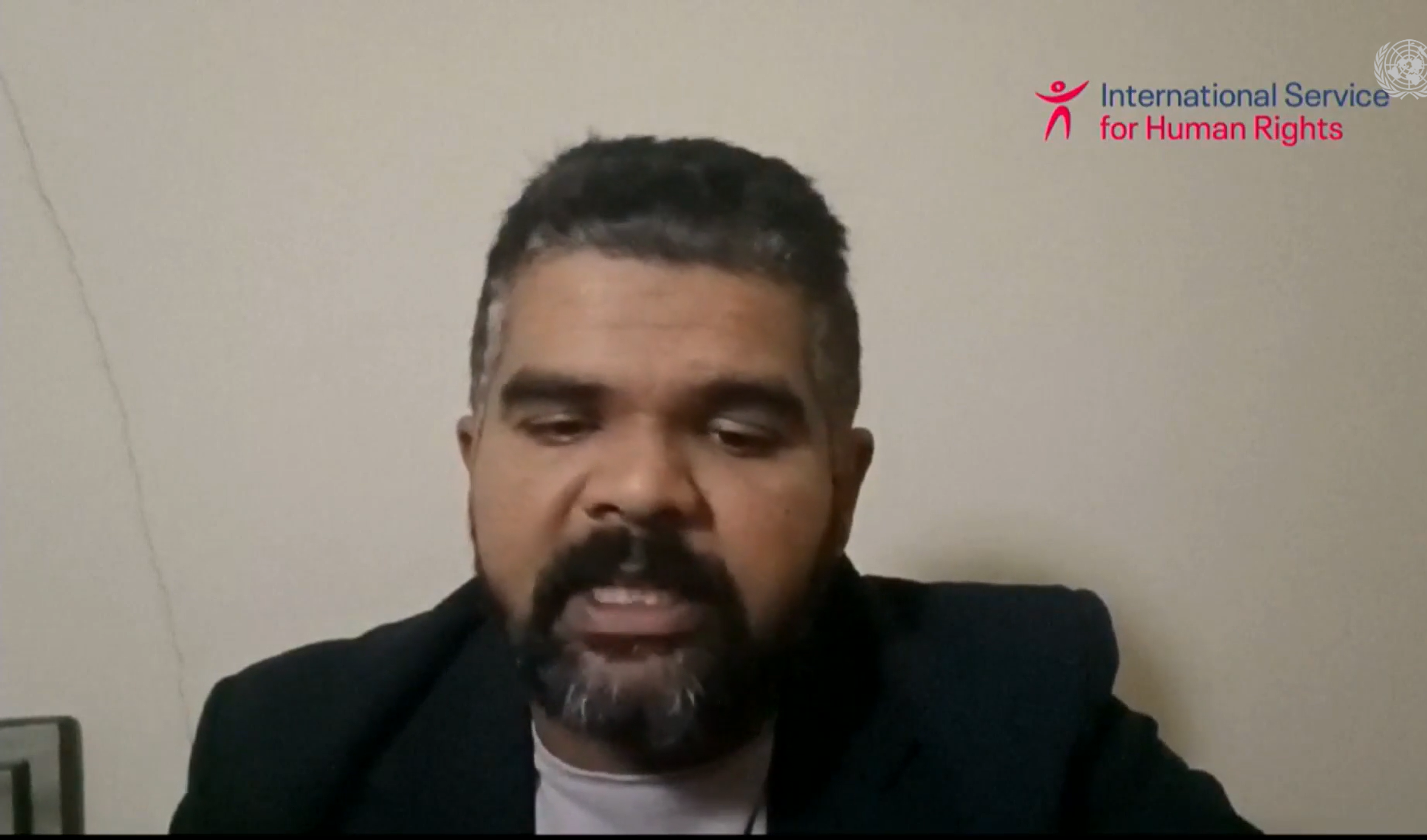
In a joint statement, ISHR and Mauritian NGO Dis-Moi pointed out that, though the Constitution of Mauritius guarantees the protection of human rights as enshrined its second article, it only mentions civil and political rights. The mandate of the National Human Rights Commission is therefore based on the definitions of civil and political rights.
This has made it increasingly difficult for human rights defenders working on other issues, such as socio-economic rights violations, sexual orientation and gender identity rights, or environmental rights to denounce violations.
Therefore, ISHR and Dis-Moi called on Mauritius to :
- Ensure that the Public Gathering Act is implemented reflecting its content and purpose, especially the notification rule, to guarantee the rights to freedom association and peaceful assembly;
- Ensure that the mandate of the National Human Rights Commission reflects all human rights and not only civil and political rights to ensure protection of all victims of rights violations, including economic, social and cultural, environmental and LGBTIQ defenders;
- Conduct prompt, thorough, independent, impartial investigations of all threats and attacks against human rights defenders, especially those involving law enforcement.