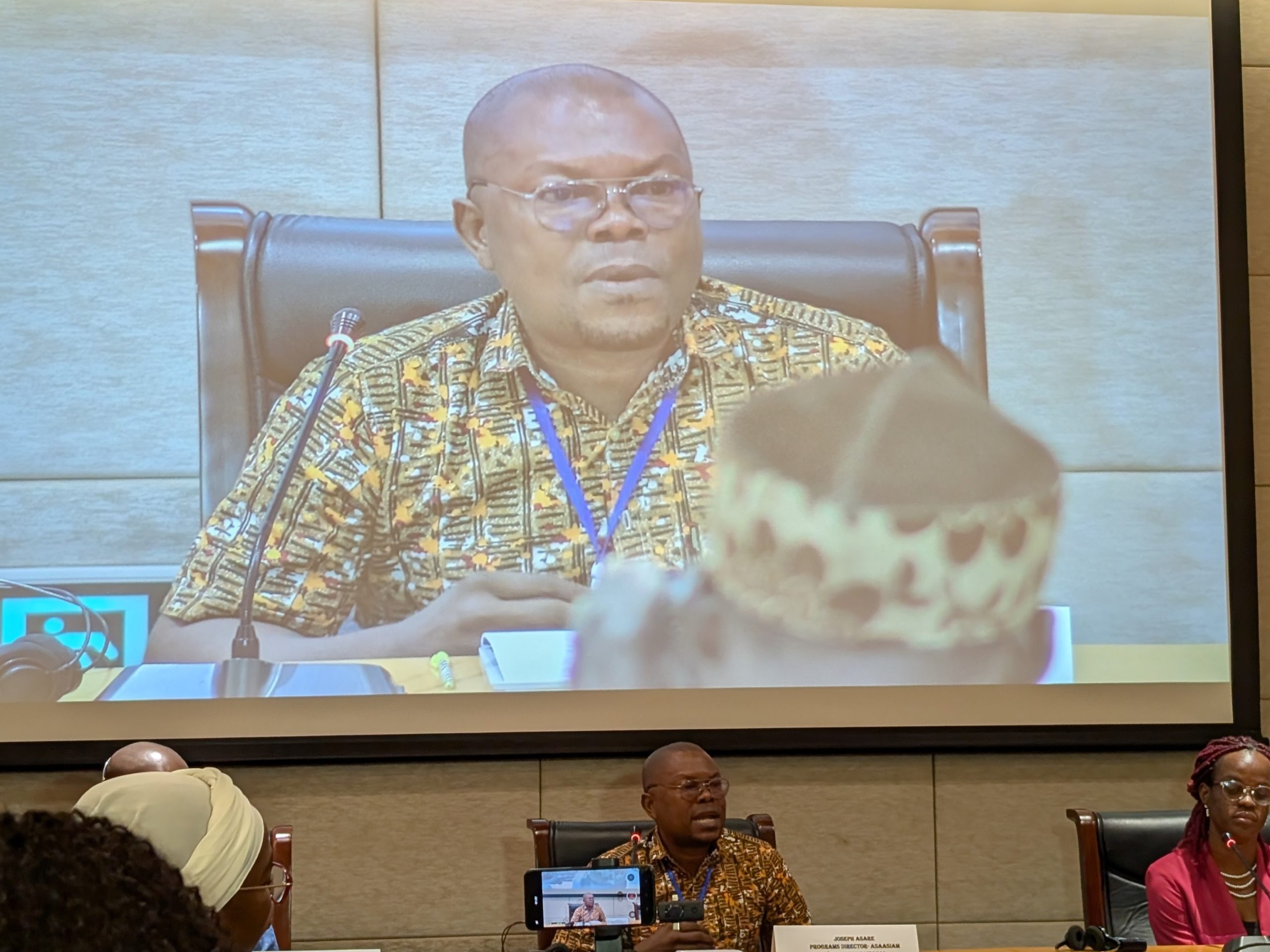
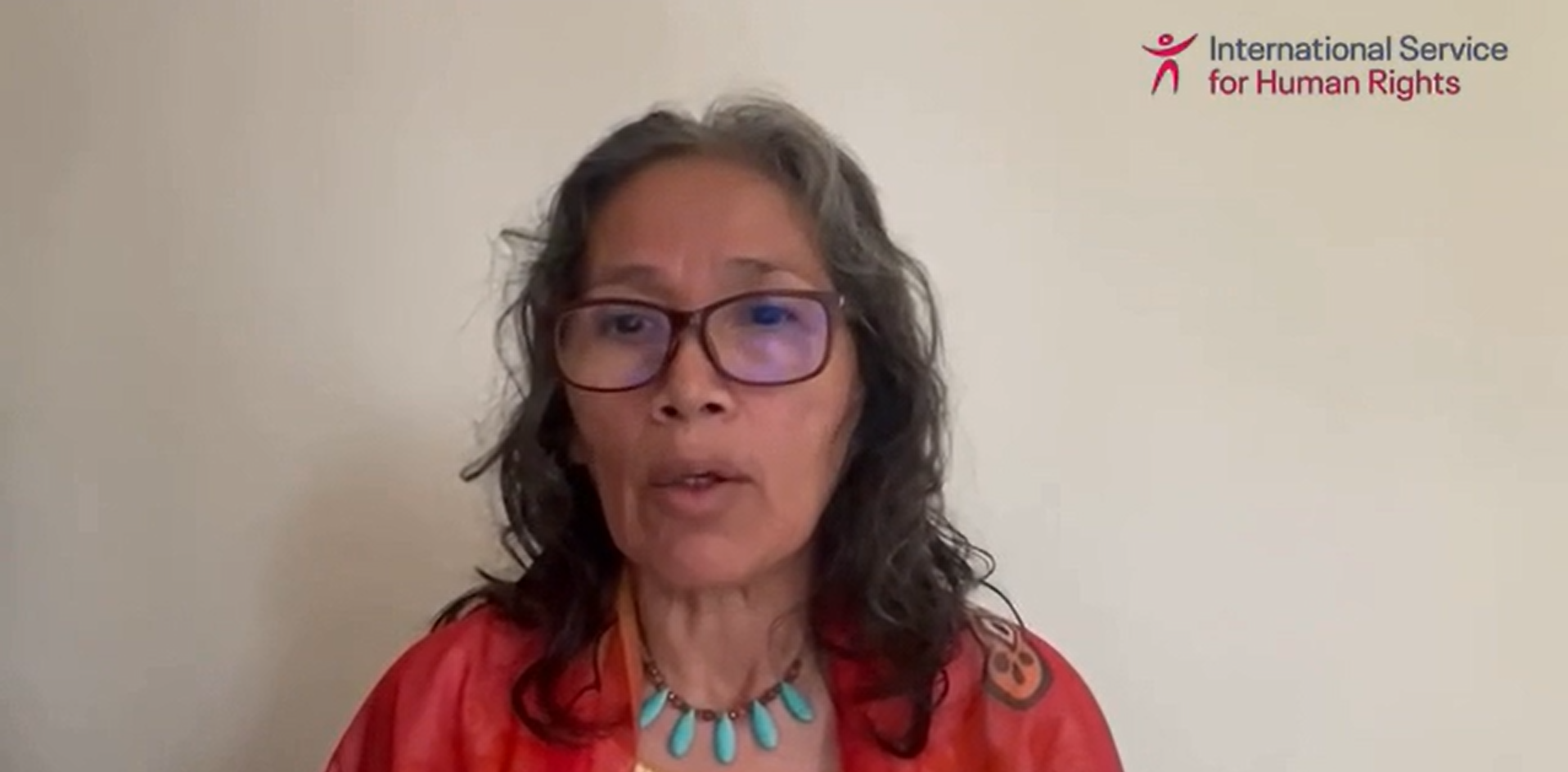
Panellists included speakers from Touch to Heal Initiative, the Association des jeunes dynamiques pour le développement durable, and Asaasiam Vision International, with moderation from the Legal Aid Commission of Ghana.
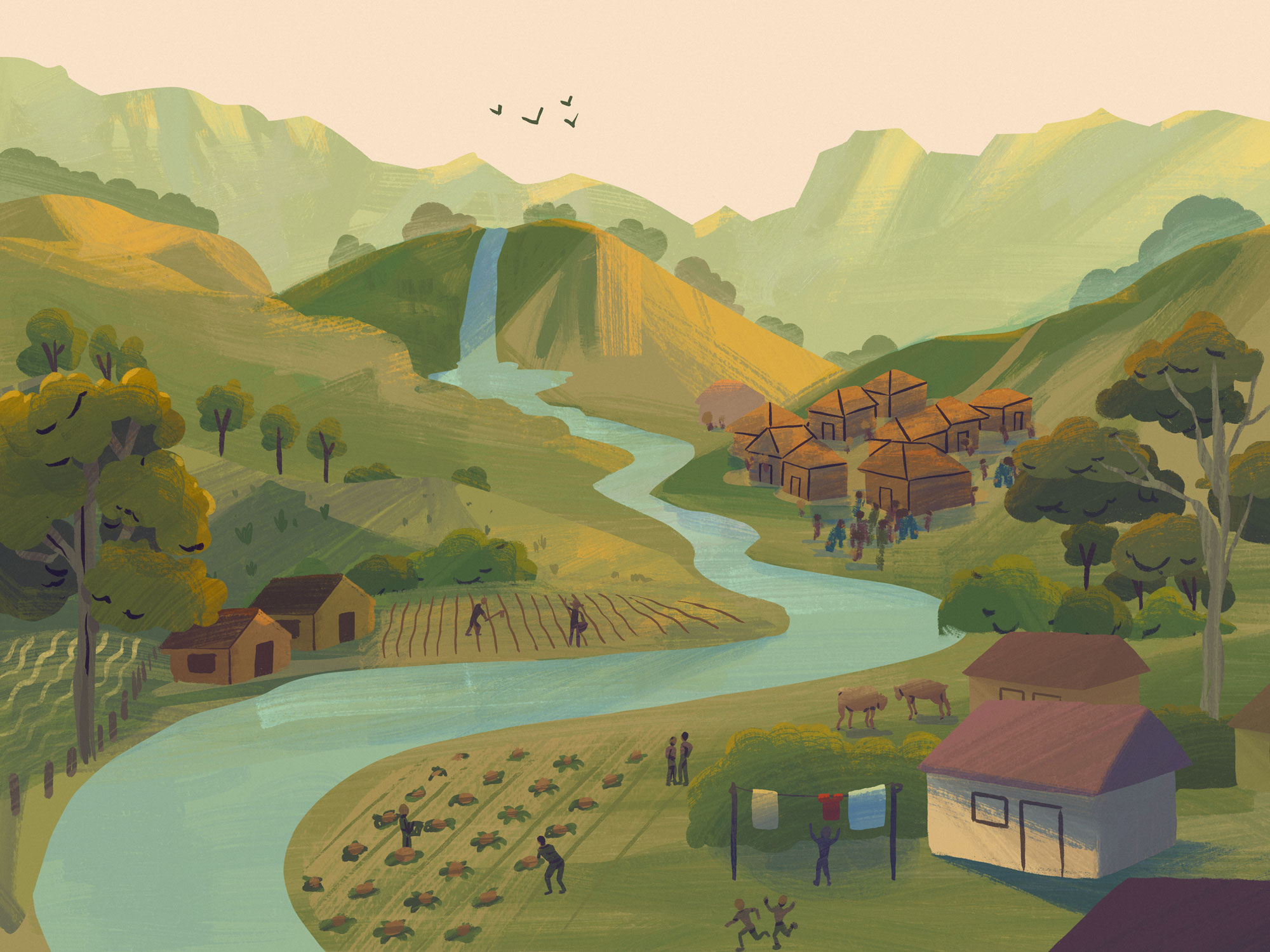
The discussion centred around how environmental injustice, pollution, environmental degradation, and climate change disproportionately affect indigenous peoples in Africa, as well as women and youth, especially in those communities that depend on nature for their survival and livelihoods on a day-to-day basis.
Participants raised a number of thematic issues and country cases, including hydrogen extraction and transformation in Tunisia, overfishing in Mauritania, mining in the Democratic Republic of the Congo and Guinea, and more, with many projects described by participants as a form of ‘green colonialism’, whereby the profits tend to go to Europe or North America and local communities enjoy little of the benefits.
Speakers highlighted a number of structural barriers to Indigenous Peoples and environmental human rights defenders claiming their rights in the face of large, well–organised extractive corporations. Such barriers include violence and threats, development of capacities for strategic litigation and advocacy, access to information and technology, discrimination based on descent and work, women and youth inclusion, and the language barrier faced by Portuguese-speaking countries in Africa.
Solutions proposed during the panel included the creation of a special mechanism for a Special Rapporteur on environmental rights in Africa and the designation of ecocide as an international crime, with associated prevention and punishment.