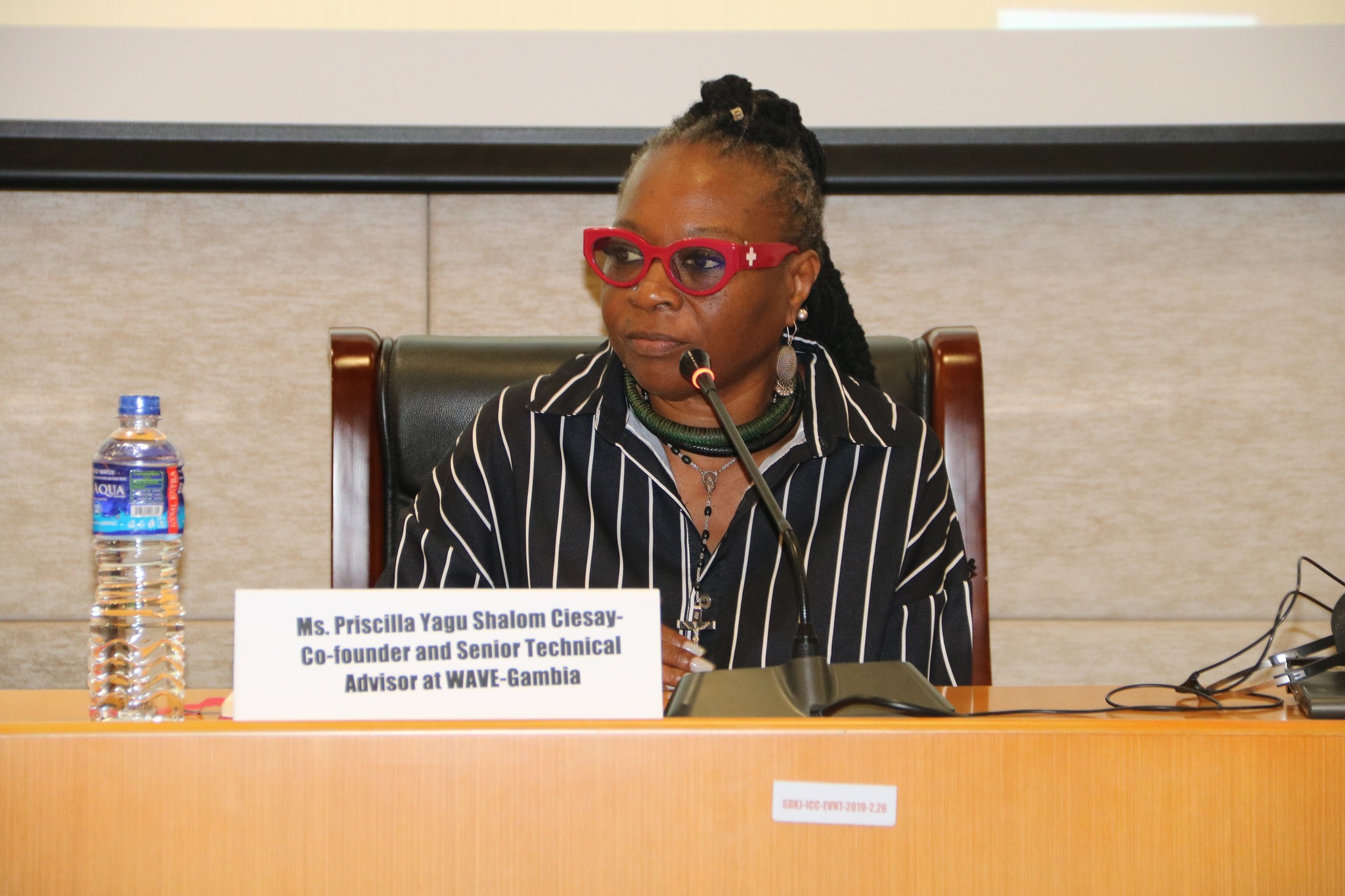
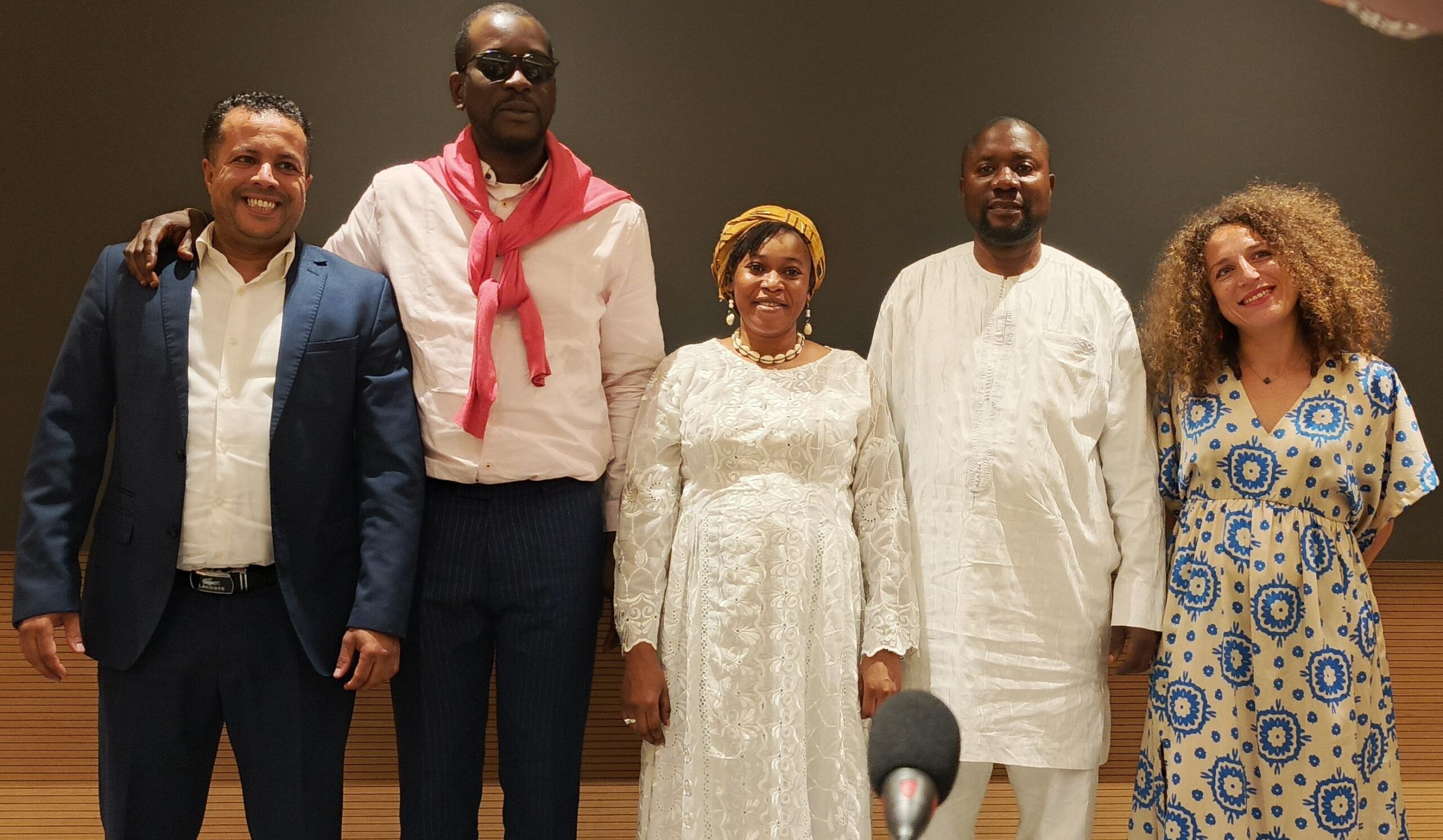
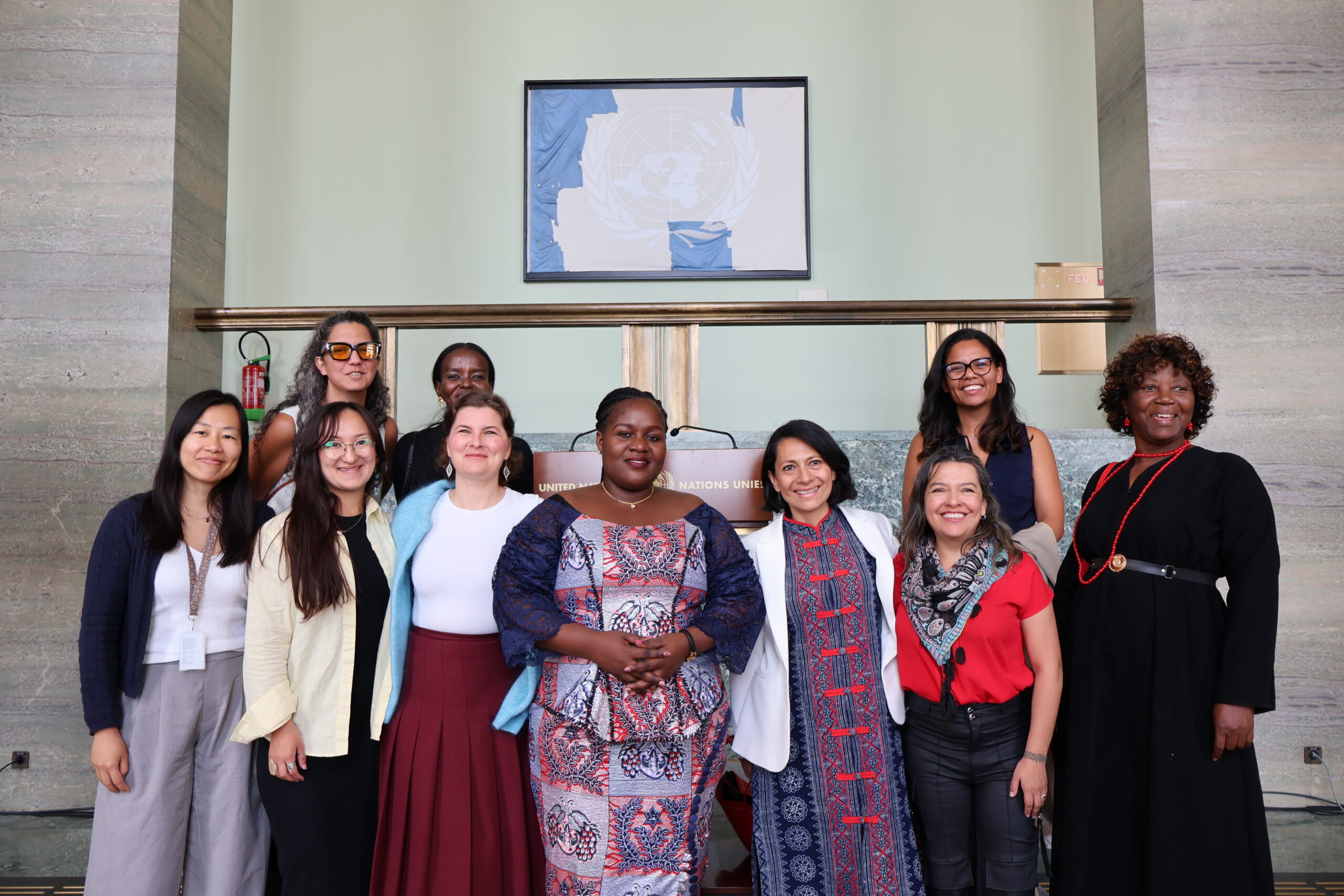
During the NGO Forum ahead of the 83rd Ordinary Session of the African Commission on Human and Peoples’ Rights, three panels focused on the role of Women Human Rights Defenders (WHRDs) during reparations: Gender Justice in Reparations, Feminicides in Africa (Panel 5), Maputo Protocol, a tool for decolonising Africa women from harmful laws and policies (Panel 8), Reparations as a Path to Justice: The Role of Women Human Rights Defenders in Restoring Dignity and Reclaiming Agency (Panel 10).
We are grounding in the lived experienced of our people and aim to restore history with feminist justice. For us it’s about dignity.
Mary Pais Da Silva, Co-Founding Director at the African Initiative of Women Human Rights Defenders
As panellists recalled unanimously, violence on women bodies have been particularly institutionalised during slavery times and colonial era, and brutality commercialised.
Caroline Wambui from the Centre for Reproductive Rights also mentioned the role of missionaries who came to Africa to impose religious constraints on women rights, which have today negative consequences on safe abortion.
Tata Rosalie, Queen of ‘Sacred Wood’ stated that Africans and people of African descent must endeavour to maintain their dignity and traditions. In that regard, she gave the example of traditional women communities in Casamance, Senegal, who have always been at the forefront of dialogue and participation in discussions concerning justice and reparations. She noted that a lot of women were raped and maltreated during the civil war in Casamance and they also deserve reparation.
Gender justice doesn’t mean just punishing killers but rather looks at systemic causes, dignity and changes.
Commissioner Janet Ramatoulie Sallah-Njie
Commissioner Janet Ramatoulie Sallah-Njie, Vice-Chair of the ACHPR, reminded the audience of the legal framework that civil society shall use, such as the Maputo Protocol, which states a clear call on States to establish reparations mechanisms dedicated to women (article 25). Other instruments such as the Niamey guidelines, Resolution on the Right to a Remedy and Reparation for Women and Girls Victims of Sexual Violence – ACHPR/Res.111(XXXXII)07, Resolution on the Protection of Women Against Digital Violence in Africa – ACHPR/Res. 522 (LXXII) 2022 are also important tools to use in advocacy. At the national level, the example of the Truth, Reconciliation and Reparations Commission (TRRC) report in the Gambia was mentioned as a follow-up tool to ensure reparatory justice for women, with civil society organisations calling for a better implementation.
Over the three days, speakers welcomed the advancement of debates regarding women’s rights in African Parliaments, such as the Safe Abortion Act currently discussed in Sierra Leone, but they also deplored the relatively low number of Court cases addressing gender justice in the national and regional human rights systems in Africa, as pointed out by Henrietta Ekefre, Africa Reparations Programme Lead at Africa Judges and Jurists Forum.
All the panels also mentioned the importance of introducing healing strategies for communities, including Indigenous women human rights defenders, which take into account mental health, well-being and care, when addressing the past and the future as well as the consequences of the colonial laws. In this regard, Ramatoulie Jallow from the Strategic Initiative for Women of Horn of Africa (SIHA) network described an education programme on the Maputo Protocol in South Sudan, focusing particularly on article 14 on safe abortion, as a tool to empower communities through evidence-based material and focused-groups discussions.
We need to value healing as a way to resist colonial power and telling our stories for a strong narrative.
Caroline Wambui, Centre for Reproductive Rights
Recommendations to States and the ACHPR from the three panels include:
- the recognition of women as a particular group to address in the path to reparation, but also as agents of change in their defender role
- the implementation of training programmes for police officers, magistrates and judges in order to offer an integrated right-based approach when it comes to assessing testimonies and complaints
- the encouragement for States to ratify the Maputo Protocol, and to revise reservations made on critical articles such as safe abortion
- the addition of mental health support in any initiatives in the field of reparations
- the support for funding healing and reparation programmes for WHRDs which include an intersectional approach and focus on solidarity among groups.
Author
Salomé Boucif
Salomé leads our work on capacity-strenghtening initiatives online and offline, such as the Human Rights Defender Advocacy Programme, ACHPR training and the ISHR Academy. Salomé has over 12 years’ experience working in the humanitarian sector in the field of access to education and advocacy as a project manager.
Article also available in