At a side event ahead of the 89th ordinary session of the African Commission on Human and Peoples’ Rights (ACHPR), human rights defenders from across the continent warned that the destruction of land and the shrinking of digital space are two faces of the same system of extraction, one that is silencing those who resist it.
Co-organised by African Defenders, DefendDefenders and Front Line Defenders, and moderated by ISHR, the event “Protecting our land, our environment and our digital space in Africa” brought together defenders from the Democratic Republic of Congo, Western Sahara, Mali and Nigeria to expose how environmental destruction, land dispossession and digital repression reinforce one another, and to call on the Commission to act as it drafts a landmark General Comment on the right to a clean, healthy and sustainable environment.
A shared logic of extraction
The panel’s central message was that extractivism is not confined to the ground beneath our feet. The same logic that strips minerals from the soil is now mining data from people’s lives, while the technologies used to do so increasingly target those who defend both.
“Environmental protection, land rights, human rights and digital security are deeply interconnected,” said Hassana Abba, of the Working Group on Human Rights in Occupied Western Sahara and the Protection League for Political Prisoners. “When natural resources are exploited without respect for the rights of the people concerned, when economic projects proceed without meaningful participation, and when those who document the consequences face torture, intimidation or digital abuse, we are confronting more than an environmental problem. We are confronting a broader challenge of justice, accountability and human dignity”, he added.
Charles Ikem, Executive Director of PolicyLab Africa, put a name to this phenomenon. “Just like natural resources extraction, we are seeing some form of digital colonialism and extractivism; platform data mining and content moderation silence the voice of indigenous communities, women and minority rights,” he said, pointing to Nigeria’s Cybercrime Act of 2024, which “has become a punitive tool to censor speech online.” He called for a continental moratorium on high-risk technologies and for the African Union to build on the Pall Mall Process to tackle the proliferation of spyware across the continent.
Indigenous defenders and the cost of ‘conservation’
Fidèle Mbilizi Mutimanwa, Advocacy and Strategic Partnerships Director at the National League of Indigenous Pygmy Associations of the Congo (LINAPYCO), described the lethal reality facing Batwa, Baka and other Pygmy communities, who are being driven from their ancestral forests in the name of environmental protection itself.
In operations to clear land for protected areas such as Kahuzi-Biega and Upemba National Parks, park authorities and security forces have been implicated in killings, gang rapes, arbitrary arrests and the destruction of homes and crops. In 2022, the African Commission found against the DRC in its landmark Communication 588/15, ordering the State to restore Batwa lands and end discriminatory laws, a decision that, more than three years on, remains largely unimplemented.
“The progressive loss of their traditional territories automatically entails the loss of their cultural identity,” Fidèle Mbilizi Mutimanwa explained, recalling that these same communities are essential guardians of the Congo Basin’s forests. His appeal to the Commission was direct: ensure that the 2022 decision and the 2022 national law n° 22/030 on Pygmy peoples’ rights are finally enforced.
Gender at the intersection
The event also highlighted how women defenders pay a disproportionate price, both on the land and online. Aminata Diarra, Projects Coordinator at Women in Law and Development in Africa (WiLDAF-Mali), showed how rural Malian women face a triple exclusion, from land, from environmental decision-making and from the digital space.
Citing national data, she noted that only 31 per cent of women in Mali own land, against 43 per cent of men, and customary practices can still give rise to inequalities, particularly with regard to inheritance and access to land. She also mentions that violence facilitated by technology affects between 16 and 58 per cent of recorded cases of gender-based violence. “The digital rights of defenders are non-negotiable,” she stressed, calling for accessible, confidential reporting mechanisms and for women’s meaningful participation in the management of land and natural resources.
Hassana Abba echoed this from a context of occupation, describing smear campaigns by Moroccan authorities and the circulation of private images targeting Sahrawi women defenders, tactics that, he warned, blur the line between digital surveillance and offline repression.
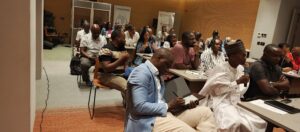
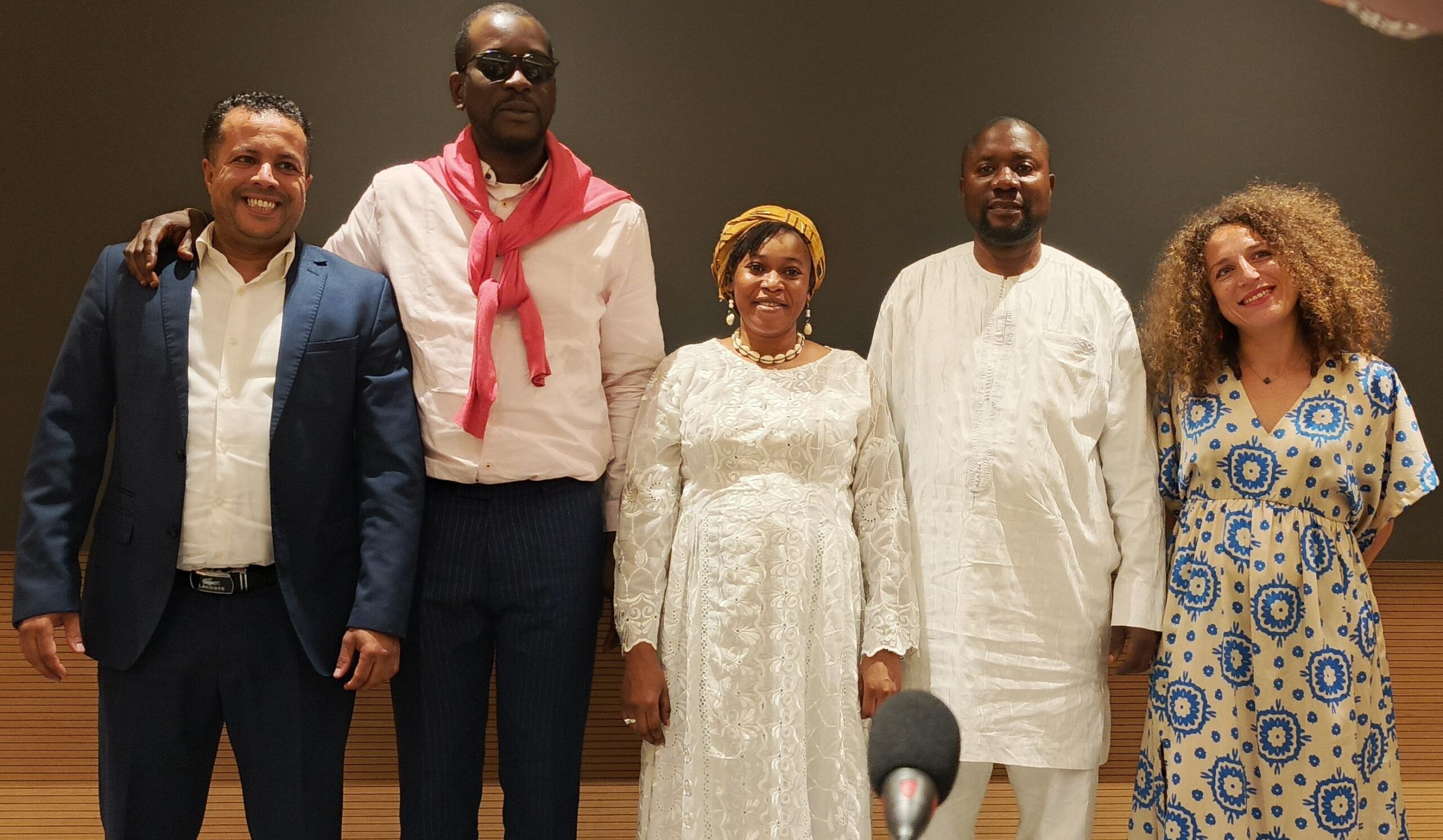
Participants at the side-event
A moment of opportunity for the Commission
Speakers framed the event around a concrete opportunity: the Commission’s ongoing work on a General Comment on the right to a clean, healthy and sustainable environment, and the fifth anniversary of the landmark General Assembly resolution of the same name. The panel urged that environmental defenders be substantially reflected in the General Comment, and that digital threats, internet shutdowns, surveillance, restrictive cybercrime laws and technology-facilitated gender-based violence, be recognised as integral to the protection of environmental rights.
The statistics underscored the urgency: in the DRC alone, at least 12 environmental and land-rights defenders were killed between August 2025 and March 2026, amid 31 documented serious violations. Across Africa, at least 30 internet shutdowns were recorded in 15 countries in 2025.
As the African charter marks its 45th year, defenders left Dakar with a clear demand: to turn its landmark decisions into enforceable protection, and to ensure that the Commission outcomes reflect the lived reality of those defending the land and their digital space, at great personal risk.
The panel expressed solidarity with the participants and echoed similar issues happening in Cameroon, Uganda and Sierra Leone.
Author
Salomé Boucif
Salomé leads our work on trainings and capacity development initiatives online and offline, such as the Human Rights Defender Advocacy Programme and the ISHR Academy. Salomé has over 9 years’ experience working in the humanitarian sector in the field of access to education and advocacy as a project manager.