On 8 October 2021, the Human Rights Council adopted resolution 48/13, recognising the human right to a clean, healthy and sustainable environment. The UN General Assembly followed suit on 28th July 2022. These milestones reflected decades of work by civil society, Indigenous Peoples, social movements and communities seeking stronger protection for people and the planet.
Celebrating collective action
The recognition of this right demonstrates what sustained organising and international solidarity can achieve. In 2023, the global coalition that advocated for its recognition received the UN Human Rights Prize, acknowledging the contribution of civil society, Indigenous Peoples, social movements and local communities.
That achievement also carries a continuing responsibility to support the people advancing environmental justice, as ISHR has emphasised that protecting civic space and supporting environmental human rights defenders are essential to implementing the right to a healthy environment.
States should use this anniversary to publicly recognise environmental defenders’ contributions and commit resources to their protection and participation. Coordinated action by national, regional and international mechanisms can help communities obtain protection and accountability, while sustaining the collective advocacy that secured recognition of the right to a healthy environment.
Protecting environmental defenders to advance implementation
In the lead up to the anniversary, ISHR published its submission to the Special Rapporteur that will inform her report to the Human Rights Council’s 64th session on environmental human rights defenders. Drawing on our work with environmental defenders and the Declaration +25, it urges her to recognise attacks on environmental human rights defenders as violations of the right to a clean, healthy and sustainable environment. This connects defenders’ protection directly to the rights of the communities they serve.
The submission describes how stigmatisation, criminalisation and reprisals is not only an attack against environmental defenders, their families and their communities, but also an obstruction to environmental protection as a whole. The submission lists a number of recommendations for States and non-State actors, including financial support for defenders, strengthening protection mechanisms in consultation with them, or legislation against strategic lawsuits against public participation It also calls for maintaining and strengthening environmental institutions and laws in line with the principle of non-regression,
Our submission also calls for safe and meaningful participation in environmental and climate decision-making, with practical support for travel and visas and measures against reprisals. States should hold corporations and financial institutions accountable, ensuring that mandatory due diligence includes consultation with defenders and assessment of the risks they face.
‘We cannot advance the right to a healthy environment without advancing the protection of environmental human rights defenders’.
Ulises Quero, ISHR Programme Manager
Positive contribution of environmental defenders.
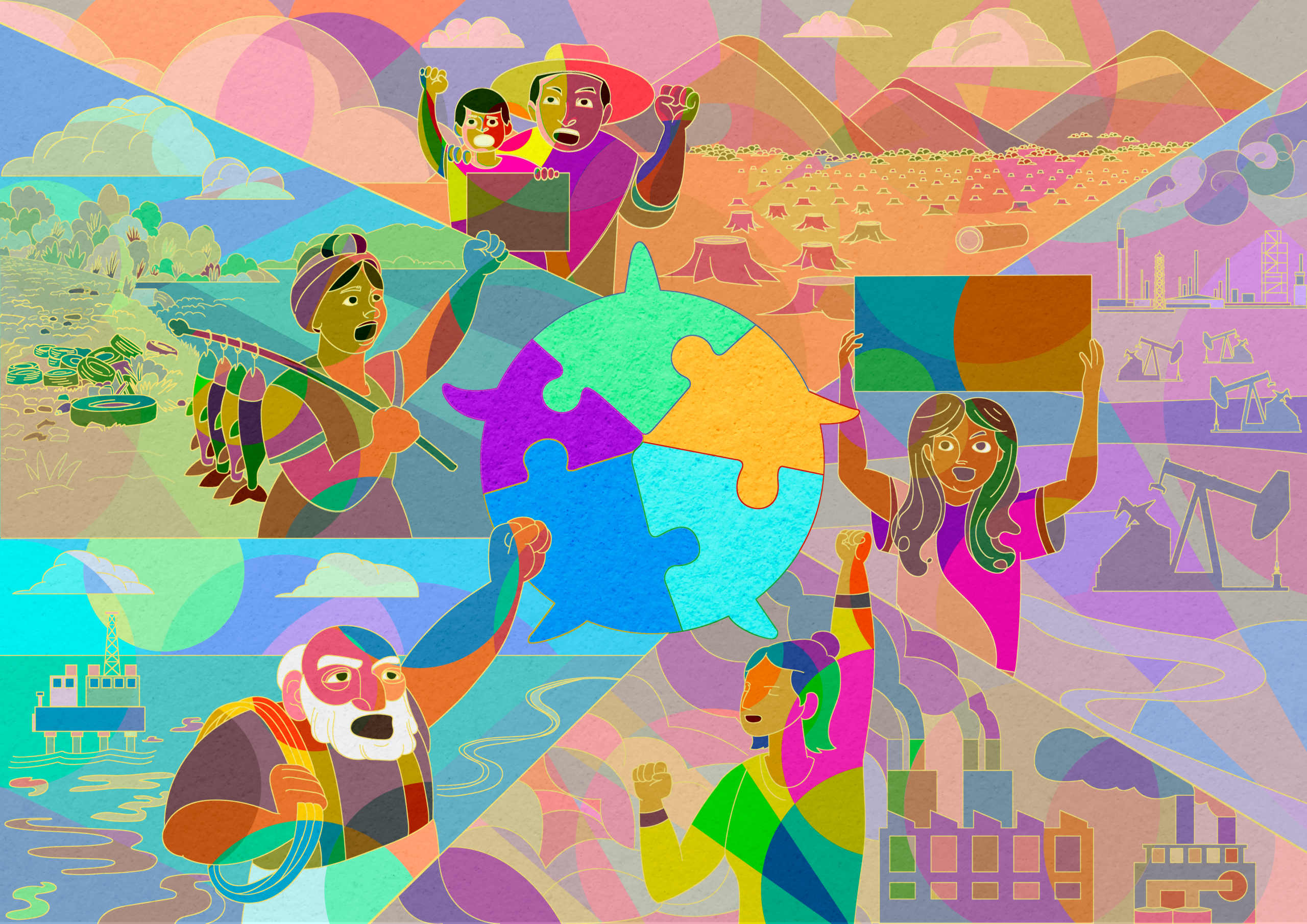
Environmental human rights defenders help communities protect their land, water and livelihoods. They demand accountability for environmental harm and participate in decisions affecting their futures. Their knowledge and advocacy contribute to advancing the right to a clean, healthy and sustainable environment.
ISHR’s submission calls for public recognition of these contributions and of defenders’ right to defend human rights. Public narratives should reflect their leadership and achievements alongside the challenges they face.
States should acknowledge their vital work through public statements, provide financial support and ensure their safe and meaningful participation in environmental and climate governance. These measures help sustain defenders’ contributions and strengthen communities’ ability to exercise their rights.
Supporting women environmental defenders
Women human rights defenders bring essential experience to these efforts. ISHR’s account of the 2024 Women Human Rights Defenders Advocacy Week, a training course co-organised by ISHR, we documented how women defenders brought concerns about environmental harm and corporate accountability into discussions in Geneva.
ISHR’s recent submission calls for protection measures that respond to the intersecting risks faced by women environmental defenders and indigenous defenders. Protecting their communities, supporting their wellbeing and ensuring they can shape decisions affecting their lives are central to sustaining their work.
On 24 September, ISHR co-sponsored a celebration and stock-taking event in Geneva co-organised by the UN Special Rapporteur on the right to a healthy environment, States and civil society. The event was convened to reflect on achievements since the recognition and priorities for implementation for the upcoming years.
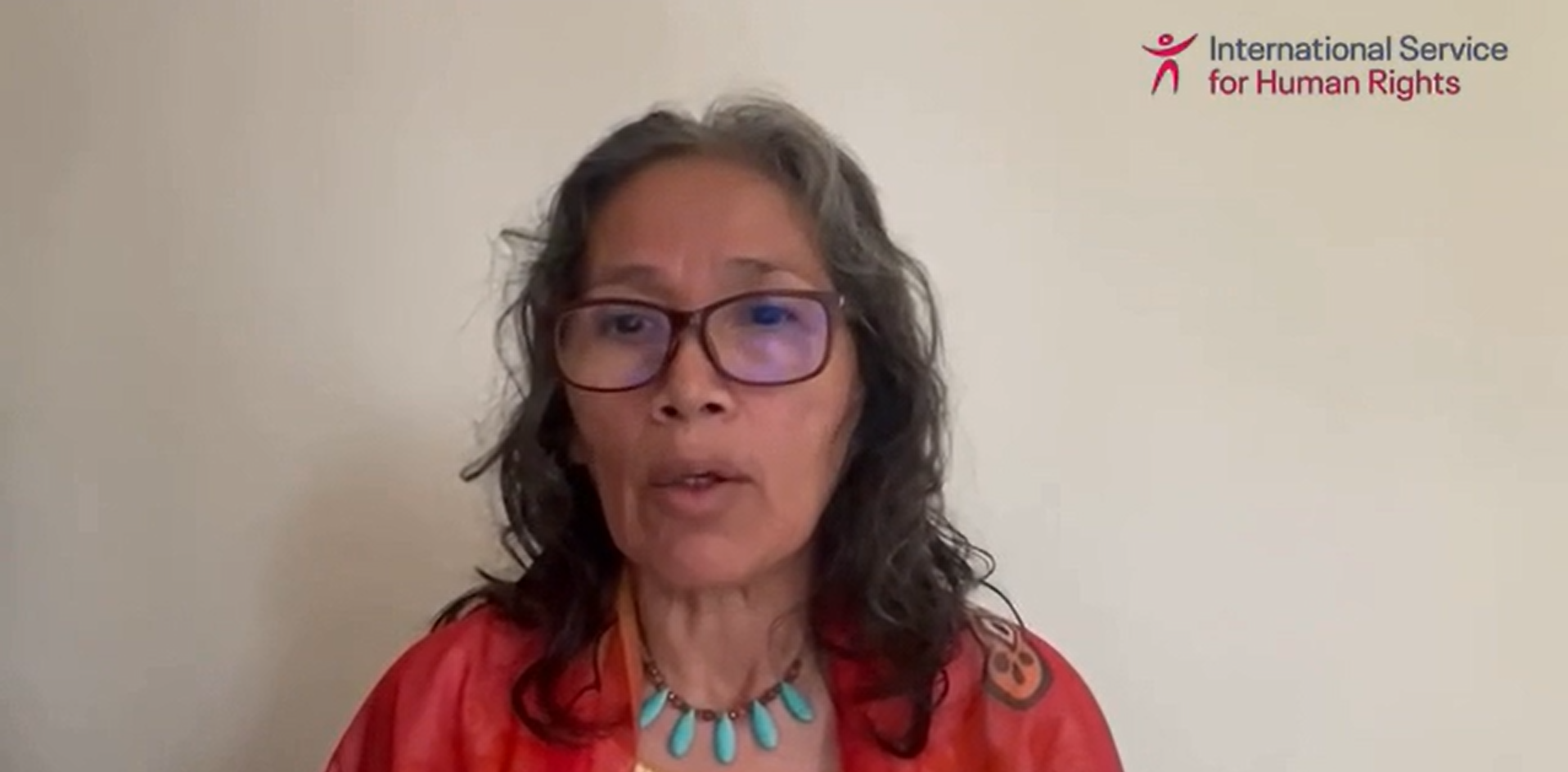
Among the speakers was Andriyeni, a participant in the 2026 edition of the Women Human Rights Advocacy Week training course, representing Solidaritas Perempuan from Indonesia. She highlighted threats to women’s rights in relation to land, water and livelihoods. She warned that Indigenous women, farmers and fisherwomen defending their communities face repression, physical violence and criminalisation. Her organisation recorded 135 women affected by violence and criminalisation in agrarian conflicts during 2025.
’Protecting the right to a healthy environment through an Indigenous and gender perspective means recognising us as legitimate rights holders and political subjects, not merely objects of development. Environment justice will never be achieved without gender justice.’
Andriyeni, Solidaritas Perempuan, Indonesia
A learning tool to support environmental defenders’ advocacy
ISHR’s Environmental Human Rights Defenders Pathway offers a free online course that defenders can follow at their own pace.
Developed with defenders and experts, it provides practical guidance on using UN and regional mechanisms to advance environmental justice, seek protection and hold States and businesses accountable.
Case studies, videos and resources help defenders plan their engagement around their communities’ needs.
Author
Diego Perez Scheel
Diego Perez Scheel has recently joined ISHR as an intern. Diego is a Guatemalan law student at Universidad Rafael Landívar. Before joining ISHR as a Programme Intern (Geneva), he worked on human rights issues including migration, Indigenous peoples’ rights, environmental protection and access to justice through advocacy competitions and volunteer initiatives.
Author
Ulises Quero
Ulises leads the work on business, environment, and land at ISHR.