Feminist voices at the UN: Women Human Rights Defenders Advocacy Week 2026
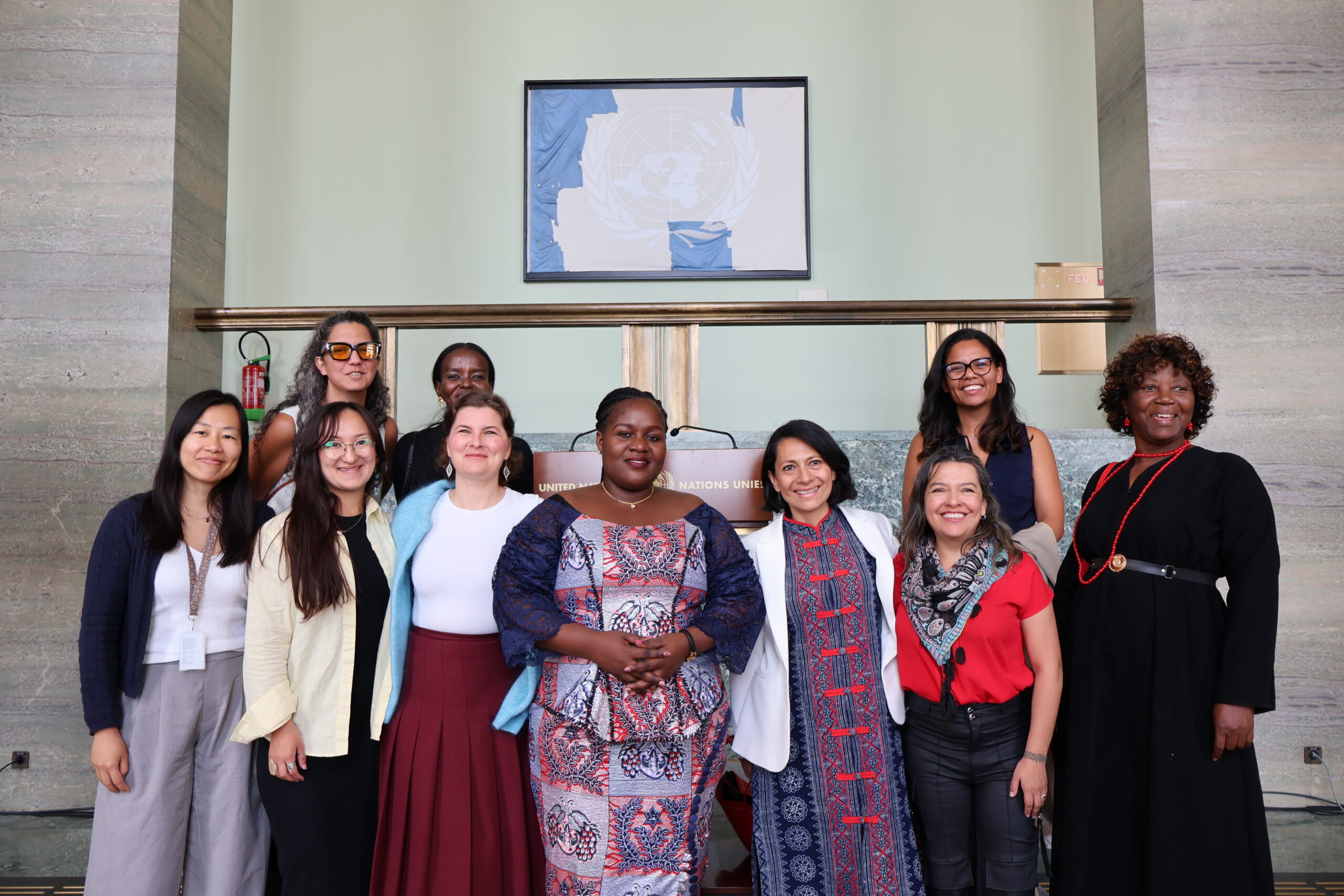
Women human rights defenders working at the intersection of gender, climate and conflict gathered in Geneva for the Women Human Rights Defenders Advocacy Week from 21 to 25 September 2026 for a week of solidarity, learning and exchange.
Eleven women human rights defenders gathered in Geneva from 21 to 25 September for the Women Human Rights Defenders Advocacy Week (WHRD-AW). Held during the 63rd session of the Human Rights Council, the training focused on connecting their struggles around gender equality and climate justice in conflict settings, exploring how defenders can use the UN strategically to support their work.
From defending the rights of rural women in Cameroon, to studying the gendered impacts of ecological collapse in Kazakhstan, or protecting the wetlands in Mexico and the rights of fisherwomen in West Papua, their stories demonstrate that these intersecting crises cannot be tackled separately.
The training was co-organised by ISHR, in partnership with Amnesty International, the Asia Pacific Forum on Women, Law and Development, Front Line Defenders, Peace Brigades International, the Association for Women’s Rights in Development, the Women Human Rights Defenders International Coalition, the WHRD Middle East and North Africa Coalition, and Urgent Action Fund for Feminist Activism.
Putting advocacy into practice
Training sessions introduced the Human Rights Council, Special Procedures and Treaty Bodies, with practical guidance on engaging with UN human rights mechanisms. Defenders explored the pathways of engagement with those mechanisms to amplify their work at home and had the opportunity to meet with different stakeholders inside and outside the UN quarters.
Participants met staff from the Office of the High Commissioner for Human Rights (OHCHR) working on the environment and climate change, civic space, business and gender. They discussed the Office’s mandate and the support it can offer women human rights defenders and how civil society can engage in Geneva and with OHCHR field presences.
They also presented their concerns and discussed possible collaboration with the representatives of the Special Procedures mandates covering discrimination against women, human rights defenders, racism, extreme poverty, development, water and sanitation, food and climate change.
The group also had the opportunity to meet with the mandate holders Astrid Puentes Riaño, Special Rapporteur on the human right to a clean, healthy and sustainable environment, and Fernanda Hopenhaym Cabrera, Vice-Chair of the UN Working Group on Business and Human Rights. These meetings allowed participants to put the week’s training into practice through direct exchanges with UN experts.
‘I learnt about conflicts in other regions that face the same seasonal challenges at grassroots level. And I learnt a great deal about collaboration.’
Participants followed the Council’s session and delivered oral statements during the discussions taking place inside the UN. Dilraba Anayatova delivered a statement on access to water and sanitation in Kazakhstan.
Azra Berbić briefed the Council about the situation of women environmental defenders from Bosnia and Herzegovina and the Balkans. Nathalia Bonilla Cueva raised restrictions to civic space and the criminalisation of Indigenous and human rights defenders in Ecuador. Rana El Araj also addressed the situation of migrants in Lebanon. Andriyeni talked about land grabbing and ecological violence in Indonesia, and Nuria informed the Council about the damage caused to the lives and livelihoods of Indigenous communities by the avocado industry in Mexico.
They also shared their views via video messages after the week was concluded.
Marie Crescence Ngobo from the Network of Sustainable Development Actors in Cameroondenounced how agro-industrial palm oil, sugar and rubber operations seize customary lands without consent, pollute water, and violently punish women. Watch her video intervention (in French).
Gratias Kibanja Lukoo from Women in Action for Human Dignity, in the Democratic Republic of Congo, talked about how the climate crisis and conflict reinforce violence against women and restrictions to civic space and the work of women human rights defenders (in French).
‘The nexus between gender, climate and conflict: Perspectives from defenders on the frontlines’
On 24 September, ISHR and co-organisers held a side event titled ‘The nexus between gender, climate and conflict: Perspectives from defenders on the frontlines’. The event brought the week’s central themes into a public discussion at the UN. Defenders spoke alongside Special Rapporteur Astrid Puentes Riaño, bringing their experiences to the discussion.
Throughout the week, the defenders also received firsthand guidance on presenting their issues in diplomatic spaces. They met with diplomats leading work on resolutions at the Council on gender and climate from a range of countries, sharing information about their work and outlining what they are asking the international community to do to address their main concerns.
'It's a powerful space with really incredible women for learning, solidarity and friendship!'
WHRD-AW participant
Learning from one another and making time for care
At a breakfast organised for civil society organisations, the participating defenders were introduced to international, regional and local organisations working in Geneva and attending the Human Rights Council session and had the opportunity to informally network and exchange around their work and opportunities for collaboration.
In a peer-learning exercise, participants also led sessions where they explored the transformation of community conflicts and peacebuilding, activists’ resilience and safety, grassroots women defenders’ struggles and collective protection, as well as how grassroots field realities can reframe and complicate dominant geopolitical narratives around conflict. Each session provided space for defenders to learn from one another’s lived realities.
A session on wellbeing, care and activism gave participants time to consider how to sustain their work. Another session explored strategies for mobilising resources for their movements. Alongside the meetings at the UN, these exchanges addressed the practical needs of continuing to organise and defend rights. The week concluded with a discussion on joint advocacy goals and an evaluation.
Participants filled a survey to share feedback and reflect on how to continue learning after their time in Geneva. Results revealed that 100% of participants now feel equipped to implement their advocacy strategies, and 80% of them said they were either satisfied or very satisfied with the week spent in Geneva.
'For me, this week was like a booster. It is thanks to spaces like this that we can understand that we are not alone and we can continue the work we’re doing.'
WHRD-AW participant
In the days following the WHRD Advocacy Week, Rachel Tan from the Asia Pacific Forum on Women, Law and Development delivered a joint statement that summarised the week’s main discussions and reflections.
Tan called on the international community to act against violence targeting women human rights defenders and their communities by confronting patriarchy, militarisation, extractivism, and corporate capture.
Author
Diego Perez Scheel
Diego Perez Scheel has recently joined ISHR as an intern. Diego is a Guatemalan law student at Universidad Rafael Landívar. Before joining ISHR as a Programme Intern (Geneva), he worked on human rights issues including migration, Indigenous peoples’ rights, environmental protection and access to justice through advocacy competitions and volunteer initiatives.
At the Human Rights Council's session, 47 States jointly denounced the dismantling of democracy in Nicaragua, while UN experts presented new evidence of systematic repression, enforced disappearance and deaths in State custody.
The Human Rights Council has renewed the mandate of the Special Rapporteur on Afghanistan for another year, maintaining dedicated scrutiny of the rights of women and girls. ISHR welcomes the renewal and calls on States to make sure the new Independent Investigative Mechanism for Afghanistan is up and running without delay.
On this day, five years ago, the UN Human Rights Council’s recognised the right to a clean, healthy and sustainable environment. ISHR calls on States to protect the defenders who help advance this right.