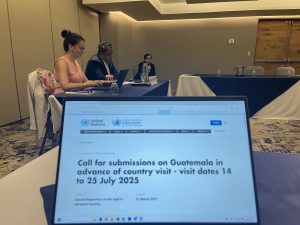
From 14 to 25 July, the UN Special Rapporteur on the right to adequate housing, Balakrishnan Rajagopal, conducted an official visit to Guatemala – only the second visit to the country in nearly seven years by UN Special Procedures. From 18 to 20 November, Guatemala was reviewed by the UN Committee on the Elimination of all forms of Racial Discrimination (CERD).
©ISHR
As part of these processes, ISHR worked throughout the year to empower Guatemalan human rights defenders through technical support and capacity building to engage with both mechanisms. This helped to advance key recommendations for the protection of Indigenous women, Indigenous and land defenders, particularly in relation to protection of land rights of Indigenous Peoples and peasant communities.
Forced evictions: A gross human rights violation
In Guatemala, the lack of implementing legislation that recognises and protects the lands and territories of Indigenous and Afro-descendant Peoples persists alongside the absence of agrarian institutions to implement the 1996 Peace Accords. In 2024, institutions addressing these issues were weakened and dismantled, and court rulings and decisions that restore rights to Indigenous communities have not been implemented. Existing regulations also fail to recognise Indigenous forms of land tenure and do not apply or respect the Indigenous communities’ right to free, prior and informed consent.
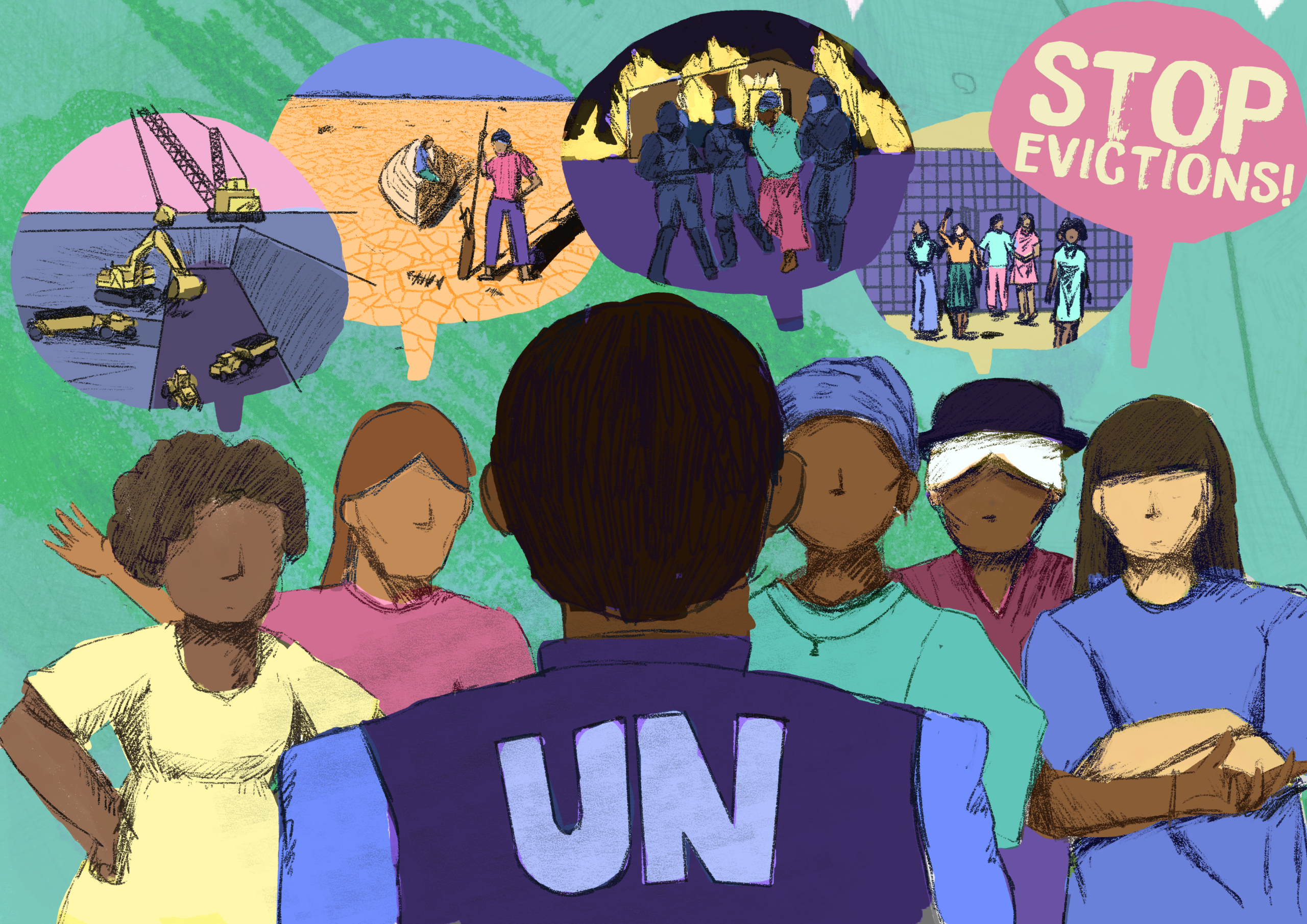
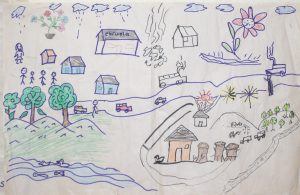
This context has led to an intensification of forced evictions, which have become a recurring practice mainly affecting Q’eqchi’ Maya Indigenous communities in the departments of Petén, Alta Verapaz, Baja Verapaz and Izabal.
According to the Tzununija movement, these actions are marked by the disproportionate use of force and the involvement of public and private security forces, including the burning of homes, crops, animals and livelihoods. Their systematic and generalised use, involving physical and psychological violence, could even amount to acts of torture or inhuman treatment. Many of these evictions occur without prior notification and without resettlement plans.
On this issue, the Special Rapporteur asserted that ’the vast majority, if not all, collective evictions carried out in Guatemala amount to forced evictions under international law’ and are conducted in an inhumane manner. He also called on Guatemala to urgently put in place a moratorium on collective evictions, and to adopt a national law outlawing illegal evictions.
For its part, CERD also expressed concern about forced evictions and called on the State to adopt effective measures to protect Indigenous Peoples, fully respecting their rights, traditions and culture, including through a moratorium until the recognition, regularisation, and collective titling of their lands and resources is completed.
Climate change and extractive industries as drivers of displacement
©Tz’ununija
ISHR also provided technical support to the Working Group on Internal Forced Displacement in Guatemala for the preparation of a report prior to the Special Rapporteur’s visit.
The information highlights how sectors such as mining, hydroelectric projects, and agribusiness ventures including palm oil and sugarcane cultivation negatively affect the enjoyment of the right to adequate housing. In addition, deforestation and other environmental changes associated with these projects have increased vulnerability to climate change, intensifying impacts on affected communities and reinforcing a cycle of exclusion and poverty in rural areas.
As examples, the report pointed to the ‘Dry Corridor’ phenomenon affecting much of Central America, including Guatemala, but also the effects of storms such as hurricanes Iota and Eta (both in 2020) and other climate-related events. The Working Group also highlighted the situation of the Arenal community in the eastern department of Zacapa, where deforestation has intensified the effects of hurricanes and earthquakes, causing destructive landslides .
The Special Rapporteur also noted that in some cases these situations require the relocation of communities, which should be accompanied by adequate resettlement in accordance with human rights standards.
An end to the criminalisation of defenders
The instrumentalisation of criminal law to persecute and criminalise Indigenous and communities and human rights defenders has increased in recent years. Cases such as those of Bernardo Caal Xol, Luis Pacheco and, Héctor Chaclán are just a few examples of this phenomenon, which seeks to silence defenders, wear down their families and communities, and allow other human rights violations to continue.
According to the Guatemalan Unit for the Protection of Human Rights Defenders (UDEFEGUA in Spanish), a human rights watchdog, the number of recorded attacks against human rights defenders and organisations increased in 2023, reaching nearly 9,496 cases – the highest figure in recent years. In 2024 there was a significant decrease, though the number remained high at over four thousand cases.
The crimes of ‘trespassing’ (usurpación in Spanish) and ‘aggravated trespassing’ (usurpación agravada) have been repeatedly used to delegitimise struggles for access to land and housing. Likewise, private actors have been involved in intimidation, physical attacks, and even killings against defenders in a context marked by institutional corporate capture, corruption, and impunity.
The Special Rapporteur called on Guatemala to urgently decree an amnesty for those convicted of these offences, release individuals in pre-trial detention, and pursue trespassing cases through civil courts.
For its part, CERD recommended that the State take the necessary measures to ensure the effective implementation of the Public Policy for Human Rights Defenders, adopted in November 2025, including effective protection mechanisms and strategies. It also recommended that Guatemala thoroughly investigate cases against Indigenous leaders and members who defend their rights.
Capacity-building for Indigenous women
©Tz’ununija
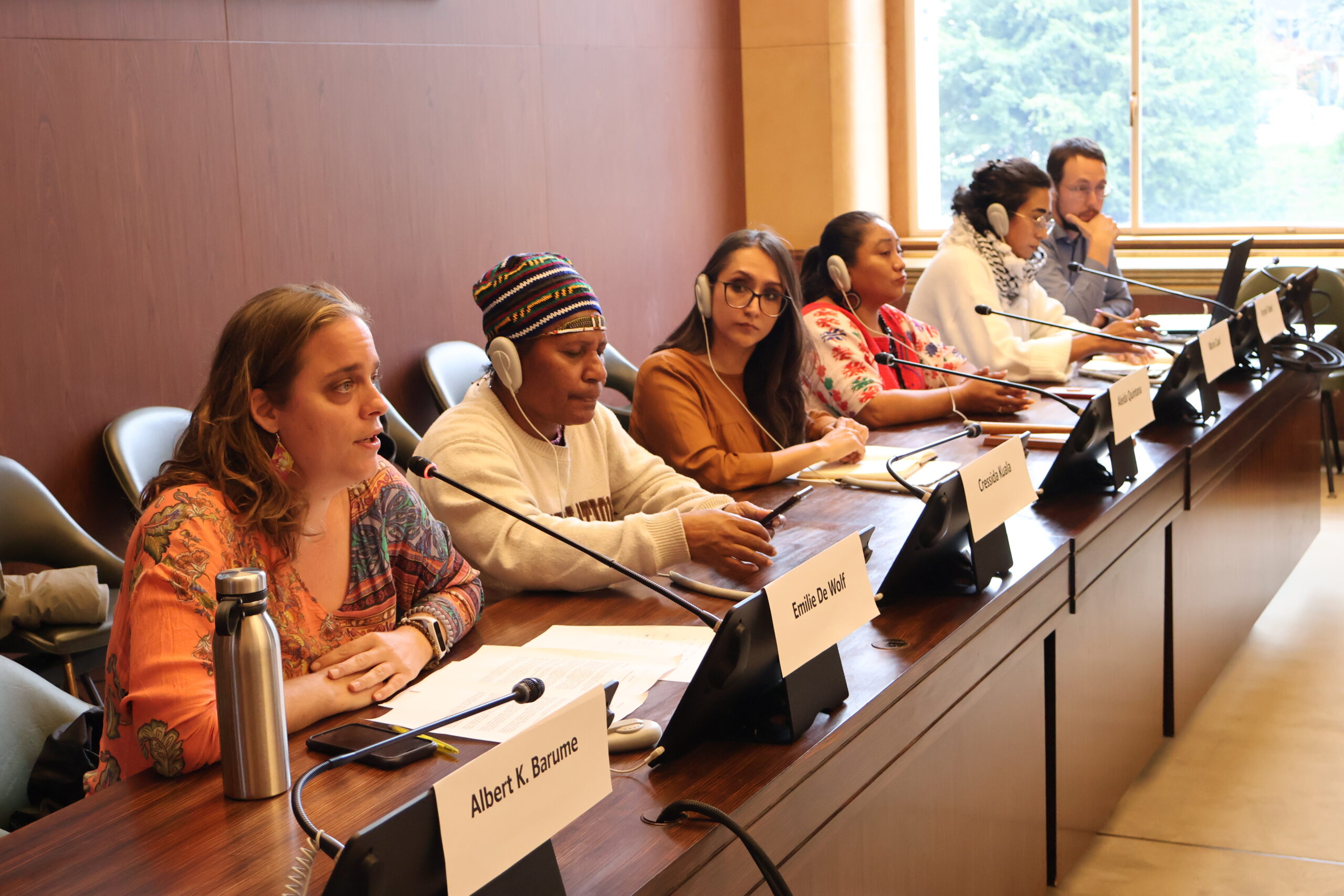
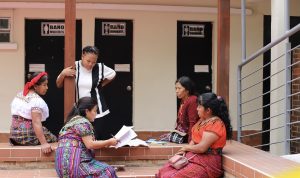
ISHR also supported the preparation of an alternative report drafted by women from the Indigenous movement Tzununija to highlight human rights violations from a gender perspective. This report addressed the impacts on women in contexts of land tenure, recognition of Indigenous lands, forced evictions, and violations of other rights such as the human right to water and adequate food.
This alternative report emerged following an in situ training involving around 30 Indigenous women from different regions of Guatemala. Fifteen of these women also met with the Rapporteur during his visit in July and provided first-hand information during a private meeting.
In his preliminary conclusions, the Special Rapporteur noted that, according to data by Food and Agriculture Organization of the United Nations (FAO) , only 7.8% of landowners in rural areas of Guatemala are women. This reflects a disproportionate and structural denial of access to land and housing as a result of colonial and patriarchal patterns. Women, especially Indigenous women, also lack equal access to credit and economic and employment opportunities.
The Special Rapporteur will present his final report on his official visit to Guatemala in March 2026 during the 61st session of the Human Rights Council.
For its part, CERD has selected several follow-up recommendations, particularly regarding human rights defenders, for Guatemala to report on the measures taken to implement them by the end of 2026.