
© Charlotte Giang Beuret for ISHR (2023)
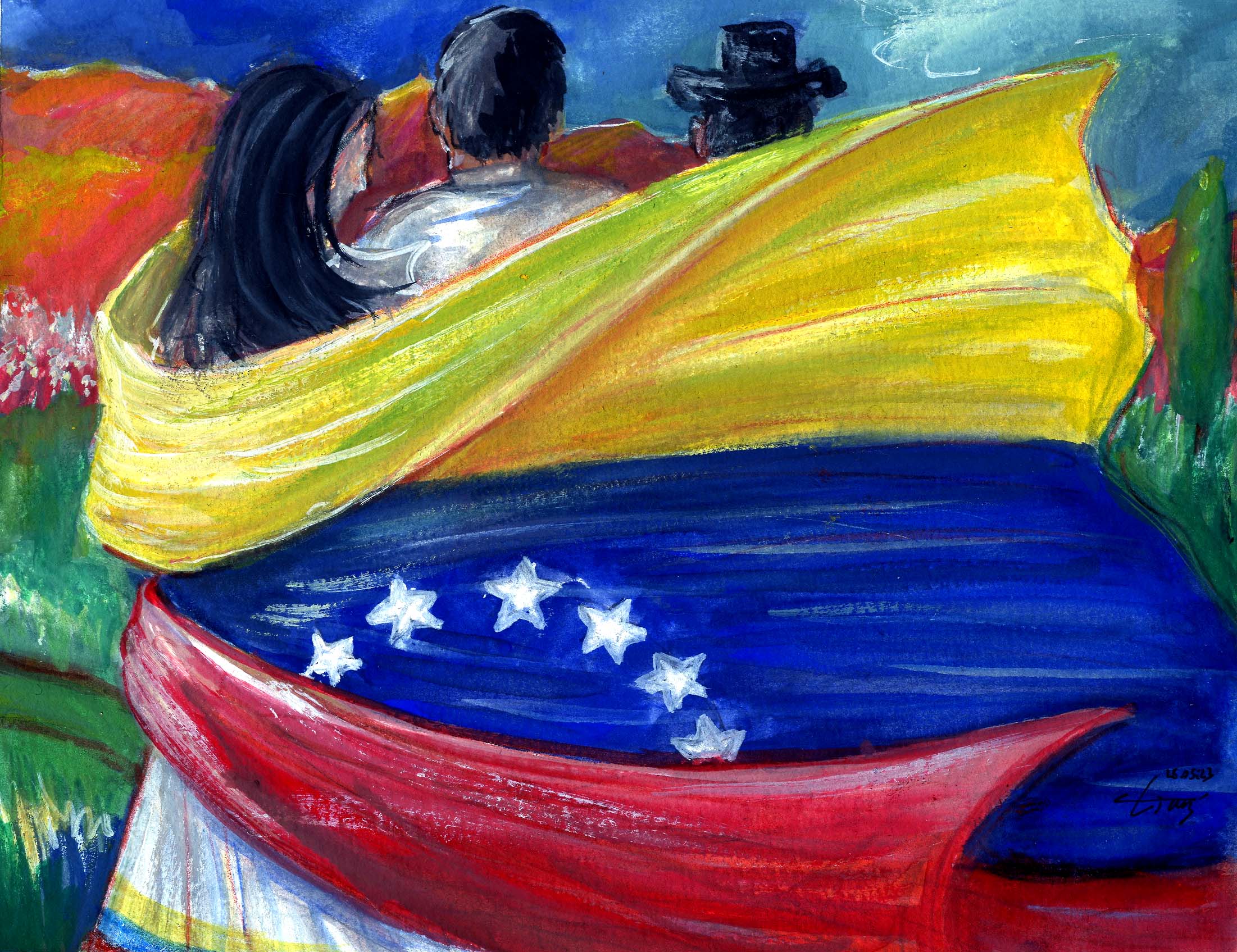
Venezuela: ISHR and human rights organisations condemn US military attack and express concern for human rights
ISHR and 37 human rights organisations in Latin America issued a joint statement condemning the United States military attack against Venezuela and expressing concern about the serious human rights situation in the country. Any solution to the crisis facing the country must be democratic, peaceful and negotiated, centred on respect for human rights, and prioritising the participation and decision-making power of Venezuelan society over its future.
Read the full statement below:
As human rights organisations in Latin America, we condemn the United States’ military attack against multiple targets in Venezuela on 3 January 2026. This armed aggression openly violates international law and sets a dangerous precedent throughout the region. We further express our concern about the grave human rights situation in Venezuela and underscore the obligation to respect these rights.
The capture of de facto president Nicolás Maduro and his wife to be prosecuted in the United States represents the culmination of a progressive U.S. military buildup in the Caribbean in recent months. In particular, since September 2025, the United States has carried out 32 attacks on vessels in the Caribbean and the Eastern Pacific under the pretext of combating drug trafficking, resulting in the extrajudicial execution of at least 115 people.
These actions by the Trump administration, undertaken without a legitimate justification of self-defence and outside the context of an armed conflict, are incompatible with the principles and norms of international law and threaten peace and security in the region. Indeed, this military aggression violates the prohibition on the unilateral use of force established in the Charter of the United Nations, Article 2(4), and the OAS (Articles 3, 19-22).
The attacks also represent risks for the Venezuelan people. The escalation of the crises of institutionality and legitimacy in Venezuela, following the rejection of the results of the 28 July 2024 presidential elections and the subsequent repression unleashed by the Venezuelan authorities, has exacerbated the complex humanitarian emergency afflicting Venezuelans. Our organisations have repeatedly condemned the human rights violations perpetrated by the de facto government of Nicolás Maduro and the persecution of organisations and individuals who have denounced these violations. The situation of people who remain arbitrarily detained and whose lives and integrity are at risk, is of particular concern. Furthermore, diplomatic and international mechanisms have failed to articulate an effective response to this crisis, reinforcing the important role that the international community now has in addressing the new situation in the country.
The Venezuelan people deserve a democratic transition, and for those responsible for serious human rights violations to be held accountable before the law. However, this cannot justify the breakdown of international order or legitimise violent and unilateral means that impose the logic of the strongest.
Any solution to the crisis facing the country must be democratic, peaceful, and negotiated, centred on respect for human rights, and prioritising the participation and decision-making power of Venezuelan society over its future. The idea expressed by President Trump that the U.S. will ‘run’ the country is counter to the Venezuelan people’s right to self-determination.
The consequences for the region are also cause for concern. The U.S.’ actions should be viewed in light of the rapid decline of democracy in the United States under the Trump administration. Domestically, the federal government has implemented a repressive policy against dissident voices and protesters, including attempts to militarise internal security, attacks on freedom of expression, and the mass criminalisation, detention, and deportation of migrants.
During the 3 January press conference, Trump stated that the United States is reaffirming its hegemony in the Western hemisphere, echoing the so-called Monroe Doctrine. These statements reflect a growing tendency toward unilateral action and disregard for the sovereignty of countries in the region, which are even more concerning in the context of the various electoral processes in 2026, in which the United States may seek to exert influence without regard for democratic norms, as was the case in 2025 in Argentina and Honduras.
In this context, the military operation in Venezuela and the return to the Monroe Doctrine, in addition to the existence of a growing number of governments in Latin America that, whether out of ideological affinity or under pressure, validate this type of illegal action, constitute a threat to democratic order and stability in Latin America.
We reiterate our solidarity with the Venezuelan people and civil society, especially with the victims of repression and human rights violations by the Venezuelan security forces, and with those directly affected by the U.S. armed aggression. We call on the countries of the region to take action to contribute to negotiations that will enable a democratic and peaceful transition in Venezuela, to protect human rights defenders, protesters, and political prisoners in Venezuela, and to protect those who decide to migrate in this uncertain situation. The situation demands an immediate, firm, and coordinated international response based on human rights and democratic principles that respects multilateralism and dialogue between nations to preserve Latin America as a war-free zone.
The statement is signed by:
- ARTIGO 19 Brasil e América do Sul
- Centro de Estudios de Derecho, Justicia y Sociedad (Dejusticia)
- Centro de Estudios Legales y Sociales (CELS)
- Conectas Direitos Humanos, Brasil
- Oficina en Washington para Asuntos Latinoamericanos (WOLA)
- Archivo Provincial de la Memoria de Córdoba, Argentina
- Artículo 19 oficina para México y Centroamérica
- Asociación Ecuménica de Cuyo, Argentina
- Asociación de Familiares de Detenidos Desaparecidos y Mártires por la Liberación Nacional (ASOFAMD), Bolivia
- Asociación por la Memoria y los Derechos Humanos Colonia Dignidad, Chile
- Centro Cultural Museo y Memoria de Neltume, Chile
- Centro de Derechos Humanos Miguel Agustín Pro Juárez, México
- Centro de Políticas Públicas y Derechos Humanos (Perú EQUIDAD)
- Centro Nueva Tierra, Argentina
- Comisión Argentina para Personas Refugiadas y Migrantes (CAREF), Argentina
- Committee to Protect Journalists (CPJ)
- Coordinadora Nacional de Derechos Humanos, Perú
- Fundación 1367-Casa Memoria José Domingo Cañas, Chile
- Fundación Asociana, Argentina
- Fundación para la Libertad de Prensa (FLIP), Colombia
- Fundación Protestante Hora de Obrar, Argentina
- Global Center for the Responsibility to Protect
- Grupo de Apoyo Mutuo (GAM), Guatemala
- Heinrich-Böll-Stiftung Buenos Aires
- INREDH – Ecuador
- Instituto Vladmir Herzog, Brasil
- International Service for Human Rights
- Instituto de Estudos da Religião – ISER, Brasil
- Justiça Global, Brasil
- Memoria Abierta, Argentina
- Memorial Brumadinho, Brasil
- Memorial para la Concordia, Guatemala
- México Unido Contra la Delincuencia (MUDC), México
- Museo de la Memoria de Rosario, Argentina
- Núcleo de Preservacao da Memoria Política, Brasil
- Observatorio Ciudadano, Chile
- Prodesc, México
- Sexuality Policy Watch/ABIA, Brasil
- Sitio de Memoria Estadio Nacional, Chile
- Sitio de Memoria Tlaxcoaque, México
- Somos Memoria-Red de colectivos de memoria mexicanos, México
- Temblores, Colombia
- Washington Brazil Office