Women activists who work in crisis, conflict and post-conflict contexts are making essential contributions to sustainable and inclusive peace and security.
It’s time for our leaders to listen to them! When the stories of women human rights defenders are heard, when their movements and collective organising is supported, when their voices are included in local and global decision making, entire societies are strengthened.
The UN and its member States must recognise and consider women human rights defenders as partners. They should support the holistic protection of their groups, movements and communities and ensure an enabling environment where they can thrive and expand their work. The women defenders called on the UN and its member States to hold perpetrators accountable for violations against women human rights defenders and to take a firm stand against reprisals, violence and impunity.
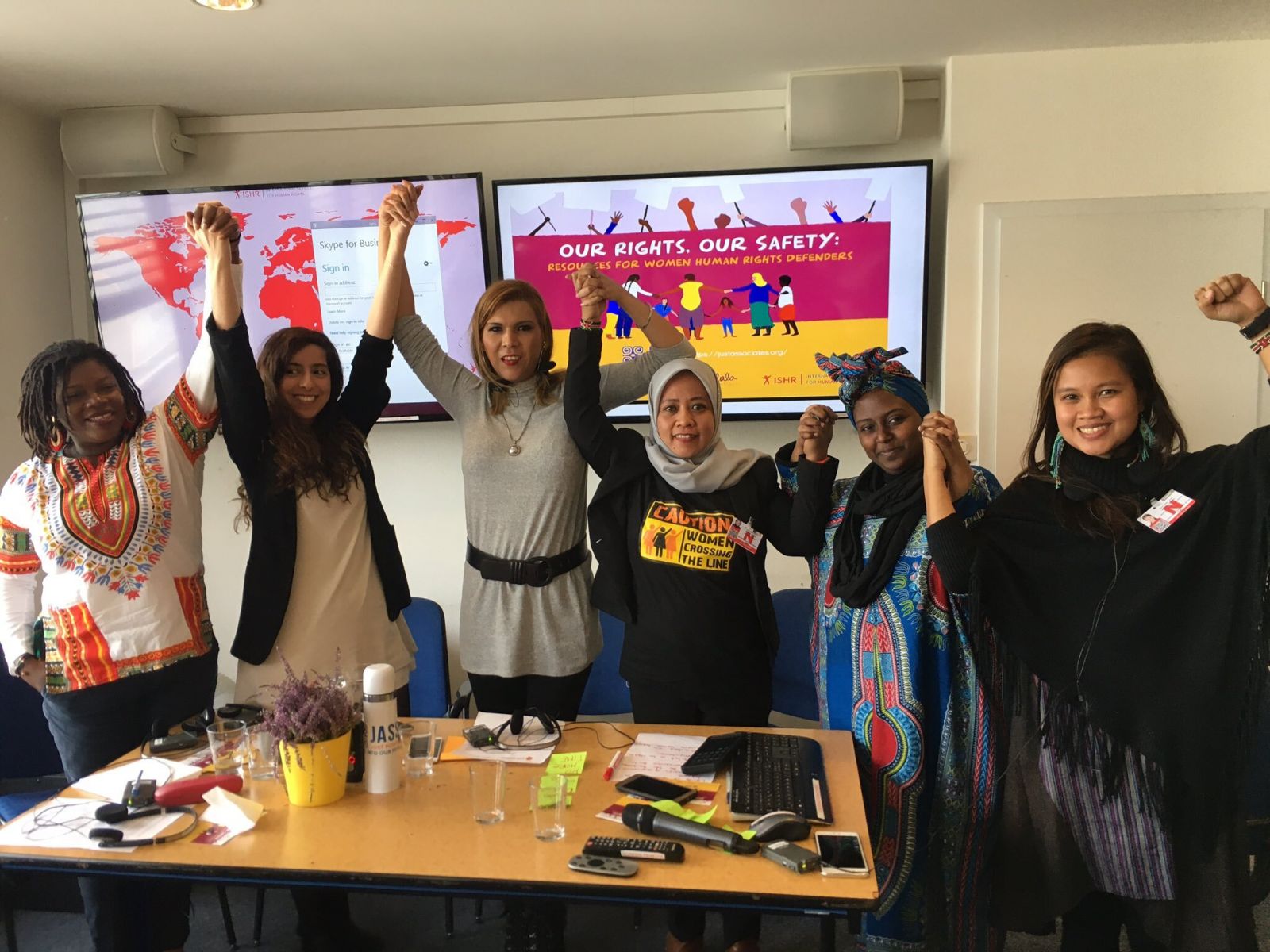
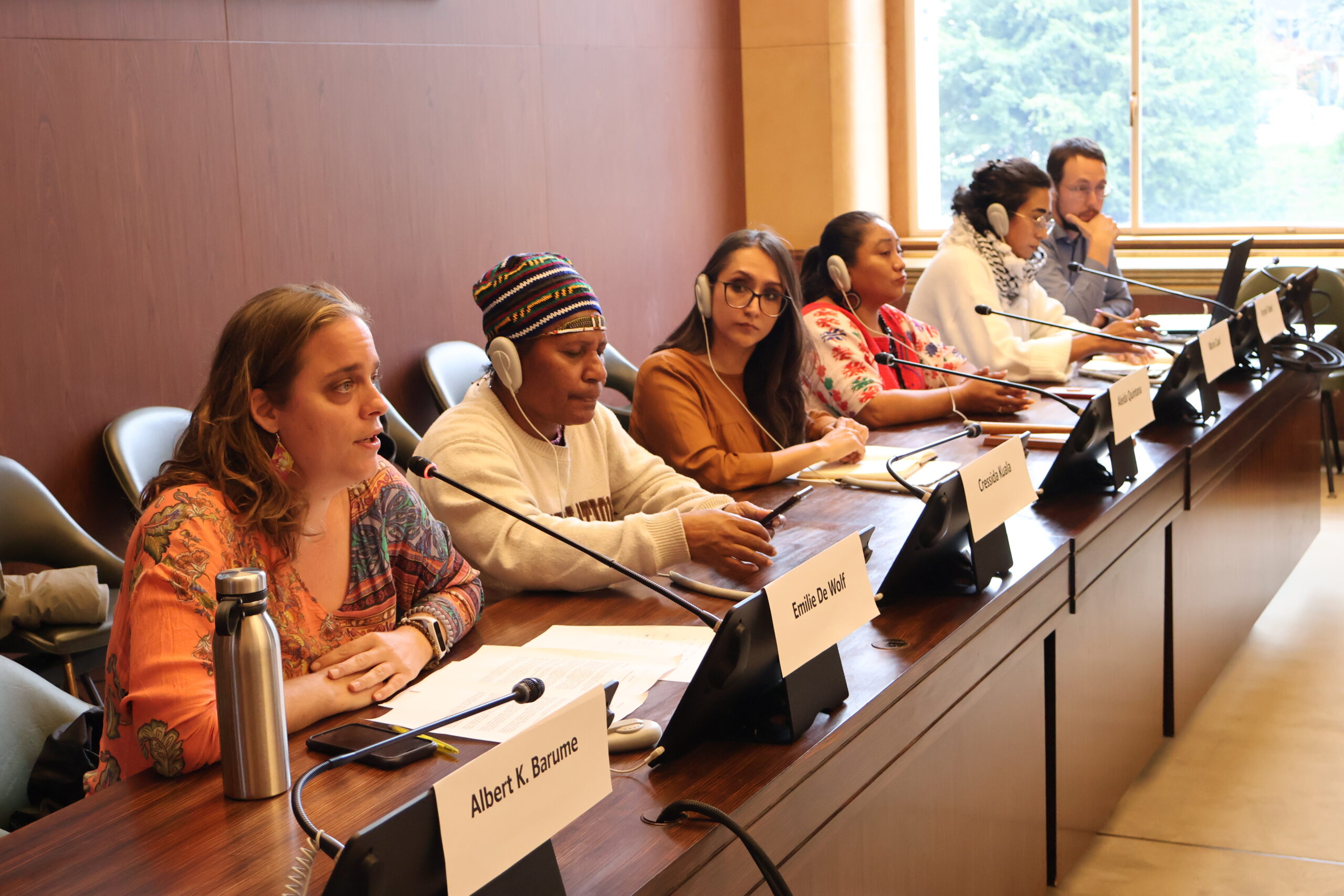
The group of women defenders from El Salvador, Nicaragua, Colombia, Chile, Namibia, Kenya, Sudan, Indonesia, Philippines, Armenia and France were support by the Mesoamerican Initiative of WHRDs, Just Associates, Global Fund for Women, Urgent Action Fund for Women’s Human Rights, Amnesty International as well as ISHR.
In their engagement with the Special Rapporteur on human rights defenders, they highlighted that women human rights defenders working in conflict and post-conflict contexts are active agents in:
Documenting violations, organising and protecting communities, and mounting resistance during conflicts;
Providing early-warning in the onset of conflict, particularly for prevention of escalation;
Bringing solutions for transformational change and healing to address the structural and systemic root causes of conflict;
Ensuring justice and accountability for gross and systematic human rights violations;
Undertaking collective care and protection strategies, and addressing trauma, for communities and movements.
The participants also engaged with the Special Rapporteur on cultural rights, who examined particularly the situation of cultural rights defenders at the current session.
“Our strength is forged in the feminist struggle against patriarchal oppression, fighting discrimination and inequality and we know that gender and cultural rights are deeply intertwined. We fight cultural and religious practices that are used to legitimise discrimination; we defend the right to education, to our cultures, spaces, languages and cosmovision; we demand to live our lives to be free from violence, fundamentalist ideologies, and with our identities and diversity fully recognised and enabled.”
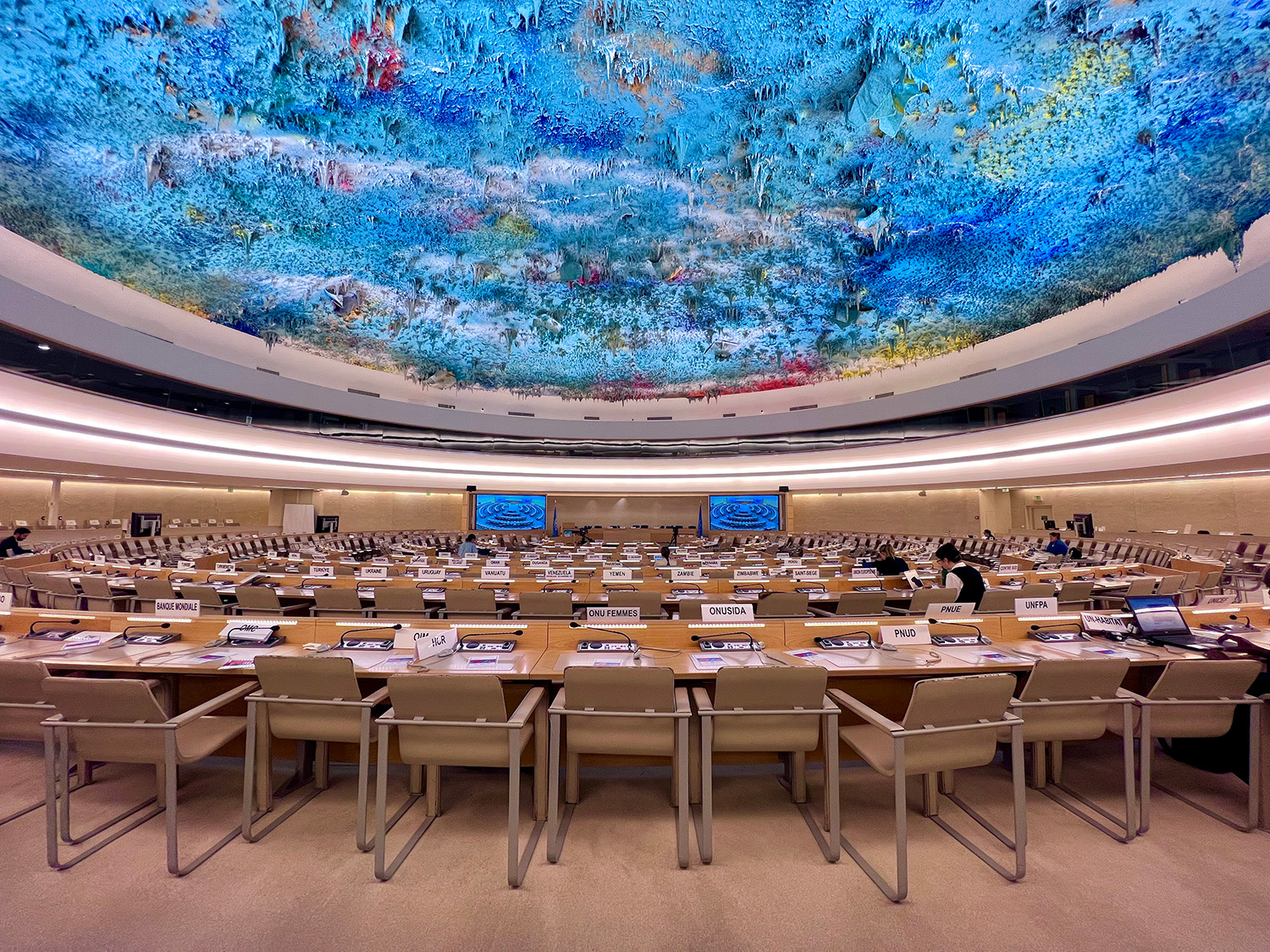
Despite changes to the agenda of the Human Rights Council arising from COVID-19 related concerns, a side event was held on 4 March where the experiences and stories of women human rights defenders were shared.
The event also launched “Our Rights, Our Safety: Resources for WHRDs”, a new manual by and for women activists and human rights defenders. The manual was created by JASS (Just Associates), in collaboration with the UN Special Rapporteur Michel Forst, and with the support of the International Service for Human Rights, Calala Women’s Fund and Central American Women’s Fund. It builds on the experiences of women activists to offer practical and interactive approaches that both deepen understanding of context, power and risk, and help develop collective strategies and practices which keep women defenders safer and stronger as they defend human rights.
Ahead of International Women’s Day, ISHR and over 40 organisations supported a joint statement delivered by AWID calling for recognition of women and girls’ full dignity, equality and humanity, not just in words but in policies, in budgets, and implementation. Read the full statement below.
A cross-regional coalition of 90 States have issued a joint declaration at the UN Human Rights Council emphasising the critical need to defend multilateralism amidst escalating global conflicts and eroding respect for international law and human rights.

.jpg)