
ACHPR 73: Launch of the Guidelines on civil society Reporting of the African Commission on Human and Peoples' Rights
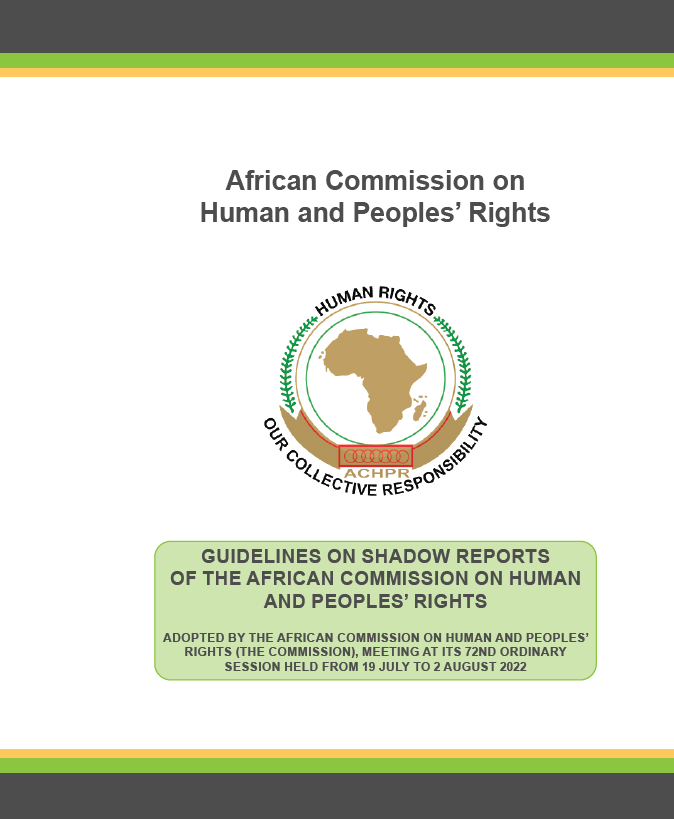
For the first time since its establishment, the African Commission on Human and Peoples' Rights published guidelines on civil society reporting ahead of State reviews for relevant stakeholders, including National Human Rights Institutions, NGOs with observer status, institutions and any other interested party submitting such reports under the African Charter.
On 23 October, the African Commission on Human and Peoples’ Rights (‘the Commission’) held a panel discussion to launch the guidelines on civil society reports (also referred to as shadow reports). The panel was jointly organised with the International Commission of Jurists, Equality Now and the Centre for Human Rights of the University of Pretoria.
In her opening remarks, Commissioner Maria Teresa Manuela recalled that to ensure active participation of stakeholders willing to share information on the situation of human rights in specific countries, it was important to take stock of how civil society reports have been elaborated until now and to streamline their structure.
Remy Ngoy Lumbu, Chair of the Commission, added that the guidelines were drafted and adopted following a rigorous consultative process of several stakeholders including civil society organisations, national human rights institutions (NHRIs) as well as States. This process was initiated following the adoption in 2020 of resolution 436 on the Need to Develop Guidelines for Shadow Reporting.
‘Shadow Reporting is useful in providing independent, additional and alternative information which helps the African Commission to gain a more holistic understanding of the human rights situation in the country under review’ stated Janet Ramatoulie Sallah-Njie, Special Rapporteur on the Rights of Women in Africa.
Kennedy Kanyali from Equality Now went into more detail as to the content of the guidelines and how they will help in ensuring that the information provided by alternative stakeholders meets the requirements set by the African Commission. Indeed, the guidelines provide a number of practical information such as the mention of the need to include objective information linked to evidence to verify it as well as the prohibition to use insulting language against the State reviewed. Moreover, such types of report should be drafted in one of the official languages of the African Union, and when the stakeholders are in fear of reprisals as a consequence of their collaboration with the mechanism, they can send a request to the Commission to refrain from publishing the report on the Commission’s website.
“The guidelines concluded an important effort to guarantee the African Commission gets the necessary information to ask critical questions to the State being reviewed. It is important that all stakeholders get familiar with the content of the guidelines and start using them as they submit their shadow reports,” Kanyali concluded.