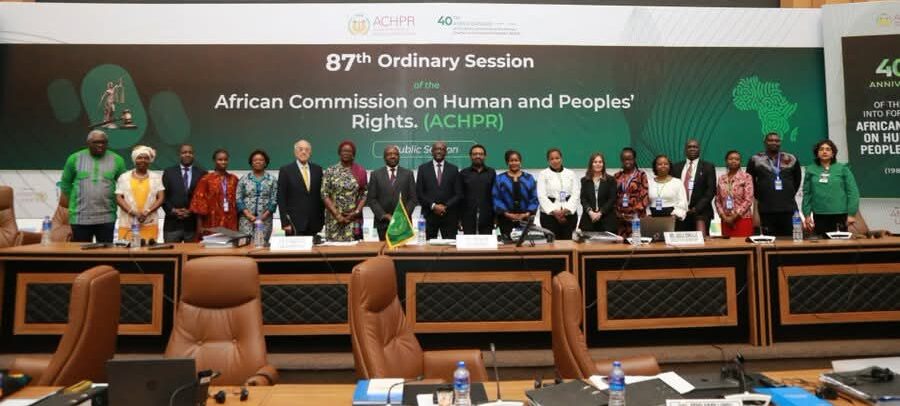
Article 62 of the African Charter states that, ‘State Party shall undertake to submit every two years, (…) a report on the legislative or other measures taken, with a view to giving effect to the rights and freedoms recognised and guaranteed by the present Charter.’ In line with this obligation, Kenya submitted its periodic report, reviewed by the African Commission.
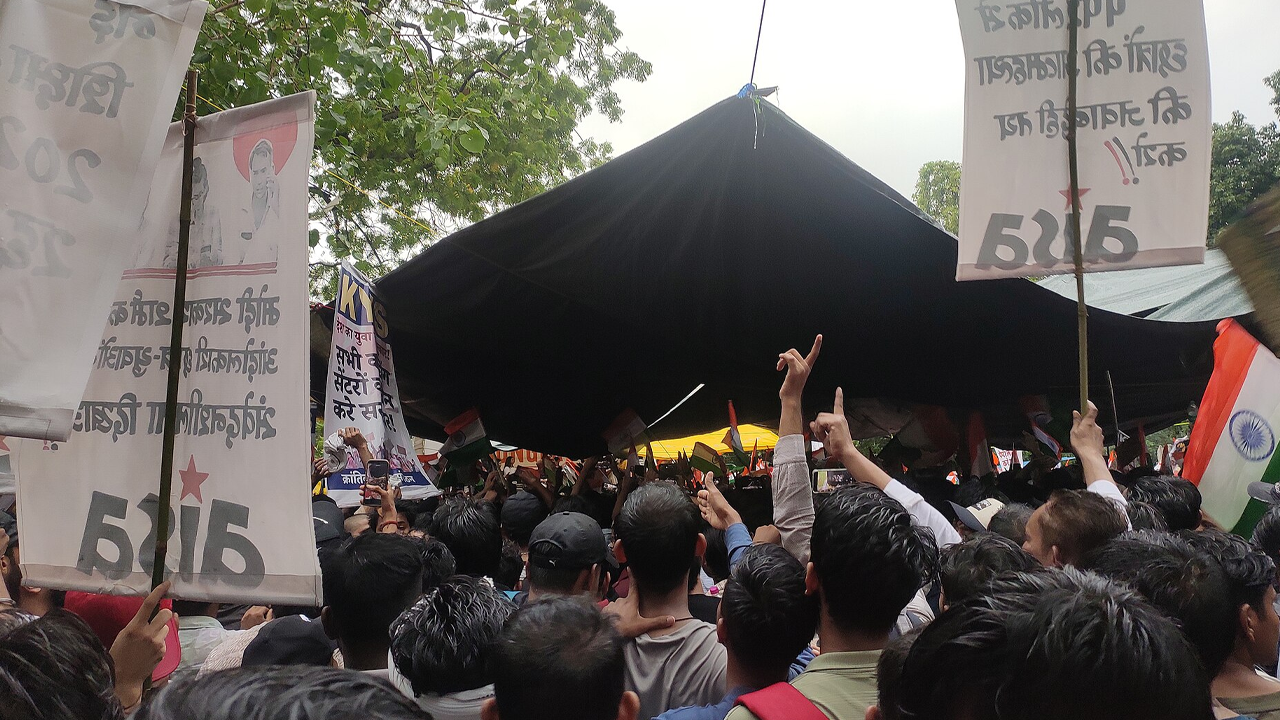
As part of its practices, International Service for Human Rights (ISHR) in partnership with Arise and Thrive Africa submitted a shadow report to the State report with a specific focus on the situation of defenders in the reviewed State party. The report submitted by ISHR and its partner reveals that despite the existing frameworks, during the covered period of the State party report, defenders were subjected to excessive use of force by security forces during protests, attacks, convictions, arrests, detention and sentences, abductions, injuries and death.
On the day of review, Kenya presented the recent legal and institutional adopted frameworks for the implementation of its obligations under the African Charter and Maputo Protocol. Among others, the State party mentioned the operationalisation, in 2024, of the public benefit organisation act providing a stronger legal framework to CSOs, and the ongoing investigation on the allegation of the excessive use of force during the protests of July 2024,
Following the presentation by the representatives of Kenya, the 11 Commissioners asked questions. Among them, the Special Rapporteur on Freedom of Expression and Access to Information in Africa, Commissioner Ourveena Geereesha Topsy-Sonoo invited the State party to share updates on the implementation of the recommendations of the African Commission on the amendment of the penal code, the official secret act, the computer misuse and cybercrime act, and the public service code of conduct to ensure compliance with international standards regarding the protection of Kenyan access to information.
The Special Rapporteur on Human Rights Defenders, Focal Point on Reprisals and Focal Point on the independence of justice in Africa, Commissioner Rémy Ngoy Lumbu, questioned, among other things, on the implementation of the recommendation of the African Commission inviting to adopt new regulations that better rule the enjoyment of freedom of assembly and the existence of a specific law on the protection of defenders.
The Chairperson of the Working Group on Extractive Industries, Environment and Human Rights Violations, Commissioner Solomon Ayele Dersso, inquired on the legal standards in Kenya that provide for administrative, civil and criminal accountability and responsibility for extractive activities leading to violations and, contrary to the existing standards and the available settlement mechanisms, to redress the violations.
On 19 May, Kenya gave his preliminary response to some of the questions raised by the African Commission and promised to send the African Commission a more detailed document in response to all the questions. Regarding the protection of the environmental rights and the extractive sector, the delegation confirmed the existence of institutional and legislative measures that cover the work of industries and the protection of communities from industries harm. In terms of legislative measures, they mentioned the mining Act of 2016, the petroleum Act of 2019, environmental management and condition Act, the community land Act of 2016, the land Act 2012, the corruption and economic crime Act, the public finance management Act and the access to information and natural resources Act. all of those, overall, covers contract, licences, social impact assessment, environmental compliance, community development agreement and benedict sharing, etc.
On freedom of expression and access to information, the delegation confirms the existence of constitutional, legislative and regulatory measures that punish speech, online incitement on media and online platforms found, among others, incorporated in the cybercrime Act. The delegation, however, did not confirm the compatibility of those measures with the international norms as recommended by the African Commission.
The State review ended with the Chairperson of the African Commission acknowledging the completion of the obligation in article 62 of the African Charter by Kenya for the covered period. Commissioner Idrissa Sow further informed the State party that the concluding observations following the review will be shared by the African Commission with Kenya in due time.