Human rights defenders have been paramount in developing the national, regional and global corporate accountability agenda. They strongly contributed in shaping the UNGPs that the UN Human Rights Council endorsed in June 2011 and they continue to monitor and implement these standards.
The UNGPs recognise that human rights defenders have a legitimate role and their activities shouldn’t be obstructed. In 2021, the Working Group on Business and Human Rights (WGBHR) further developed the scope of the UNGPs to ensure respect for human rights defenders and developed a guidance to establish clear obligations and responsibilities.
Since the adoption of the UNGPs, ISHR has urged companies and investors to not only respect the rights of human rights defenders but also to recognise their positive role in identifying, preventing and mitigating risks in the context of business activities. This means that businesses should meaningfully consult defenders as part of their mandatory due diligence processes, and incorporate risks to defenders and an enabling environment for their work as part of their human rights and environmental impact assessments.
What has changed for defenders in fifteen years?
In 2025 the Business and Human Rights Centre (BHRC) documented 790 attacks in 80 countries against people who raised concerns about business activities. This would add to more than 6,400 attacks that were recorded between 2015-2024. In addition to the attacks, a recent report by Swedwatch, BHRC and the European Coalition for Corporate Justice showed that organisations working on business and human rights have lost an average of 40% of their funding since 2024.
Since the adoption of the UNGPs, some companies have adopted human rights policies that include commitments to not tolerate or contribute to attacks against defenders. According to BHRC only 51 companies have committed to not tolerate nor contribute to attacks against defenders and from this number, only nine companies expect the same commitment from their business network and actively engage defenders to create enabling environments for human rights work.
ISHR has found that few companies had put their commitments into practice and almost none of them promoted an enabling environment for defenders. BHRC has recently found that many companies still view defenders primarily as a risk to be managed, rather than as partners whose insights can strengthen due diligence and decision-making.
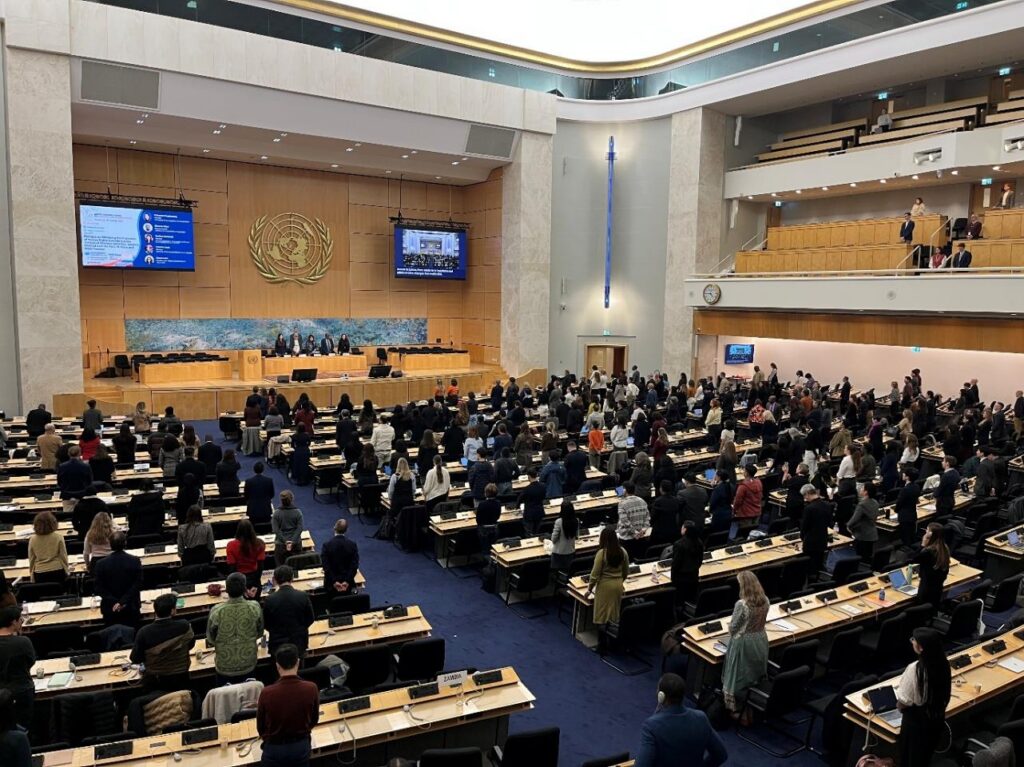
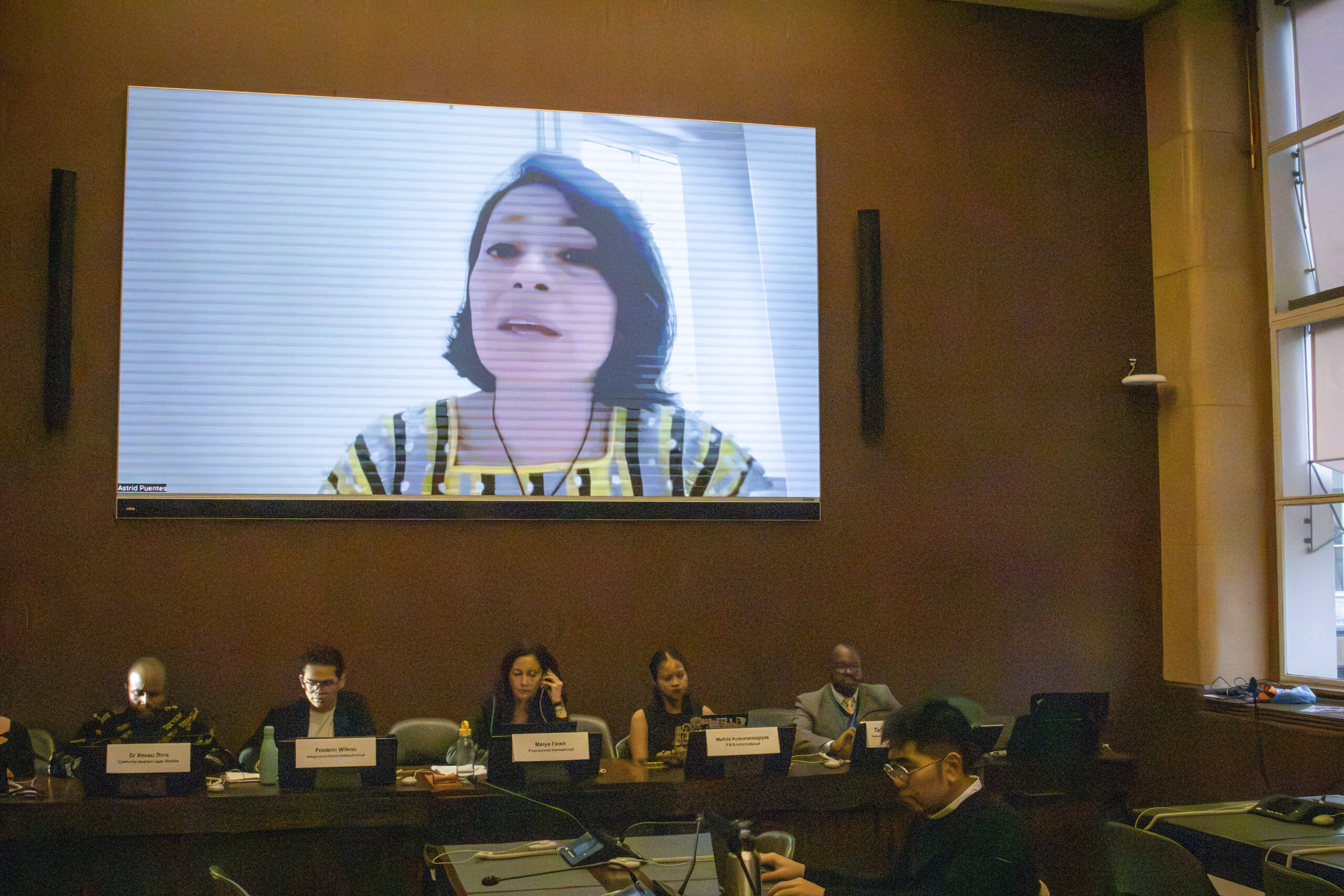
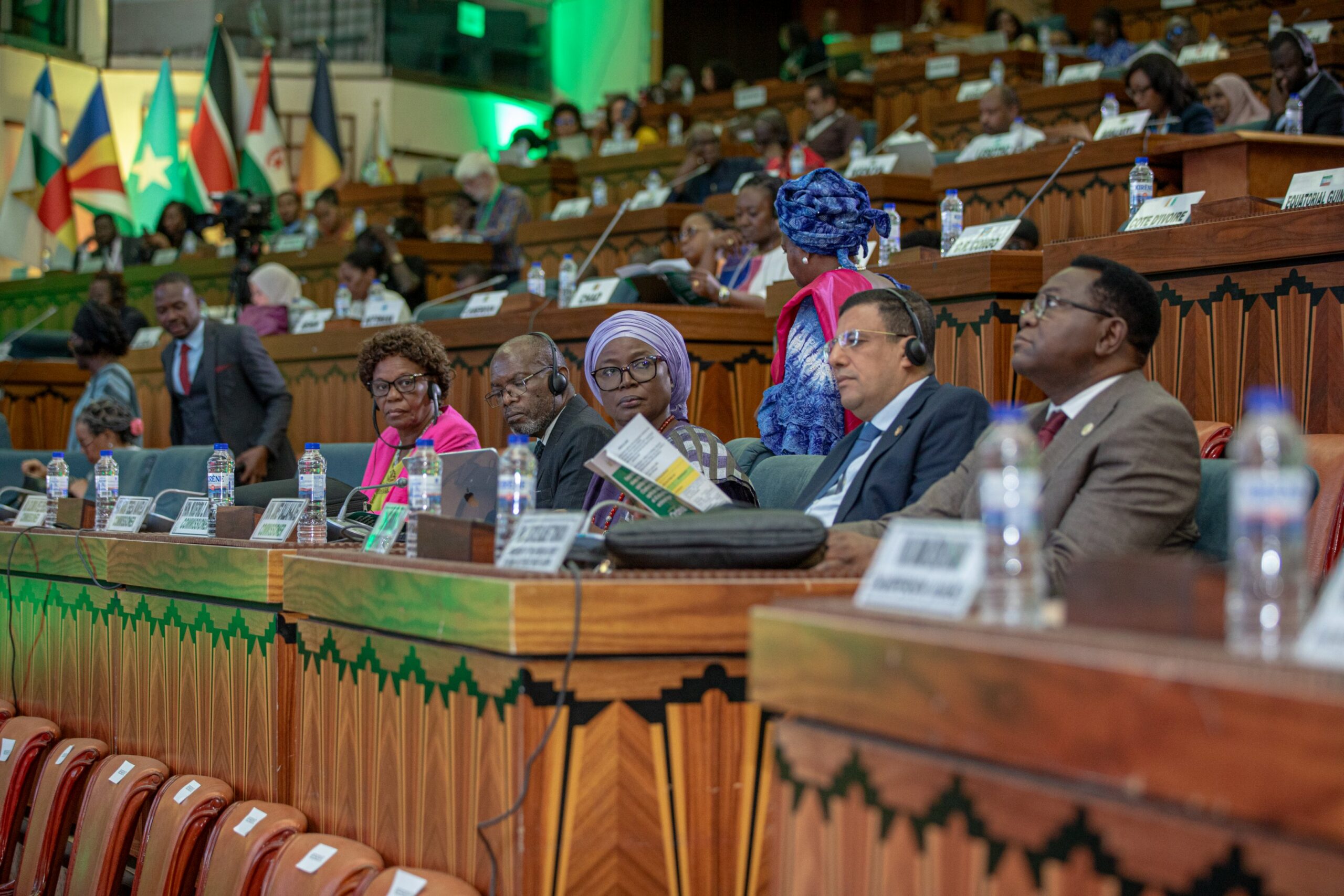
During the Forum, ISHR in collaboration with partners, organised a dialogue on the situation of human rights defenders. The session included testimonies by defenders from Zimbabwe, Bosnia and Herzegovina and Argentina who also shared insights on the way forward. Defenders shared that the lack of implementation of human rights standards has led to further attacks and criminalisation for merely exercising their right to defend rights. The situation is exacerbated by the lack of legislation and policies that protect human rights defenders, including weaken institutions and lack of rule of law. In many cases, consultation is neither meaningful nor adequate, and Indigenous Peoples’ collective rights as well as free, prior an informed consent are not upheld. While right to participation is enshrined in international human rights law, in many cases, participation is not only dangerous, it is a matter of life or death. Defenders shouldn’t be considered an obstacle by business: instead, they are a fundamental element to prevent and mitigate risks in the context of business operations.
From business risk to a community and defender approach
Despite ongoing efforts, corporate measures to respect the rights of human rights defenders remain far from adequate, leaving a pressing gap that demands immediate action if defenders are to continue their essential work in safeguarding human rights and environmental justice.
Mandatory and ongoing environmental and human rights due diligence starts when companies recognise that they are not dealing only with business risks, but rather with environment, community, peoples’ and defenders’ risks. The human rights standards are already clear on what businesses need to do, so it is not a question of legal and standard vacuum but an issue of corporate willingness to implement those standards. Businesses should move from mere compliance to implementation.
ISHR has created various tools that could help to close this gap. These include a series of indicators and a series of targeted recommendations that pinpoint the main obstacles to effectively respect the rights of human rights defenders.
We call on States, businesses, and financial institutions to focus on the following recommendations:
For States:
- enact and implement legislation recognising the right to defend rights and adopt specific laws and policies that discourage the use of strategic litigations against public participation (SLAPPs)
- enforce strong legislative frameworks for mandatory human rights due diligence
- provide accessible and effective remedies for affected human rights defenders.
For companies and industry associations:
- adopt and implement zero-tolerance policies towards attacks against defenders
- strengthen and include defenders in comprehensive mandatory environmental and human rights due diligence
- respect Indigenous defenders and People’s rights to self-determination and free, prior and informed consent
- refrain from supporting limits on civic freedoms or using and engaging in judicial harassment and SLAPPs
- require the same commitments from business partners and suppliers.
For investors and international financial institutions:
- integrate defender-specific criteria in investment decisions and due diligence
- advocate proactively for civic freedoms and protection of defenders
- require the same standards from their investment partners and other businesses.
Author
Ulises Quero
Ulises leads the work on business, environment, and land at ISHR.
Author
Diego Perez Scheel
Diego Perez Scheel has recently joined ISHR as an intern. Diego is a Guatemalan law student at Universidad Rafael Landívar. Before joining ISHR as a Programme Intern (Geneva), he worked on human rights issues including migration, Indigenous peoples’ rights, environmental protection and access to justice through advocacy competitions and volunteer initiatives.