
Durban at 25: public security, racial justice and responses to multiple crises
A quart of a century after its launch, civil society continues to mobilise around the Durban Declaration and Programme of Action.
UN Web TV
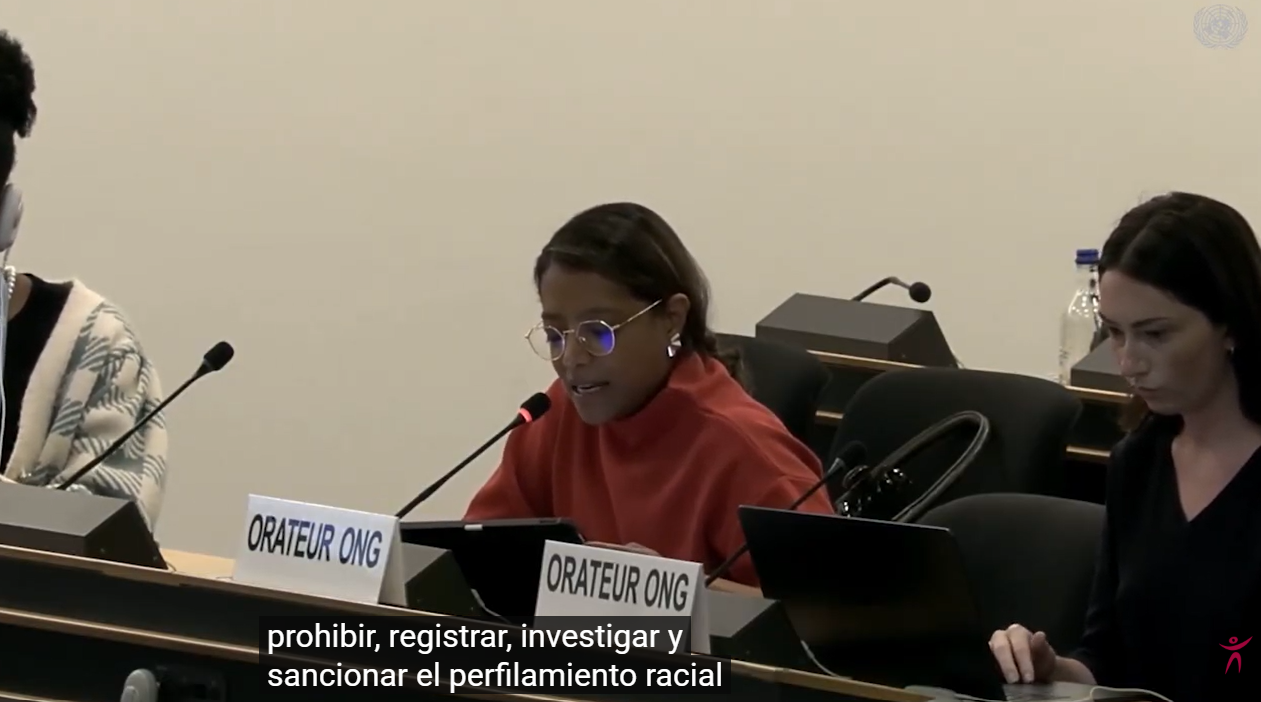
Organisations delivered a joint statement calling on States to move towards drug policies based on harm reduction, human rights, an ethnic-racial approach.
On Tuesday 29 September 2026, the Human Rights Council (HRC) held an Enhanced Interactive Dialogue (EID) on the promotion of racial justice and equality in law enforcement. The event brought together the Office of the United Nations High Commissioner for Human Rights (OHCHR) and the International Independent Expert Mechanism to Advance Racial Justice and Equality in Law Enforcement (EMLER) to present three reports. Awa Dabo (Deputy High Commissioner for Human Rights), Tracie L. Keesee (EMLER), as well as two civil society representatives, Mr Angelo Camufingo (STUBBORN) and Ms Maryluz Barragán González (DeJusticia), took the floor to discuss the criminalisation of Blackness, the lack of data, failures in drug control, racially motivated police brutality and other issues.
The report by the High Commissioner’s (HC) monitored the implementation of the Agenda for Transformative Change towards Racial Justice and Equality. It covered progress from April 2025 to June 2026 and was based on 34 contributions and consultations with over 70 individuals from 24 countries. The HC urges governments to bring about a genuine paradigm shift and to make deliberate investments in racial justice and equality, as well as to fulfil their obligations to eliminate racial discrimination in all spheres of life. You can view the report here.
The EMLER report focused on the intersection between drug policy and racial discrimination, emphasising how punitive drug control acts as a driving force behind racial disparity at every stage of the criminal justice system. The report also highlights intersectional discrimination and the exacerbated impacts suffered by women, children and young people, as well as migrants of African descent. The report echoes what civil society and human rights defenders have been pointing out for many years: the so-called ‘war on drugs’ has failed to achieve its own stated objectives. According to the report, meaningful reform must move away from punishment and towards a framework based on human rights, racial justice, public health and community participation. Find the report here.
The report on the EMLER’s visit to Colombia in May 2026 was also presented. The report highlights systemic racism in both urban and rural areas. Among the issues highlighted are racial discrimination, discriminatory police stops, excessive use of force, poverty, displacement, widespread impunity and more. Furthermore, the report and the EID referred to the harm caused by drug policies, such as aerial spraying with glyphosate. Find the report here.
The Colombian State formally responded to the report in September 2026. View Colombia’s statement here.
During the debate, the United Nations Antiracism Coalition (UNARC), Ilex Acción Juridica, and the International Service for Human Rights (ISHR) delivered a joint statement welcoming the reports by EMLER and the OHCHR on systemic racism towards Africans and people of African descent. During the dialogue, the organisations urged States to move towards drug policies based on harm reduction, human rights and an ethnic-racial approach.
Read the statement below:
This is a joint statement. UNARC welcomes the reports from EMLER and the High Commissioner.
Today we demand justice for Donovan Balanta, a man of African descent who died following a police operation in Colombia and who was beaten and subjected to electric shocks whilst already subdued. His case is not an isolated one: as documented by EMLER, the Colombian police systematically use racial profiling against people of African descent, who are detained, searched and fined as a mechanism of social control.
Although the use of illicit drugs occurs at very similar rates across all racial groups, law enforcement agencies focus disproportionately on Black people at every stage of the criminal justice system, and they have less access to treatment and harm reduction.
The High Commissioner’s report condemns the persecution of human rights defenders of African descent. We urge States to protect them and to develop solutions with the participation of communities of African descent.
We ask the Colombian government: what concrete measures will it adopt to prohibit, record, investigate and punish racial profiling, and to provide redress to those affected?
And to all States: how will you move towards drug policies based on harm reduction, human rights, an ethnic-racial approach and the effective participation of people of African descent?
See the statement below:
A quart of a century after its launch, civil society continues to mobilise around the Durban Declaration and Programme of Action.
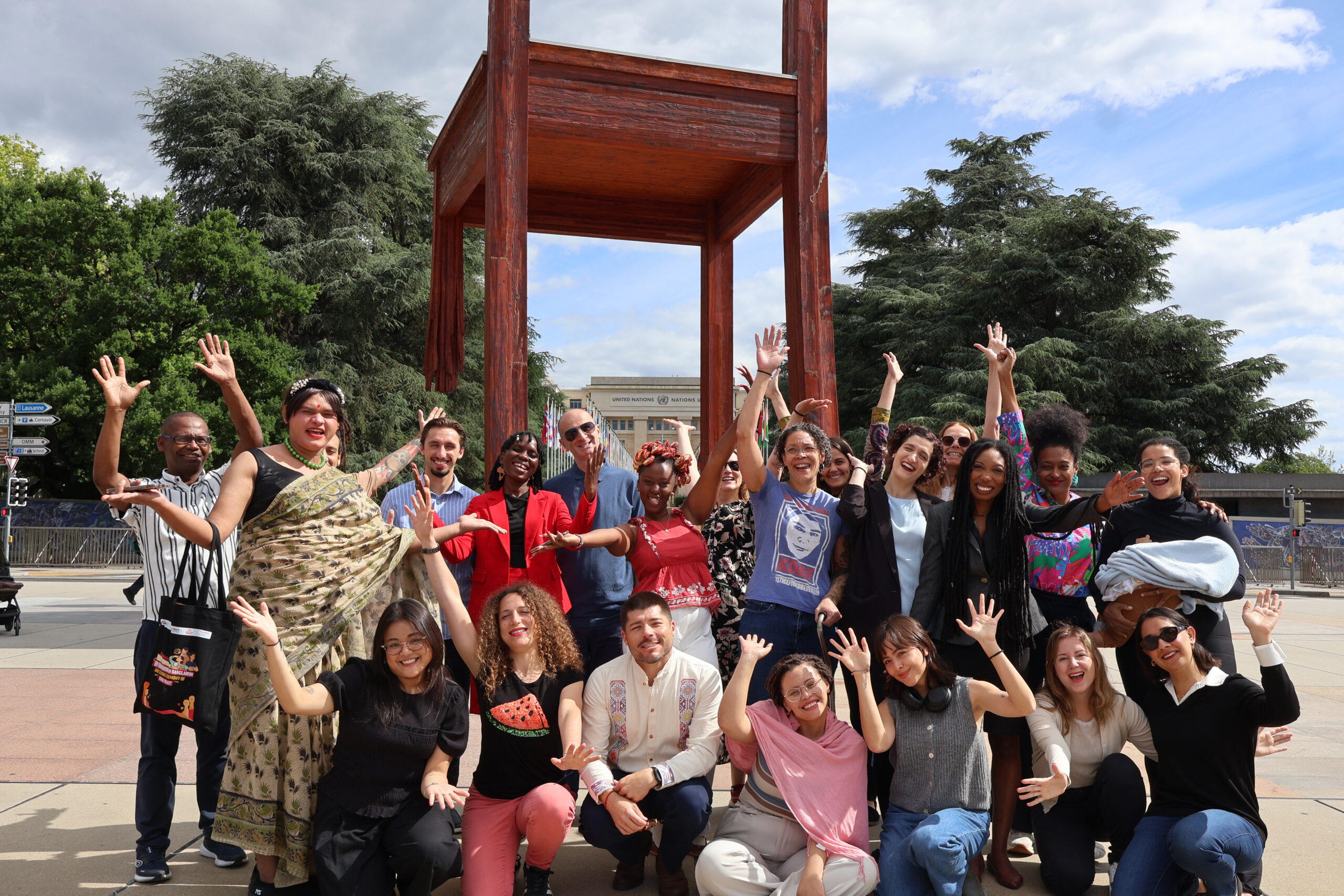
This year eleven activists completed ISHR’s flagship training, the Human Rights Defender Advocacy Programme, to strengthen their advocacy skills and develop an individual roadmap to push for change in their country.
At the 62nd Human Rights Council session, civil society organisations shared reflections on key outcomes and highlighted gaps in addressing crucial issues and situations.