Since 28 February 2026, the United States and Israel have led an unlawful war of aggression against Iran. For their part, Iranian authorities have responded by indiscriminately attacking several of their neighbours.
The conduct of the war has included strikes that have killed large numbers of civilians and targeted civilian infrastructure across the regions, possibly amounting to war crimes. It has also further endangered a civilian population in Iran that has long suffered brutal internal repression, amounting to crimes against humanity.
These actions, in flagrant violation of the UN Charter, constitute an attack on the very basis of international law and multilateralism, and have caused untold suffering to civilians across the region.
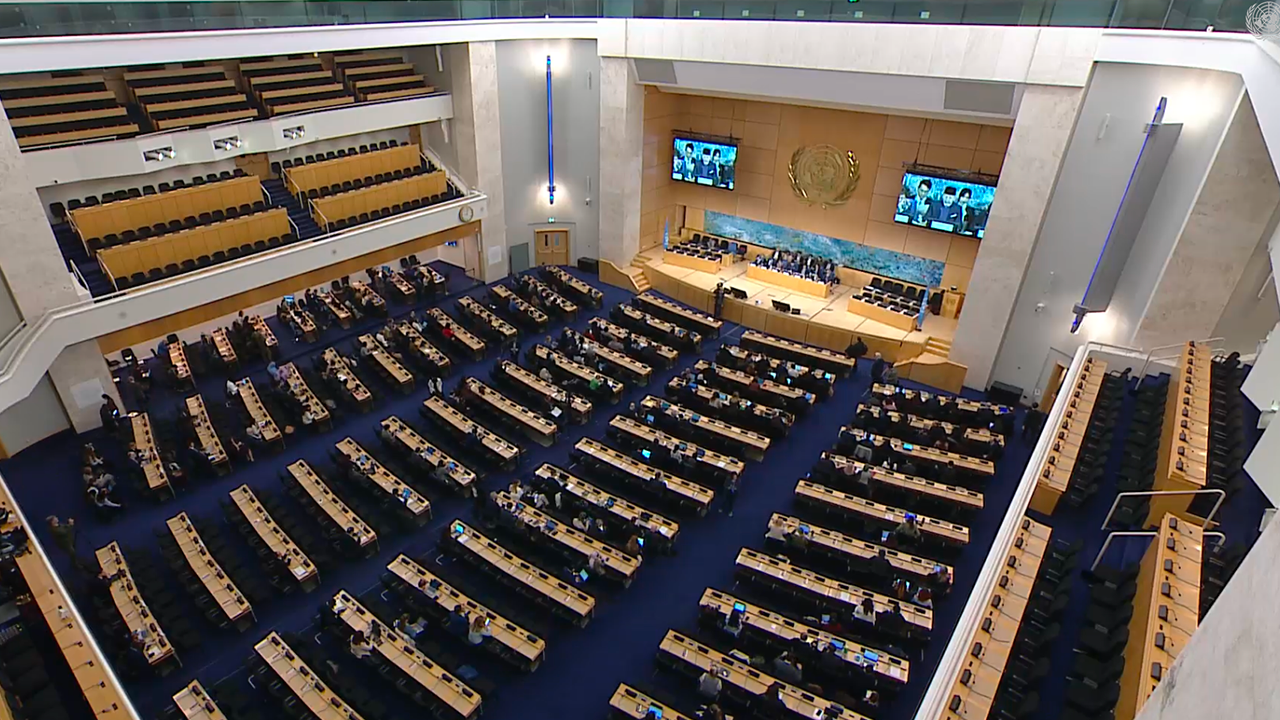
In response, two groups of States have called for the Human Rights Council to address the human rights consequences of this conflict, leaving the body in the position of having to call two separate urgent debates on the matter, both convoked for different reasons that reflect the narrow interests and selectivity of each group rather than an universal application of human rights.
The first session is scheduled to take place on Wednesday 25 March, at the request of the members of the Cooperation Council for the Arab States of the Gulf and Jordan, centring on the attack on civilians and infrastructure in countries targeted by Iranian missiles and drones.
The second, still to be confirmed as of writing, at the request of China, Cuba and Iran’s representatives, centred on the egregious US missile attack that killed over 150 people, including numerous school children, at the Shajareh Tayyebeh school, in southern Iran.
ISHR urges States at the Council to avoid one-sided framing, adopt a comprehensive, non-selective approach to the conflict and apply objective criteria to all situations and address their root causes, regardless of the perpetrator.
The Council must consistently expose violations, aggression, and war crimes by all parties, demanding accountability for all violations of international law. This is essential for atrocity prevention, preserving the Council’s legitimacy and the universal application of human rights.