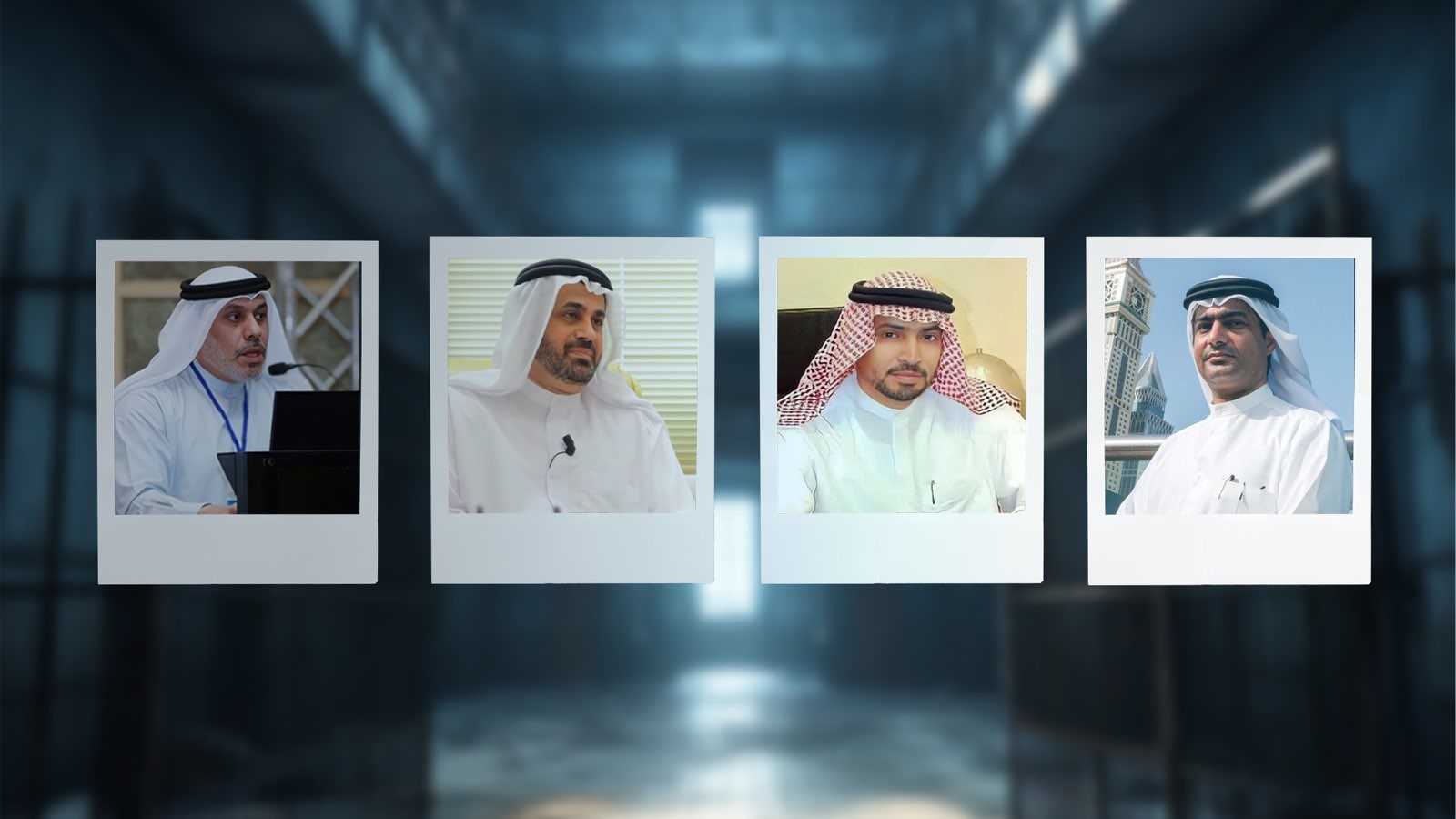
UAE authorities continue to detain dozens of people who completed their prison sentences some years ago, including 55 dissidents, lawyers and other people convicted in a mass trial known as the ‘UAE94’ case. The UAE also continues to detain prominent human rights defenders, including Ahmed Mansoor and Dr. Nasser bin Ghaith, and to retaliate against people, including Amina Al-Abdouli and Maryam Al-Balushi, for speaking out about abuses in prison.
The authorities should also put an end to other human rights violations, including: monitoring government critics with sophisticated surveillance technology to stifle dissent; using repressive laws to imprison human rights defenders and dissidents; effectively denying the right to freedom of peaceful assembly through draconian legal restrictions and practices; and denying migrant workers, who suffer a range of violations linked to the abusive kafala system, the right to form unions.
Detaining people long after they have served their sentences
There are at least 58 people being held past the end of their sentences in the UAE. (See detailed list here).
The authorities appear to have used Article 40 of Federal Law No. 7 of 2014 on Combating Terrorism Offences, which includes a vague and overbroad definition of terrorism, to indefinitely detain people who have completed their sentences.
In its first paragraph, Article 40 states: ‘A terrorist danger exists in a person if he has adopted extremist or terrorist thinking, such that it is feared that he will commit a terrorist crime.’ The second paragraph states: ‘If a terrorist danger is present in a person, he shall be put in a counselling centre by a court judgment based on a request from the prosecution.’
The process of detaining people beyond the completion of their sentences is not transparent and lacks minimum standards of fairness and due process. The Federal Court of Appeal in Abu Dhabi, at the request of the State Security Prosecution, issues referral orders to counseling centres without any fair trial guarantees. Such detention for ‘counselling’ can apparently be extended indefinitely.
Authorities argue that many of the people held beyond their sentences pose a threat to State security and are in need of rehabilitation. Although the law speaks of ‘counselling centres’, people whose detention is extended in this way often continue to be held in the same prison where they served their regular sentence. Prisoners scheduled for release are transferred from Al-Razeen Prison to the Munasaha (‘Counselling’) Centre which is often just another building in the same prison that is isolated from the other wings.
The majority of the people being held beyond their completed sentences are part of the ‘UAE94′, a group of government critics who were arrested in 2012 and sentenced to between seven and ten years in prison after a grossly unfair mass trial in 2013. Among the ‘UAE94’ group, 55 of them have completed their sentences, yet remain in prison. They include human rights lawyers Dr. Mohammed Al-Roken and Dr. Mohammed Al-Mansoori. In addition, Khalifa Rabia was arrested in July 2013 and sentenced to five years in prison on charges related to a tweet he wrote after the verdicts of the UAE94 case were issued, yet he remains in prison.
One of the main catalysts for the ‘UAE94’ arrests and subsequent mass trial was a reform petition launched on 3 March 2011. The reform petition was signed by hundreds of people from across the Emirati intellectual, legal and political spectrum and had two main demands: democratic elections for the UAE’s Federal National Council and constitutional amendments to shore up the Federal National Council’s legislative and oversight powers. More than 30 petition signatories were charged as defendants in the UAE94 trial.
In addition to holding many beyond their sentences, UAE authorities have obstructed contact between some UAE94 prisoners and their families by only allowing calls or visits months apart, and have denied all calls between UAE94 prisoners and their immediate family members who are outside the UAE. This is a violation of the UN Standard Minimum Rules for the Treatment of Prisoners (the Nelson Mandela Rules).
No tolerance for human rights defenders and dissidents
The UAE has a Ministry for Tolerance but insists on charging, sentencing, detaining and mistreating human rights defenders and dissidents. The UAE should immediately release prominent human rights defenders, including Ahmed Mansoor, who has been held in prolonged solitary confinement since his arrest on 20 March 2017 for his human rights activities, and academic Dr. Nasser bin Ghaith, who was sentenced to 10 years in prison for tweeting about a previous imprisonment.
You can find here more information on those unjustly detained.
Recommendations
The undersigned organisations call on the international community, especially governments that have influence with the United Arab Emirates, such as the United States, the United Kingdom, Canada and the members of the European Union, in addition to all United Nations mechanisms including relevant Special Rapporteurs, to urgently call for and take steps to obtain the immediate and unconditional release of the prisoners listed in this appeal and to seek an end to grave human rights violations in the UAE. We also call on the international community to demand that independent monitors be granted permission to visit these prisoners in order to ensure their physical and mental health and safety.
We call on the UAE authorities to:
- Release all human rights defenders and dissidents who were arrested, detained, charged or sentenced for exercising their rights to freedom of expression, or other human rights including Ahmed Mansoor, Dr. Nasser bin Ghaith, Amina Al-Abdouli, Maryam Al-Balushi, and members of the ‘UAE94’ case;
- Release all detainees who are being held past the end of their sentences, in flagrant violation of their human rights, and end the practice of arbitrarily detaining human rights defenders and dissidents in Munasaha (Counselling) Centres after they have served their full sentences.
- Repeal the text of Article 40 of Federal Law No. 7 of 2014 on Combating Terrorism Offences, which allows people to be detained indefinitely;
- Protect human rights in the country, including freedom of expression, assembly and association, and ensure nobody is arrested in violation of these rights; and
- End restrictions on civic space and uphold human rights, including freedom of expression and assembly, during COP28 and beyond.
Signatories:
- Access Now
- ALQST for Human Rights
- Amnesty International
- Cairo Institute for Human Rights Studies (CIHRS)
- CIVICUS
- Emirates Detainees Advocacy Centre (EDAC)
- FEMENA
- Front Line Defenders
- Gulf Centre for Human Rights (GCHR)
- Human Rights First
- Human Rights Sentinel
- Human Rights Watch
- IFEX
- International Federation for Human Rights (FIDH), in the framework of the Observatory for the Protection of Human Rights Defenders
- International Service for Human Rights (ISHR)
- MENA Rights Group
- Project on Middle East Democracy (POMED)
- Rights Realization Centre
- Salam for Democracy and Human Rights
- SMEX
- Stand up for UAE Detainees (SANID) Campaign
- Vigilance for Democracy and the Civic State
- World Organisation Against Torture (OMCT), within the framework of the Observatory for the Protection of Human Rights Defenders