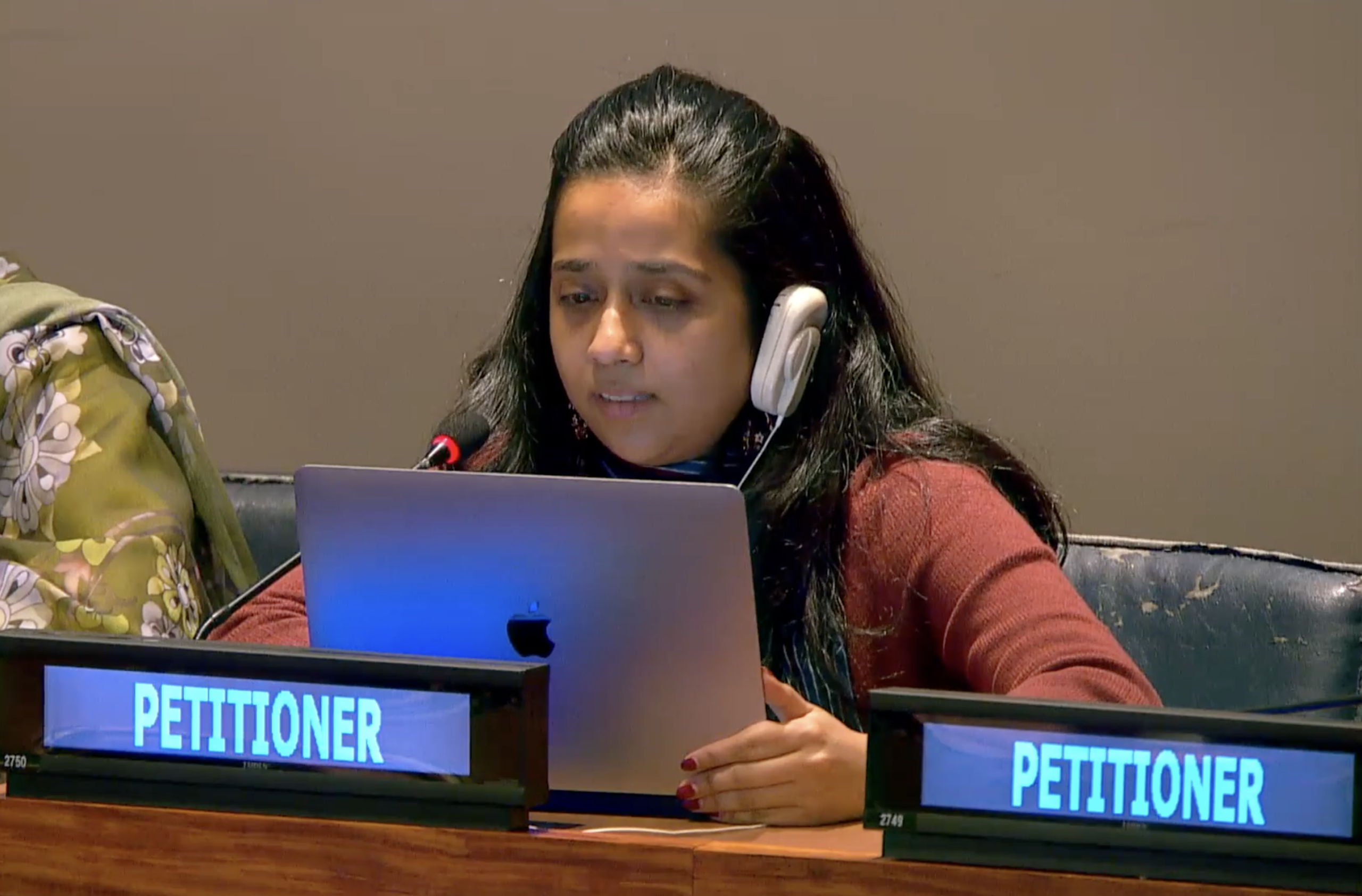
In a submission to the UN Special Rapporteur on freedom of peaceful assembly and of association and the Special Rapporteur on torture and other cruel, inhuman or degrading treatment or punishment, ISHR is urging both mandates to address the recent use of metallic pellets against protesters in Delhi, India on 20 July 2026 as a flagrant violation of international law, and to recommend that India investigates the use of these weapons.
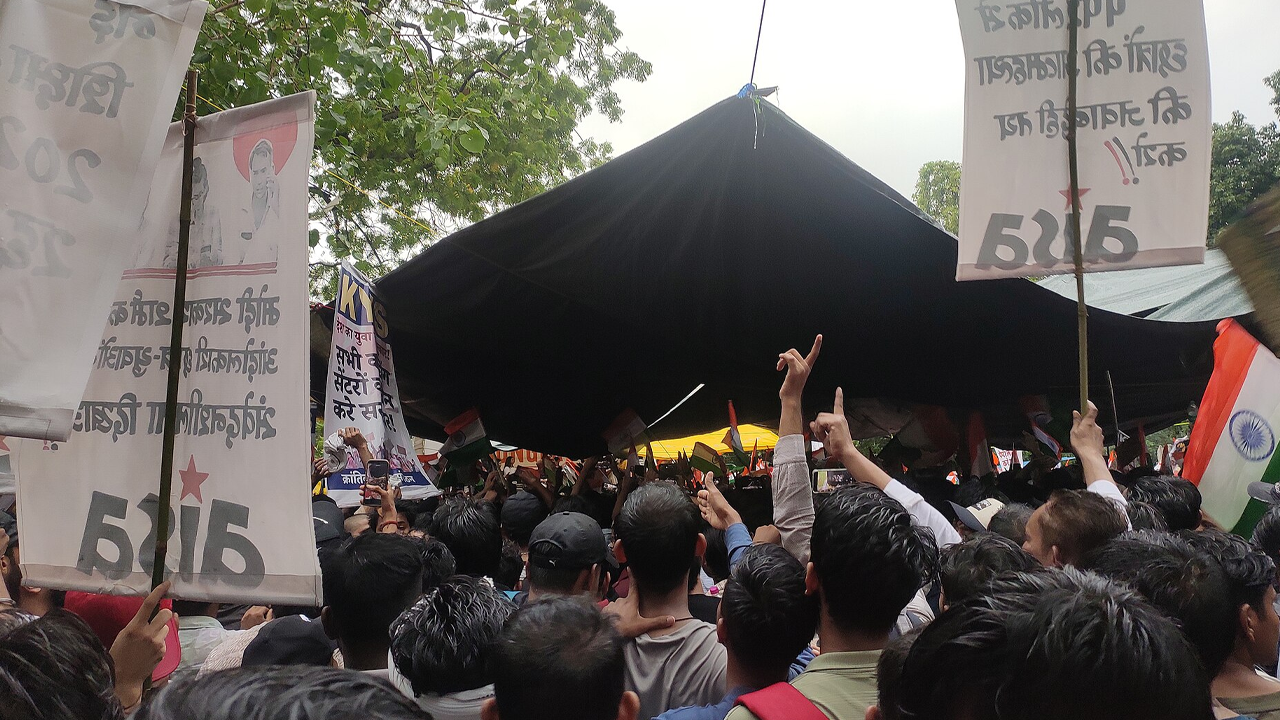
During the ‘Sansad Chalo’ march called by the ‘Cockroach Janta Party’ (CJP), law enforcement reportedly charged protestors with ‘lathi’ batons, used electric shocks and batons embedded with nails, fired tear gas, and fired at least seven rounds of pellets which seriously injured peaceful protestors. By the police’s own count, at least 60 protestors were injured.
Indian law enforcement has a history of using pellet-firing shotguns in response to public protests, notably in Jammu and Kashmir. In two reports published in 2018 and 2019, the UN Office of the High Commissioner for Human Rights (OHCHR) called these ‘one of the most dangerous weapons used in Kashmir’ and called on authorities to ‘immediately’ order an end to their use.
The use of pellet-firing weapons, and the State’s overall disproportionate response to the ‘Sansad Chalo’ march also runs contrary to India’s own international human rights commitments and established international standards. This includes Articles 7 and 21 of International Covenant on Civil and Political Rights (ICCPR), to which India is a party, and which respectively forbid ‘torture’, ‘cruel’ and ‘inhuman or degrading treatment’ and enshrine the right of peaceful assembly. Moreover, the 2020 UN Guidance on Less-Lethal Weapons in Law Enforcement states that metal pellets ‘should never be used’.
ISHR calls on the Special Rapporteurs to issue a public statement addressing the use of metallic pellet guns at the ‘Sansad Chalo’ march, to urge India to comply with its international law obligations, and to clarify that the use of these weapons in the context of civilian assemblies is a manifestly unlawful use of force under international law.
ISHR urges India to impartially investigate the use of metallic pellets, to offer an effective remedy to all victims, to hold those responsible for the deployment of pellet guns accountable, and to ensure that this cannot happen again – including by enacting relevant legislation, guidelines or policies to ban the use of pellet guns.
ISHR’s submission is based on information gathered primarily from Indian and international media reports, social media posts, a public interest litigation lawsuit filed before the Supreme Court of India on 27 July 2026, international law treaties and guidance, OHCHR and other UN reports, and reports of international NGOs.
BACKGROUND
Established in May this year, the ‘Cockroach Janta Party’ (CJP), a youth movement founded in response to India’s Chief Justice comparing unemployed youths to ‘cockroaches’, has been protesting against corruption and inequality, most notably in the field of education.
The movement has held protests in response to the cancellation on 12 May of the National Eligibility cum Entrance Test (NEET) – a nationwide exam that determines access to medical schools – after this year’s questions were allegedly leaked. The move reportedly caused a dozen students to die by suicide and meant that this year’s over 2 million candidates would have to re-take the notoriously gruelling test.
Seeing no action by authorities, the CJP called for a protest, which the government did not engage with for several weeks despite students and a well known educationist undertaking hunger strikes. A ‘Sansad Chalo’ march towards the Indian Parliament building was then organised for 20 July, attracting crowds by the thousands at New Delhi’s Jantar Mantar observatory despite a police ban. Issuing no warning, law enforcement proceeded to respond with grave violence to a protest that has been described as largely peaceful.