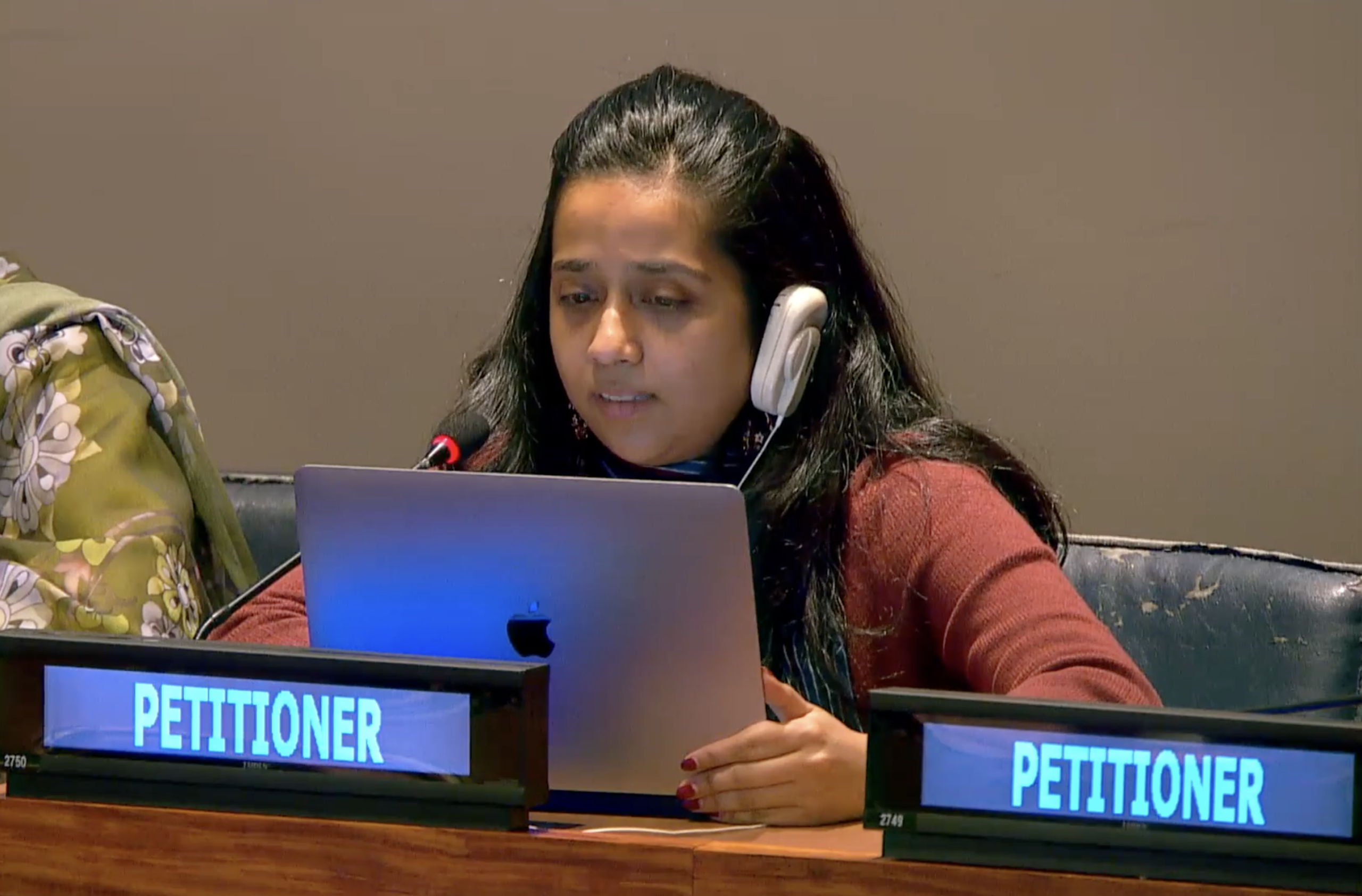
Through the granting of ECOSOC consultative status – also known as ECOSOC accreditation – to interested NGOs, the Committee determines which NGOs can access UN premises, make statements at various UN meetings, provide policy recommendations and organise events.
The Committee met for the last session of its current 4 year membership term (2023-2026) composed of 19 Member States from all UN regional groups: Algeria, Armenia, Bahrain, Cameroon, Chile, China, Costa Rica, Cuba, Eritrea, Georgia, India, Israel, Liberia, Nicaragua, Pakistan, Türkiye, United Kingdom, United States and Zimbabwe.
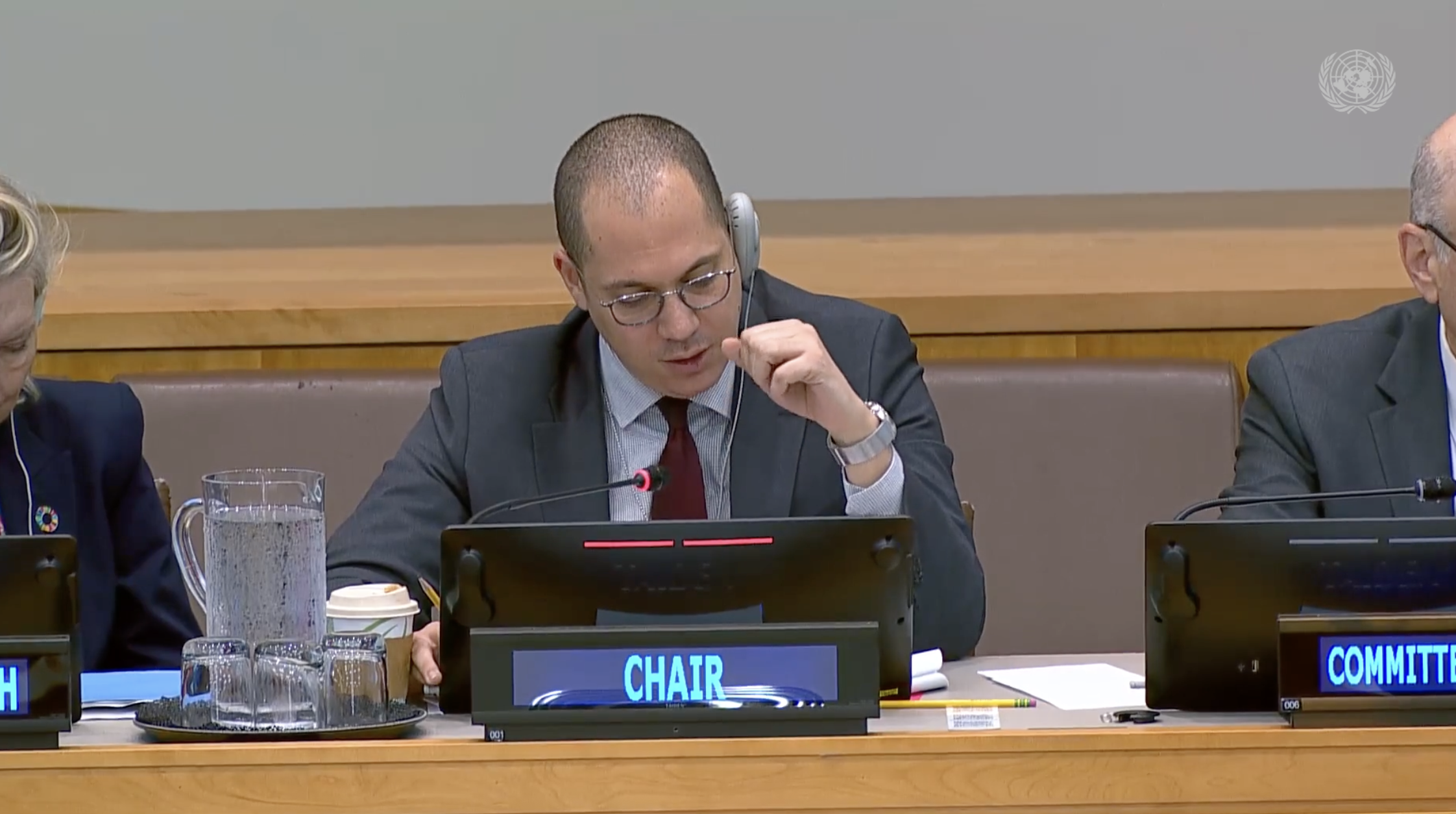
The most recent Chair of the Committee Andrew Sigley, who represented the United Kingdom as Chair for three sessions, reminded members of their collective responsibility to facilitate civil society engagement with the UN and ensure that its working methods remain fit for purpose.
This entails ‘ensuring that timely, transparent, even-handed review of applications’, recognising that ‘prolonged deferrals risk undermining confidence in this process and over time, the credibility of the Committee itself’. Concluding with a reform-minded message, the former Chair emphasised the value of making the Committee’s processes more transparent, predictable, and efficient, including in matters of suspension and withdrawal of ECOSOC status, a privilege that must be exercised through a fair process including reasonable timelines and transparent consideration of evidence.
Later in the session, the delegate representing Algeria referred to the UK’s intervention regarding fair process and requested the Committee to clarify the due process standards for the work of the Committee.
This session, the Committee considered 463 applications in total: 102 new applications and 361 deferred from previous sessions.
Only 90 were granted special consultative status, consisting of 71 new applicants – 69.6% of total new applications – and 19 deferred – 5.2% of total applications deferred from previous sessions. In the most recent session prior, the Committee recommended granting status to 214 out of 618 applications consisting of 148 (62.4%) new NGO applicants and 66 (17.3%) deferred applicants.
China, Pakistan and India together accounted for over 50% of questions posed to applicants by Committee members in this session, leading to deferrals in their requests for UN accreditation.
Moreover, 49 applications for consultative status were closed this session after organisations did not respond to questions for more than three sessions. Two of these NGOs had submitted their applications for consultative status nearly a decade ago and faithfully engaged with the process for more than eight years before ceasing to respond to the Committee’s persistent and presumably incessant questions.
The Committee’s new members for the upcoming 2027-2030 term are: Cameroon, Côte d’Ivoire, South Africa, Sudan, Tunisia, China, India, Saudi Arabia, United Arab Emirates, Estonia, Ukraine, Cuba, Mexico, Nicaragua, Peru, Israel, Turkiye, United Kingdom, and the United States.