UN WebTV: Interactive Dialogue with Group of Human Rights Experts on Nicaragua, 61st session of the UN Human Rights Council
Nicaragua
Latin America & Caribbean
News
Nicaragua: States urged to tackle surge in transnational repression
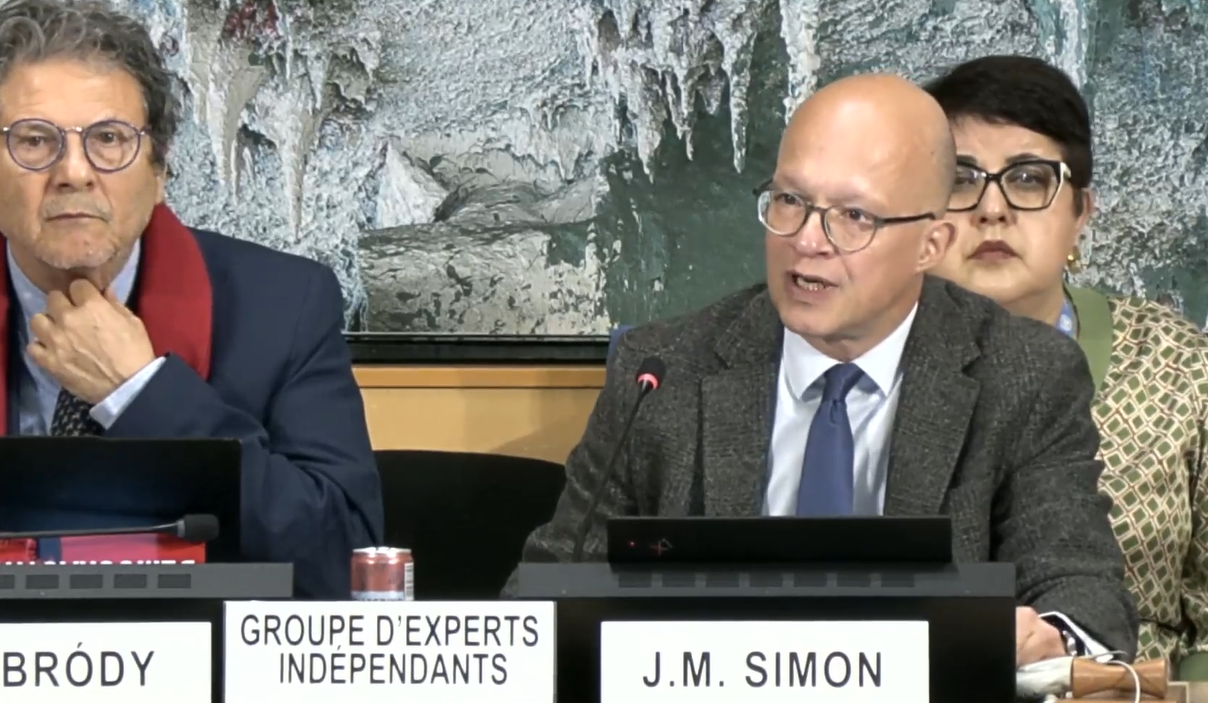
The Human Rights Council was confronted with stark new evidence of the scale, sophistication, and transnational reach of repression by Nicaraguan authorities. The latest report of the Group of Human Rights Experts on Nicaragua and public calls by States and civil society at the Council and the General Assembly, underscore the pressing need for accountability and coordinated international action.
The Group of Human Rights Experts on Nicaragua (GHREN)’s latest report to the 61st session of the Council provides one of the most comprehensive accounts to date of the Nicaraguan government’s repressive machinery. It concludes that violations are not only ongoing but have evolved in structure, financing and geographic reach.
A central new finding is the systematic use of corruption to finance repression. According to the experts, public institutions and state-linked structures have been instrumentalised to divert public resources toward surveillance, control and punishment of perceived dissent.
The report further identifies a coordinated intelligence and surveillance architecture, enabling authorities to track and categorise individuals in exile, as well as a gendered dimension of repression, with women defenders facing specific forms of violence and persecution.
The report also deepens prior conclusions that violations amount to crimes against humanity, highlighting patterns of arbitrary detention, enforced disappearance, torture and persecution on political grounds. These abuses are embedded in a broader strategy to fully dismantle democratic institutions and close civic space.
A defining feature of the current phase of repression is its transnational dimension. The GHREN documents how Nicaraguan authorities have extended surveillance, harassment and attacks beyond borders, targeting exiled activists, journalists and human rights defenders.
These practices include digital and physical surveillance, threats, reprisals against family members and even violent attacks abroad, including the killing of prominent dissenter Roberto Samcam in San José (Costa Rica) and the attempted murder of former political prisoner Kevin Solís in Madrid (Spain).
Nicaragua’s rights crisis discussed in New York
Similar findings were presented by the GHREN during its first-ever dialogue with States at the UN General Assembly’s Third Committee in New York in October 2025. The GHREN’s mandate was expanded to also report to the General Assembly during the two-year renewal of the Council resolution on Nicaragua in April 2025, following strong advocacy by Nicaraguan rights groups jointly with ISHR.
During the dialogue in New York, Brazil, Chile, Canada, Uruguay, Costa Rica, Spain, Ireland, the United Kingdom and the European Union voiced grave concern at rights violations by Nicaraguan authorities, while Mexico reiterated the pressing call on Nicaragua to resume cooperation with UN rights bodies. Nicaragua’s remaining allies – namely Belarus, North Korea, Iran, Venezuela, Cuba, Bolivia, Eritrea, Algeria, Viet Nam, Burundi, Russia and China – spoke in defence of the government’s repressive policies urging ‘non interference in internal affairs’.
Unlike in Geneva where it does no longer engages at the Council, the highly-active Nicaraguan delegation in New York vehemently opposed any criticism and gathered its allies to defend them in the room. This shows the impact of pressure on Nicaragua when exercised at the General Assembly and the importance of the GHREN’s engagement with diplomatic delegations in New York.
Raphael Viana David, ISHR Programme Manager
Growing calls for accountability
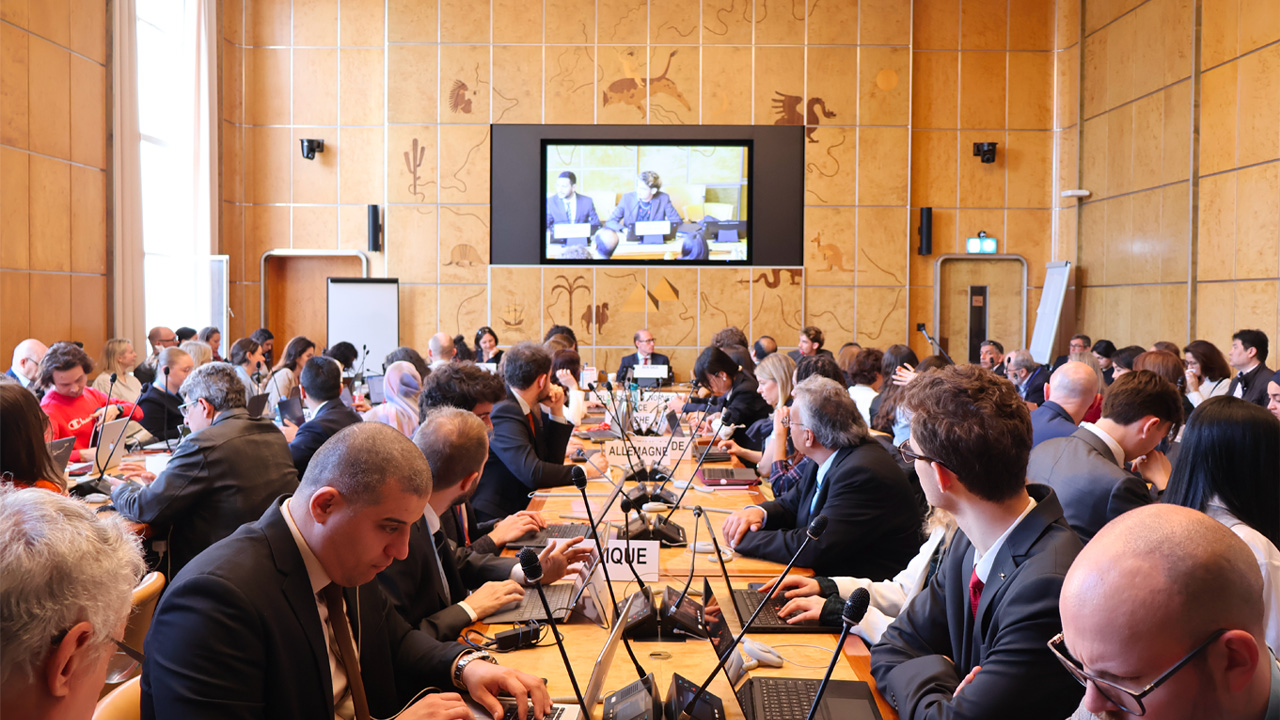
During the Human Rights Council’s interactive dialogue with the GHREN, 17 countries expressed alarm, individually and jointly, at the findings and reiterated support for continued scrutiny. States from different regions, including EU Member States, the Dominican Republic, Georgia and the United Kingdom, condemned the documented violations and the erosion of democratic institutions.
Speaking on behalf of the Core Group on Nicaragua – Argentina, Brazil, Canada, Chile, Colombia, Costa Rica, Ecuador, Paraguay, Peru -, the regional group of countries that leads the resolution establishing the GHREN and the OHCHR’s respective mandates on the country, Canada urged sustained scrutiny. The Core Group emphasised the expansion of transnational repression, taking forms as diverse as the misuse of Interpol Red Notices to the arbitrary deprivation of nationality rendering hundreds stateless.
Unlike its vociferous rebuttal of the GHREN’s findings at the General Assembly’s dialogue, Nicaragua did not address the findings at the Council given its disengagement from the body in early 2025. Where several diplomatic allies of Nicaragua would regularly speak in defense of the government (including at the General Assembly), China was the only country to endorse Nicaragua’s policies at this Council session.
Civil society organisations also took the floor to denounce continued arbitrary detention, enforced disappearances, and attacks on Indigenous Peoples and Afro-descendants, while calling for the release of political prisoners and protection of those in exile. These calls were reiterated in a side event organised by the Colectivo 46/2 of international and Nicaraguan rights groups, including ISHR.
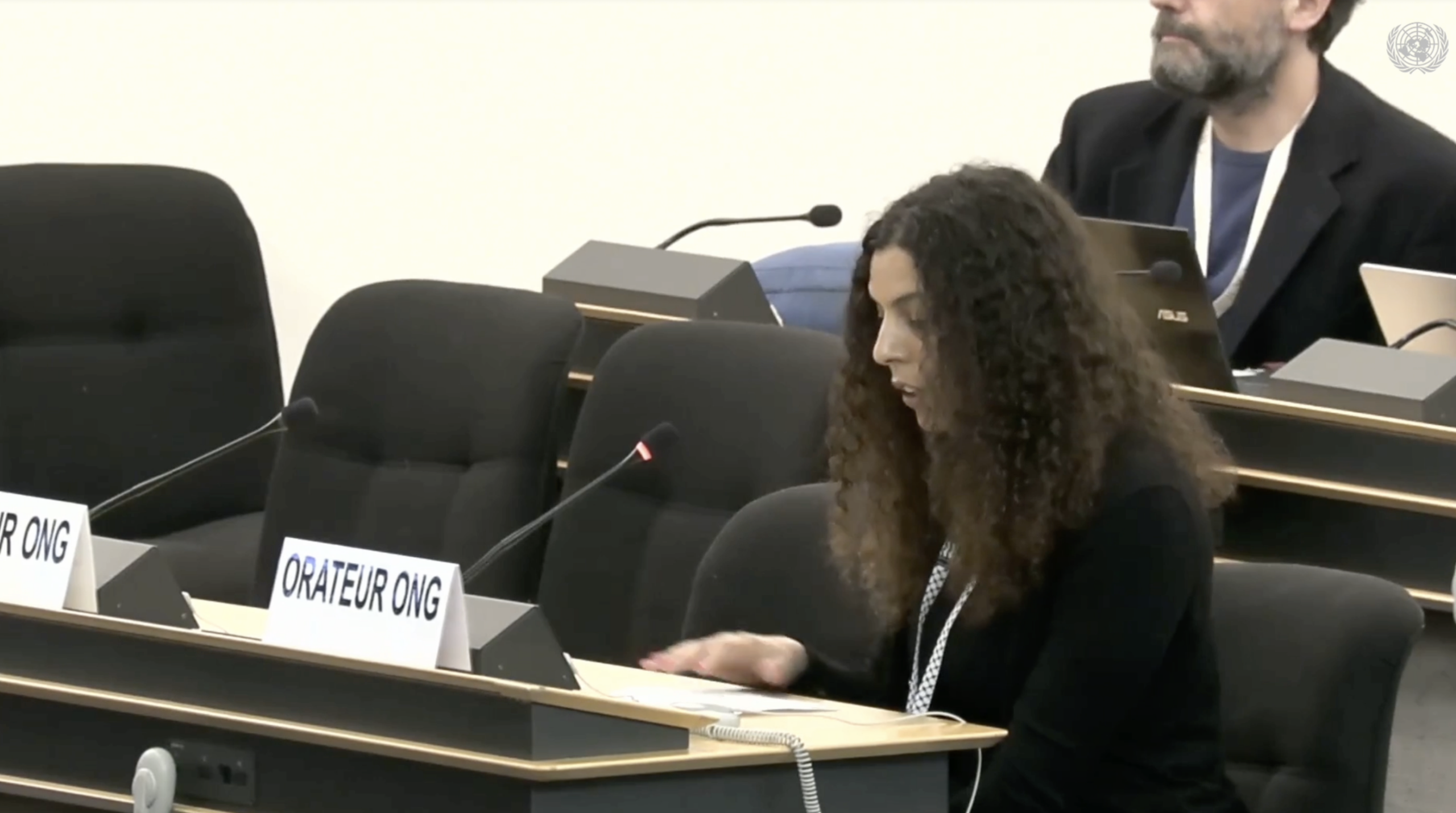
Speaking on behalf of ISHR, Nicaraguan defender Alexandra Salazar of the Unidad de Defensa Jurídica (UDJ) delivered a statement drawing attention to the situation of political prisoners and the targeting of human rights defenders.
She warned that those detained are subjected to inhumane conditions, including isolation, violence, and denial of medical care, and stressed the ongoing risks faced by defenders both inside and outside the country.
She further stressed that recently-released political prisoners have not fully recovered their freedom as they are placed under constant police control.
Salazar also emphasised the importance of sustained Council attention, and echoed the GHREN’s recommendations, including that States should:
Take meaningful steps to hold Nicaragua accountable before the International Court of Justice for breaches of the 1961 Convention on the Reduction of Statelessness and the Convention against Torture.
Require heightened human rights due diligence by financial institutions.
Strengthen oversight of international cooperation on law enforcement (such as Interpol notices) to prevent political misuse.
Ensure international protection for exiled Nicaraguans and uphold the right to asylum, establish programmes for the reception, protection and integration of exiled Nicaraguans, including access to education, healthcare and employment and recognition of qualifications.
Ensure that de facto stateless persons are afforded the protections established under the Convention relating to the Status of Stateless Persons.
Read the full statement here, and watch the statement delivered below:
Author
Raphaël Viana David
Raphaël is ISHR's China and Latin America Programme Manager in our Geneva office. He joined ISHR in 2018.
A new report prepared by Oxford Pro Bono Publico for ISHR shows that, though UN and regional human rights systems increasingly recognise transnational repression of human rights defenders, States still lack clear, binding obligations to prevent and address it.
ISHR, the Center for Constitutional Rights, Advocates for Human Rights, the Unitarian Universalist Service Committee and Human Rights First delivered a joint statement at the Human Rights Council on the United States' refusal to cooperate with the Universal Periodic Review.
Saharawi woman human rights defender Fatima Moulay delivered a joint statement on behalf of ISHR, Front Line Defenders, and the Working group on human rights in occupied Western Sahara during the 61st session of the Human Rights Council, General Debate Item 4.